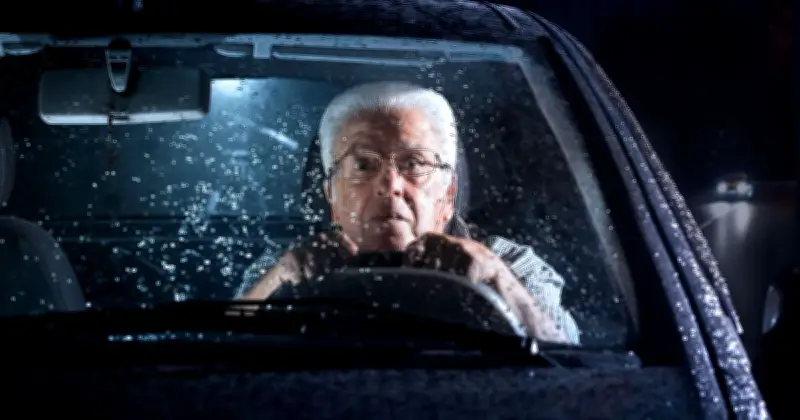
Older drivers above the age of 70 have been issued a new car headlight warning this October. Marios Antoniades, Dispensing Optician and Director of Optometrist, Quality Eyes, has revealed that night driving can become an issue for road users suffering from poor eyesight.
Why night driving is a concern
The dark conditions severely reduce natural visibility, while experts have warned that headlight glare could be a major concern for road users battling vision issues. Road users who see headlights in starbursts, halos, or streaks of light when passing oncoming traffic could be at risk, with Marios urging these individuals to have an eye test.
Older drivers are understood to be among the most at risk of eyesight issues, with DfT data previously revealing that 42% of collisions involving drivers over 70 are linked to vision problems.
What the optician advises
Speaking exclusively to the Express, Marios said: “Headlights shouldn’t normally look like dramatic starbursts every time you drive at night. If you’re regularly seeing halos, streaks or glare around lights, it’s worth booking an eye test rather than simply buying a tinted pair of glasses.”
Earlier this year, officials consulted on the introduction of mandatory eyesight checks for older drivers above the age of 70. Eye assessments are likely to be needed at licence renewal every three years if the rule is approved. However, there have been no official announcements regarding any rule changes as of yet, despite the consultation closing in May.
Impact on driving habits
There is already growing concern around headlight glare, with motorists already venting their frustration at the issue. A recent survey by the RAC found that more than half of drivers who were dazzled by headlights (57%) claim that the issue has worsened in the past year.
A quarter of respondents (25%) who said headlights were too bright have changed their driving habits in recent years, with many staying at home at night or no longer driving altogether. The survey showed older drivers were disproportionately affected, with as many as 43% of those above the age of 75 saying they were driving less.
Marios urged motorists struggling with glare to consider a fresh set of prescription glasses, with drivers told to secure the extra anti-reflective coating. He told the Express: “An up-to-date prescription and a good anti-reflective coating are much more effective at avoiding the after-effects of glare, while making sure that your eyes aren’t working harder than they need to.”