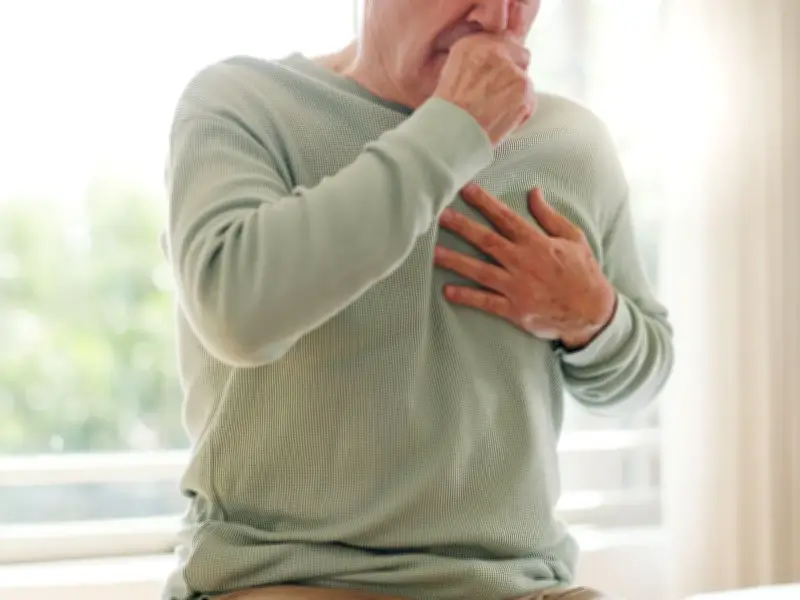
The NHS has warned that a cough lingering through the colder months could be a sign of chronic obstructive pulmonary disease (COPD), a condition estimated to affect around 1.7 million people in the UK.
In a post shared on X on Friday, November 20, the health service said colder weather can cause breathing problems for people living with COPD. It encouraged people to make sure they know how to look after themselves, or someone else, who has the condition.
Images shared alongside the post asked whether a cough or breathlessness could be COPD and advised anyone experiencing symptoms to contact their GP practice.
COPD in the UK
Around 1.7 million people in the UK are estimated to have COPD, according to lung health charity Asthma + Lung UK. The charity also estimates that around 600,000 people are living with the condition without knowing it, meaning they may not have received a diagnosis or started treatment.
COPD is the name given to a group of lung conditions, including emphysema and chronic bronchitis, which cause breathing difficulties. The NHS explains that the condition affects the lungs and can lead to a persistent cough, shortness of breath and repeated chest infections.
Symptoms and triggers
Symptoms often develop gradually and can become worse over time, according to the health service. People may notice they are getting out of breath doing everyday activities that previously caused them no difficulty, such as walking uphill.
Cold weather is among the triggers that can cause COPD symptoms to flare up, the NHS warns. Very cold, hot or windy conditions can make breathing more difficult, while chest infections and exposure to smoke or strong smells can also worsen symptoms.
Impact in Wales and next steps
The condition is particularly relevant in Wales, where Asthma + Lung UK estimates that around 185,000 people have been diagnosed with COPD. The charity has previously highlighted that winter hospital admissions for the condition in Wales were 50 per cent higher than in summer, based on figures from 2023/24.
Anyone concerned about possible symptoms should contact their GP, the NHS advises. Its guidance specifically recommends seeking an appointment if you have been coughing for three weeks or more, become breathless doing things that used to be easy, or keep getting chest infections.
There is currently no cure for COPD, but treatment can help manage symptoms and improve quality of life. The NHS says this can include inhalers, medicines to help clear mucus and pulmonary rehabilitation, alongside advice on stopping smoking and keeping active.