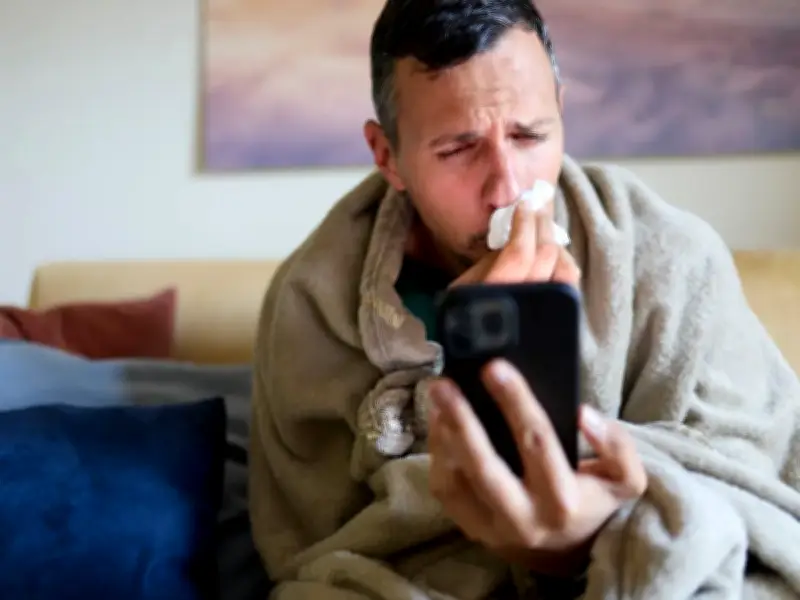
As October arrives, many of us have already fallen victim to "winter" bugs such as the common cold. While being struck down with a cold is thoroughly miserable, the illness generally clears up within a week or so, and can most often be treated in the comfort of your own home.
Typical symptoms include a blocked or runny nose, a cough, a sore throat, sneezing, fatigue and a general feeling of being under the weather, as well as a hoarse voice. Colds tend to develop gradually over the course of two or three days.
Additional symptoms and duration
Some sufferers may also experience a high temperature, a loss of taste or smell, muscle aches, and a sensation of pressure in the face or ears. Symptoms can persist for longer in young children, who may also become irritable, struggle with feeding and sleeping, breathe through their mouth, and be sick after coughing.
As a rule, symptoms are at their worst midway through a cold, around days three to five. Towards the final days, most symptoms will have eased off, and your energy levels will have returned to normal.
When to see a doctor
However, the NHS advises you should see a doctor if:
- you're worried about your child's cold symptoms
- your cold symptoms get worse
- you feel short of breath or have chest pain
- your cold symptoms do not get better after 10 days
- your temperature is very high, or you feel hot, cold or shivery
- you have a cough for more than three weeks
- you have a high temperature for more than three days
- you get cold symptoms and you have a weakened immune system (for example, because you're having chemotherapy)
- you get cold symptoms and you have a long-term medical condition (for example, diabetes, or a heart, lung or kidney condition)
Doctors do not prescribe antibiotics for a cold as it is a viral illness, meaning antibiotics will have no effect.