Boys born in Manchester's most deprived neighbourhoods are likely to lose up to eight years of their lives compared to children growing up eight miles away in Didsbury or Chorlton, according to a new council report. For girls, the loss of life expectancy is seven years.
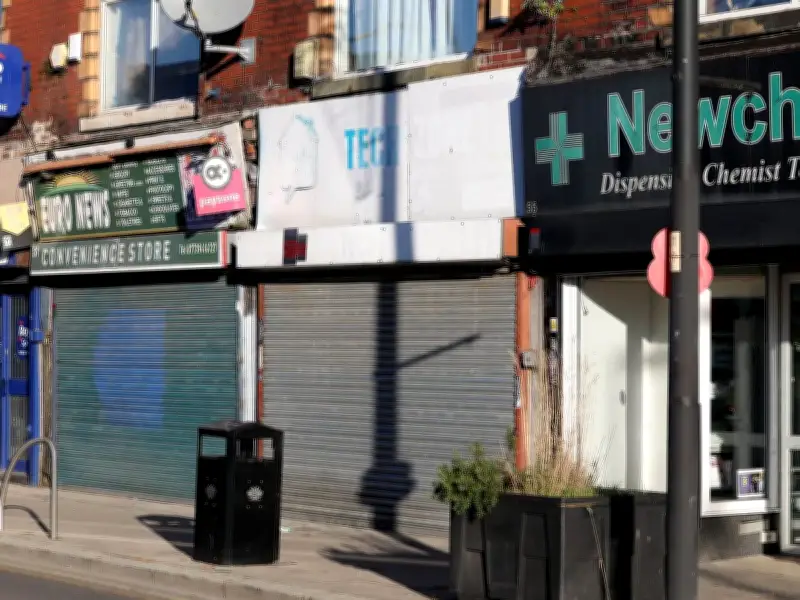
The report identified Newton Heath, alongside Miles Platting, Harpurhey and Gorton and Abbey Hey, as some of the city's most deprived areas. Locals described Newton Heath, a few miles outside the city centre, as one of Manchester's 'proud working class' communities.
Residents respond to stark figures
On Old Church Street in Newton Heath, most people did not react with outrage or anger at the fact that their children will not live as long as others in the city. Many felt resigned to accepting the situation, asking 'what can we do about it?'. Most said poverty is a 'visible' issue in the community.
Marie, 65, a Newton Heath resident, said the area has its issues but is still a 'strong' community made up of people from all different backgrounds. She added: "There can be anti-social behaviour - backchat from people, both adults and kids. You can tell the families that are struggling, you see some kids wearing the same clothes every day. But it's a strong community. When someone dies, people rally around, they do a collection and help, even if they didn't know the person."
Peter, 21, stopped to give his view on the area. He said there are problems affecting local people. Asked to describe it, he said: "You can't really have a nice car around here, put it that way." Peter was clear that, in his view, immigration has been a detriment to the area. He said: "I think there are a few reasons. One is immigration, the other is people don't care." Asked about immigration levels in the neighbourhood, he said: "There's been a lot of immigration all over the country."
Investment plans for north Manchester
Stephen Thornton, 72, was sitting on a bench just off Old Church Street. He said: "I'm born and bred here, so I am proud of it. But in terms of what it's like, anti-social behaviour is one of the big issues, and there is more fly-tipping now, it's become common, but it never used to be. I've only really noticed it in the last few years, people can't be a***d now. It's an eyesore and a nuisance."
Outside Asda, Amy McDonald, 26, said: "It can be hard being brought up here, there are good people but you also see trouble. It's years and years of issues, stuff that has been going on for generations."
Newton Heath is one of the areas earmarked for big changes. There are plans to spend £6bn on a programme of 'widescale' improvements across north Manchester's neighbourhoods and high streets, including major regeneration work. People in Newton Heath said the area's issues will not be easy to fix.
Council responds to inequalities
Manchester council said changes made in the last 12 months include growing numbers of people in Manchester being paid the real living wage, more kids being ready to start school, more 'affordable' housing being built, and increasing the amount of 'community influence' on policy decisions, among other things.
Councillor Joanne Green, the council's lead on health and social matters in Manchester, said the town hall has a five-year plan to tackle preventable inequalities, and that the council recognises that deeply entrenched inequalities can start before birth and last throughout life. She added: "This five-year plan has a focus on the preventable inequalities that affect health which are often rooted in social factors like living conditions, income, housing, education, employment, discrimination and where people live. No one person or single organisation can address the often-multi-layered approach needed, which is why it is a partnership that includes people with first-hand experience of the issues involved and strong community representation."
Councillor Garry Bridges, leader of Manchester council, said he feels areas such as Newton Heath and Harpurhey have been left 'further behind' while other areas in Manchester flourished. Asked about his plans for the city's most deprived communities, he said: "North and east Manchester has been a real focus for council investment in recent years, including building more social rent and affordable homes than at any time for three decades and delivering key transport projects and local facilities like leisure centres. But we also have to recognise that there are still areas that experience unacceptable levels of deprivation. We want Manchester to be a place where everyone shares in the city's success. For too long, while the city centre and other areas have flourished, places like Newton Heath and Harpurhey are still further behind."
He added: "We have a bold plan for the biggest regeneration programme that the north of our city has ever seen, linked to the major redevelopment of North Manchester General Hospital. But it's more than just buildings - this is a £6bn vision that is about improving the health and wellbeing of our residents, transforming communities and creating life-changing opportunities and jobs so that all Mancunians can earn a decent living. The new hospital is at the heart of the plan, but we are also investing directly in communities. Our Pride in Place programme will pump £60m into north and east Manchester alone through resident-led, community-focused projects that will improve their local areas. And our city-wide high street investment programme is already delivering impactful projects on Moston Lane and in Gorton. Newton Heath is next in line following consultation with locals around the Old Church Street area, we are looking at new healthcare facilities, new affordable housing and public spaces. While in Harpurhey the Council will transform the former Embassy Club site into a new primary care health centre."
Reacting to the stark inequalities divide in Manchester, Graham Whitham, chief executive at Resolve Poverty, said: "The life expectancy figures are shocking but not surprising. We know that poverty is the single biggest determinant of poor outcomes for people, whether that relates to how well they do at school, their career, or their health and wellbeing. Not only do people with experience of poverty die at an earlier age, but they are also much more likely to suffer from life-limiting illnesses earlier in life. The one thing that all people experiencing poverty have in common is a lack of money. That is why it is crucial that interventions to address poverty and boost health focus on maximising household incomes."
Greater Manchester Police was approached for comment.