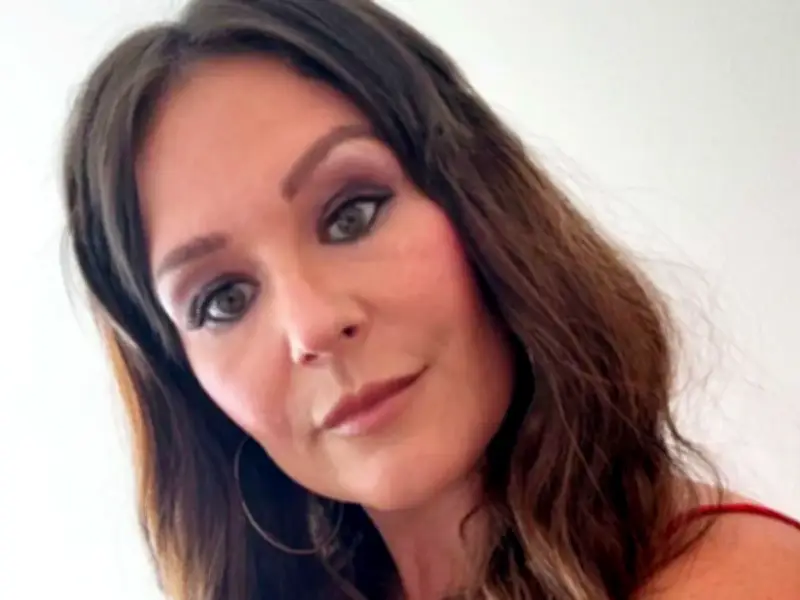
A mother who fought breast cancer has revealed that her doctor told her she was 'far too young' to have the disease. Beth Jenkins, 42, from Merthyr Tydfil, first sought medical help in 2018 after finding a lump in her right breast, but says she was not taken seriously until she was diagnosed six years later.
In September 2024, while changing her 10-month-old baby's nappy, Beth's attention was drawn back to the painful lump after her baby kicked her in the chest. One month later, a male GP attributed her pain to pregnancy hormones, a breast infection or a blocked milk duct. Prescribed antibiotics and sent home, Beth claims the doctor later suggested she was overthinking her symptoms because of postnatal depression. After a different doctor advised a referral, an ultrasound in November revealed she had stage two oestrogen and progesterone positive lobular breast cancer.
Dismissive doctor and delayed diagnosis
Beth, a police officer, said: "They are playing with people's lives for the sake of a referral. It's the first thing I wake up thinking in the morning, and the last thing I think of at night." She described the male GP as "really dismissive, really passive, and quite blasé", adding: "He said you're only 40, there's no history of breast cancer, you're far too young to have it, there's no other symptoms."
When she had her original appointment in 2018, Beth was referred to a breast clinic. Her ultrasound was recorded as P3, indicating an uncertain finding. Beth only recently discovered online that the result was suspicious and further assessment could have been warranted.
Mastectomy and chemotherapy
Beth spent two months advocating for her health in 2024 after her male GP dismissed her complaints about the lump growing in size and pain. Following her diagnosis, she underwent a right mastectomy and reconstruction before Christmas 2024. Surgeons found a five-centimetre tumour, as well as cancer in four of 26 lymph nodes, which required complete removal. She began chemotherapy in February 2025 after an anaphylactic reaction to anti-sickness medication.
Beth received treatment in cycles, every three weeks for nine weeks, before developing neutropenic sepsis after mistaking the symptoms for a cold. She spent five weeks in hospital, saying she could have died had she waited any longer. During this period, her husband Lee, 42, who was self-employed, had to stop working to care for their children. Outside of Beth's Personal Independence Payment, they received 'absolutely no financial help'.
She said: "My husband really doesn't know how much he's been my shoulder and held me together."
Ongoing treatment and fundraising
Discharged from hospital, Beth began a second chemotherapy drug called Paclitaxel, administered weekly over 12 weeks at a lower dose due to her body struggling to tolerate treatment. With her losing her hair, Beth eventually told her eldest daughter Fallon the truth about her health. She recalled: "I embraced it for my children, I wanted to show them that you've got to fight for yourself."
Beginning radiotherapy in August 2025, Beth was left with burns and unable to straighten her right arm. She said: "I just feel like if I'd been listened to, we wouldn't be at this stage. My kids wouldn't have to go through this. I could have just had a lump removed."
Beth started taking Ribociclib as part of treatment to reduce the risk of her cancer returning in autumn 2025. On Christmas Day she was placed on the palliative care ward with an infection due to there being no separate inpatient ward available. Reflecting on the experience, she said: "I've seen what the future looks like because I'm in that mental head space of: I'm going to die of cancer. She passed in January and had a 13-year-old daughter. She was my age."
Once she recovered, Beth pushed for a hysterectomy and a left mastectomy and reconstruction, noting that 'prevention was better than cure'. She had both operations this year. Having started a three-year course of Ribociclib following her recovery from infection, Beth now takes Letrozole for 10 years. Due to lobular breast cancer being difficult to detect, she has annual scans to monitor her condition.
Following her diagnosis, Beth met with her local GP practice and received what she described as a 'big apology'. The male doctor who allegedly dismissed her is no longer working there. She said: "I told them to stop being so dismissive of people of a certain age with breast cancer because it doesn't discriminate against age. It can affect anyone."
Beth, who has since been diagnosed with PTSD and is receiving EMDR therapy to help her process her experience, has organised a Breast Fest charity event on November 14, 2026, exactly two years after her diagnosis. Raising money for local independent charity Cancer Aid Merthyr Tydfil, the event has sold out, with Dublin singer-songwriter Jake Suleman performing for free. Over 34 sponsorships have been secured for the event.
Beth said: "I'm doing everything I can to flip my mindset from a negative into a positive. My family is stronger than ever. It brought us together. Your health is one of those things you take for granted, now we take things day by day. I'm hopeful for the future even though I dread what tomorrow may bring."