
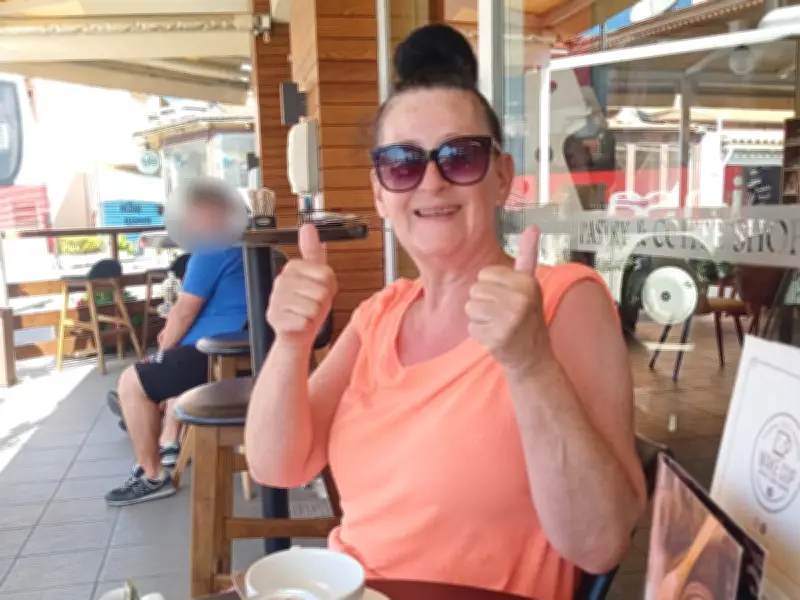
Sharon Alexander, a 72-year-old pastry chef and mother of four, died just three days after experiencing back pain that turned out to be necrotising fasciitis, a rare flesh-eating bacterial infection. Her family says medical staff suspected the infection may have been triggered by an ingrown hair.
Rapid deterioration from back pain to fatal infection
On Friday, February 13, Sharon returned home from work feeling tired and complaining of a sore back. She planned to rest the next day. By Sunday, the pain had worsened significantly, prompting her husband Stephen to call an ambulance. Paramedics noticed bruising on her back, and she was rushed to University Hospital Crosshouse in Ayrshire.
Doctors diagnosed necrotising fasciitis, a severe bacterial infection that destroys soft tissue and fascia. Sharon underwent emergency surgery to remove dead flesh from her right thigh and back. She was placed on a ventilator in intensive care, with plans to amputate her infected leg.
Infection spread despite surgery
The following day, the infection had spread to the left side of her body, and doctors told the family there was nothing more they could do. Sharon died on Monday, February 16 — just three days after her initial symptoms. Her daughter, Scarlett Simpson, a 36-year-old nurse, described the experience as a “living nightmare.”
“Mum was working on Friday, February 13 and by Sunday she was in ICU,” Scarlett said. “She had said she had back pain and felt tired. She said to my dad on the Saturday that she was going to have a day taking it easy before work on the Sunday. Mum didn’t think it was anything untoward, she just thought she had a sore back.”
Possible cause: ingrown hair
Doctors could not identify the source of the infection, but suspected it may have been an ingrown hair on Sharon’s back, as she had no visible cuts or scrapes. Scarlett said, “They told one of our relatives that it could’ve been an ingrown hair on her back. I think that’s what they suspected. My dad said she didn’t have any cuts or scrapes so it’s very strange.”
Necrotising fasciitis is extremely rare but progresses rapidly. According to the NHS, it requires immediate medical attention and often leads to severe complications or death. Sharon’s family was told she would need months of hospitalisation and 24-hour nursing even in the best-case scenario.
Raising awareness and fundraising
Scarlett has launched a fundraiser for The Lee Spark Necrotising Fasciitis (NF) Foundation, a charity supporting individuals, survivors, and bereaved families affected by the disease. She urges others to act quickly if they suspect symptoms, which can vary widely. “It’s extremely hard because it’s so rare. Mum was complaining of a sore back but that’s not always a warning sign, it varies. You need to act quickly. If you suspect something is wrong, don’t hesitate. It’s life-threatening,” she said.
Sharon’s family described her as a loving mother and grandmother. “She loved the grandkids, everybody’s distraught,” Scarlett added. The GoFundMe page aims to support the foundation’s work in raising awareness and providing assistance to those affected by necrotising fasciitis.




