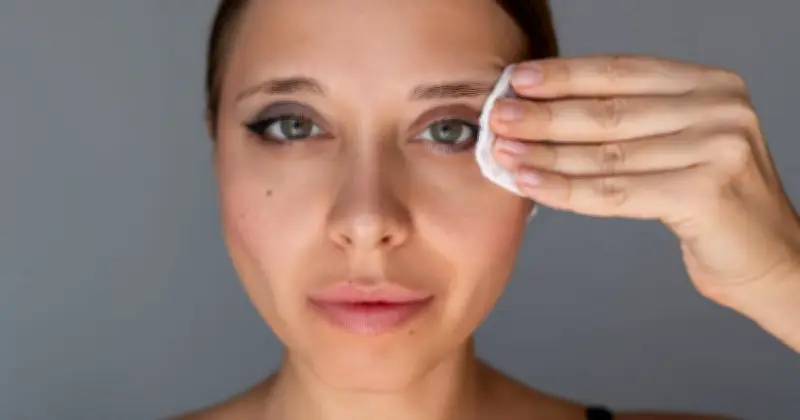
Sleeping with eye makeup on can lead to a range of eye problems, from styes and chalazions to scratched corneas and conjunctivitis, and in severe cases may even threaten eyesight, according to eye care experts.
Cosmetics containing pigments, waxes and other ingredients can irritate the delicate surface of the eyes and the fragile skin around them when left on overnight. With newer long-lasting formulations becoming harder to remove, the effects can build up over time and pose a risk to vision.
Styes and eyelid irritation
While asleep, bacteria living along the rims of the eyes can multiply, especially if eye makeup is left on. When pigments and solid particles in eyeshadows, liners, mascara and concealer mix with the moisture in the eyes, the bacteria can grow and develop into painful pus-filled lumps called styes, which can make the eyes itchy and watery.
GP Dr Daniel Atkinson, Clinical Lead at online healthcare service Treated, says: “Styes tend to be small, sometimes uncomfortable lumps that sit on the edge of your eyelid, because they’re caused by a bacterial infection in the follicles of eyelashes. They can develop quite quickly but usually clear up after one to two weeks.” Experts recommend holding a warm compress, such as a folded flannel moistened with warm water, against the eye for five to 10 minutes a few times a day to ease the blockage, rather than squeezing the stye, which can spread the infection.
The skin on the eyelids is less than 1mm thick, making it the thinnest on the body. If eye shadows are not removed properly, ingredients can build up, irritate the skin and trigger an allergic reaction or dermatitis, leading to issues like blepharitis, or itchy, swollen eyelids. Boots Opticians optometrist Opinder Malhi says: “Makeup can leave behind oils, pigments and other residue around the eyelashes, particularly if it isn’t removed properly. If you get a flare-up, use water and a gentle cleanser (like baby shampoo) to clean your eyelids daily and remove any crusting. When buying eye shadows, look out for hypoallergenic formulations.”
Chalazions and scratched corneas
Unremoved eyeliner and mascara can also block the meibomian glands, tiny openings that secrete oils to lubricate the eyes and stop them drying out. If blocked, the fluid cannot flow out onto the eye surface, making the eyelids swell up and look puffy. If left untreated, the blockage can solidify into lumps called chalazions.
“Chalazions are a little different from styes, because they’re primarily caused by blocked oil glands, not by an infection,” says Dr Atkinson. “They also tend to develop more slowly than styes, and might last for several weeks. They may not be as painful as a stye, but they can still be uncomfortable and press against your eye, getting in the way of your vision.”
Scratches to the cornea, the clear outer layer of the eye, are among the most common and painful eye injuries. Common causes include a slip of a fingernail or an applicator while applying mascara or eyeliner, resulting in sharp pain, watery eyes and blurred vision. If this happens, treatment should be sought right away to prevent an infection taking hold in the scratch, causing keratitis, or inflammation of the cornea, which without treatment can cause scarring and contribute to blindness.
Dry eyes and conjunctivitis
Chemicals and preservatives in eye makeup can interfere with the composition of the tear film that keeps eyes moist. Stephen Hannan, Clinical Services Director at Optical Express, a doctor of visual sciences, says: “People often apply makeup, such as eyeliner, regularly to an area of your eyelid called the meibomian glands. These glands secrete the oily layer of the tear film, which helps prevent tears from evaporating between blinks. As a result, the oil layer can become thinner, and tears can evaporate too quickly. This can cause dry eye symptoms like grittiness, burning, fluctuating vision and watering eyes. Using long-wear or waterproof eyeliner, designed to resist water, can also worsen dry eye symptoms.” Fake eyelashes can also contribute to dry eyes; a 2015 study at the Georgia Institute of Technology found that long eyelashes create a wind tunnel effect, directing more air to the eye surface and drying it out more quickly.
Bacteria can also thrive on makeup brushes and in makeup past its sell-by date. A 2023 survey by Beauty Pie found 42% of makeup users have never washed their eyeshadow brushes, despite research revealing they can become contaminated with the staphylococcus aureus bacterium, which can trigger conjunctivitis. Optometrist Francesca Marchetti, adviser to GoldenEye drops, says: “Conjunctivitis happens when the blood vessels of the sclera – the white of the eye – become dilated, giving that red-eyed appearance. Your eyes will be red, feel warm, gritty, itchy and watery and will produce pus. You may find your eye lashes stick together, especially after you’ve been asleep.” To treat it, clean the eyes with cool boiled water on a clean cotton pad, avoid using contact lenses, wash pillows and towels, and bin infected cosmetics. Conjunctivitis can also be triggered by a virus, and a pharmacist can advise on the best eye drops.
Make-up build-up and safety advice
If mascara is not removed, particles can get trapped, causing irritation, and too much under-eye concealer close to the rims can collect there, interrupting the moist layer and making vision cloudy. Dr Hannan says: “Long-term use of makeup products, like mascara or eyeliner, can leave pigment particles on or around the eyes. Pigment can become trapped inside the eyelids and on the clear tissue covering the white of the eye. This can cause grey or black staining around the eye’s surface, gritty deposits that cause discomfort when blinking and blocked tear ducts, leading to constant watering.”
“Our eyes are more vulnerable to lasting damage than our skin, with the retina and optic nerve forming part of the central nervous system,” warns Dr Hannan. “A cosmetic reaction on your skin will often settle without lasting damage. But a reaction or infection around the eye can spread to the cornea and cause permanent sight loss. Even a tiny scar on the cornea in the wrong place can permanently impact your sight and leave you unable to meet the driving vision standard. For that reason, eye symptoms should be taken seriously. Seek advice from a healthcare professional, rather than waiting for the problem to clear up on its own.”
Boots Opticians optometrist Opinder recommends not applying makeup directly to the inner waterline or lash line, as it could block the natural oil glands around the eyelids that help keep eyes hydrated. Eyeliner should be applied to the outer part of the eyelid instead. Choosing a good makeup remover is also advised; waking with panda eyes or bloodshot eyes is a red flag that eye makeup is not being removed properly. Most mascaras and eyeliners are a mix of colour pigments, mineral oils and preservatives, while waterproof formulations contain extra glues, or polymer films, to maintain colour and keep out water, so a dedicated waterproof eye makeup remover is recommended.
Eye makeup should be replaced every three months, as it starts to grow bacteria as soon as it is opened and the preservatives stop working over time. Opinder says: “Eye makeup has a shorter shelf life than many other cosmetics because it can become a breeding ground for bacteria, increasing the risk of an eye infection. For contact-lens wearers, I advise avoiding mascaras containing fibres because they can clump and fall into the eyes, potentially causing an infection.”
False lashes and extensions can cause problems due to the glue used to stick them on and the pull on natural lashes. Dr Hannan says: “Many lash adhesives contain chemicals that can trigger irritation or an allergic reaction, causing symptoms such as sore eyelids, inflammation and irritation from the fumes.” To reduce the risks, he advises ensuring only a fully trained and insured lash technician applies them and giving natural lashes plenty of breaks.