
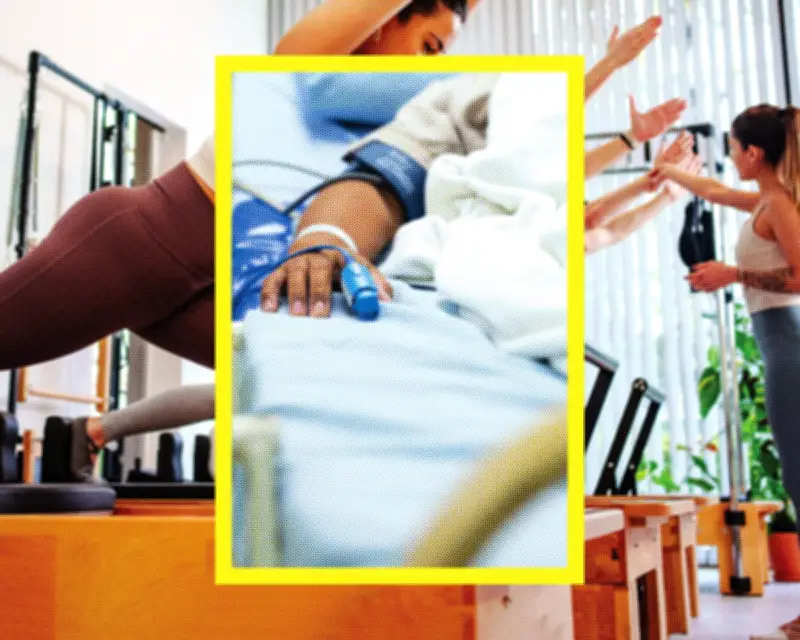
In January 2025, Lucy Rice attended her first bootcamp class, seeking an intense workout to relieve stress. The gym was no-frills, with a mirror and a militant-style instructor. After a warm-up, the class performed four sets of lateral shuffle push-ups and standing weight-bearing exercises. Rice, unaccustomed to high-volume push-ups, pushed through exhaustion, collapsing on reps. She became nauseated and dizzy, but finished the class. That night, she felt typical soreness, but by the next day, lifting her arms was exhausting. Two days later, her arms were so stiff she couldn't raise them to brush her teeth. Dark urine prompted a Google search, which revealed exertional rhabdomyolysis—a condition where extreme exercise causes muscle cell contents to flood the bloodstream, potentially overwhelming the kidneys. She went to the ER.
What Is Exertional Rhabdomyolysis?
Exertional rhabdomyolysis occurs when excessive exercise damages muscle cells, releasing creatine kinase (CK) and myoglobin into the blood. Healthy kidneys can filter normal CK levels, but overload can cause acute kidney injury (AKI). Dr. Barry Boden, an orthopaedic surgeon, explains: "When the cell membrane starts to break down, chemicals within muscle cells get released, damaging other organs." Symptoms include muscle pain at rest, weakness, and dark urine. Treatment involves aggressive IV fluids. Dr. Petr Schlegel notes that mild cases may be managed with oral hydration, but consulting a doctor is crucial. Rhabdomyolysis is fatal in rare cases; 10% of patients develop AKI.
How Common Is It?
Rice had never heard of rhabdomyolysis before. It can happen to anyone, even elite athletes. Boden's study estimated over 40,000 cases in US hospitals from 2000 to 2019, but under-reporting is likely. Data from Norway, Australia, and the US show hospital records increasing between the 2000s and 2010s. Canadian hospitals reported a surge in 2025. Researchers attribute the rise to high-intensity workouts. Schlegel says: "Evidence suggests high-intensity exercise combining strength and endurance carries the greatest potential to induce exertional rhabdomyolysis."
Can You Prevent It?
Prevention guidance includes varying exercises, incorporating rest, and gradually building intensity. Large muscle groups like biceps, triceps, and quads are especially vulnerable. Dr. Bryant Walrod warns that going from zero to 100 with large muscle groups puts people at risk. An outrageous number of low-weight exercises or calisthenics—like hundreds of push-ups—is a common trigger. Eccentric exercises, such as push-ups, are particularly likely to cause injury. The National Federation of State High School Associations calls push-ups the "No 1 cause" of rhabdomyolysis. In April 2025, Texas families filed a lawsuit after 20 children were hospitalized following hundreds of push-ups. Walrod says collegiate sports professionals became more vigilant after University of Iowa football players were hospitalized in 2011. Dr. Rebecca Stearns notes that most cases occur when athletes are pushed or threatened contrary to industry standards. CrossFit incorporated prevention into its trainer curriculum, but class participants should self-monitor.
How Do You Identify Overexertion?
Rice was discharged with instructions to avoid exercise except walking for a month. Sensing overexertion is subjective. Dr. Natalia Petrzela says: "I never have a very satisfying answer, but it's a line we need to be vigilant about, and it changes day to day." Walrod advises stopping exercise immediately if unusual pain occurs. Speaking up in a class can be difficult. Petrzela tells participants: "Only you know what you can do today." Rice ignored alarm bells, chasing endorphins. Her arms atrophied below baseline. Over a year later, she builds strength with low-impact methods like barre and pilates, avoids new or difficult exercises on hard days, and sometimes tells instructors her medical history. She learned that pain is not always gain.




