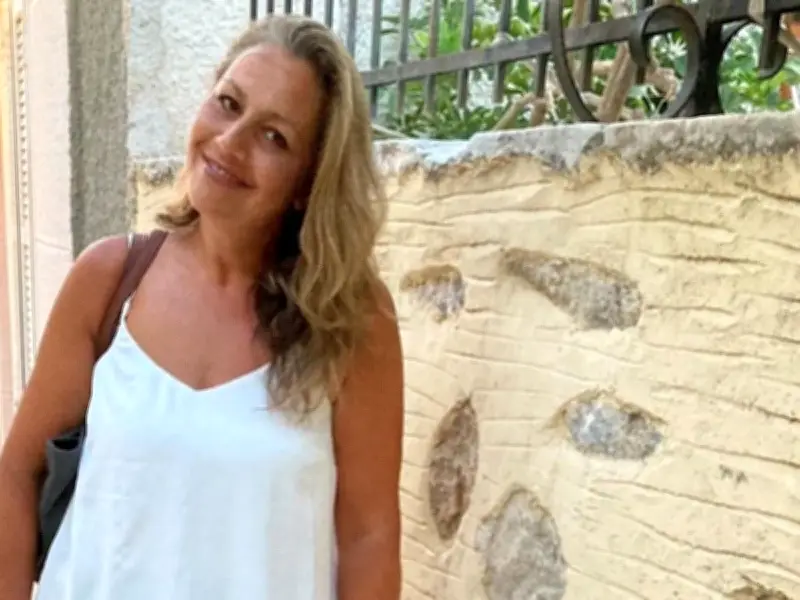
Victoria Stellas, from Anglesey in North Wales, was airlifted by helicopter to Liverpool's Walton Centre after suffering repeated night seizures. Doctors later diagnosed tick-borne encephalitis (TBE), a viral infection spread by the bite of an infected tick. She had visited the Greek island of Syros in 2019, around 27 miles west of Mykonos.
After her return home, Victoria began having seizures at night. In hospital, she said "no one knew" what was wrong. "I just kept on having seizures and no-one knew what was wrong. It was an unusual infection, and they didn't have the experts, I think, to diagnose this."
She was placed in an induced coma for 42 days at The Walton Centre, a specialist neurology hospital. "Altogether it was about six months from when I was in hospital, the treatment afterwards. Sometimes, I just keep quiet. I was outgoing before," she said.
What is tick-borne encephalitis?
Tick-borne encephalitis is caused by a virus carried by ticks – blood-feeding parasites that attach to a host's body to feed. According to the NHS, ticks infected with TBE can be found across Asia and Europe, including the UK, Russia, China and Japan, although the risk of contracting the infection in Britain remains "very low".
Symptoms of TBE
Most people infected with TBE do not develop symptoms, but some experience a high temperature, tiredness, headaches, aches and nausea. In more severe cases, the infection can spread to the brain, leading to:
- A stiff neck and severe headaches
- Seizures
- Pain when looking at lights
- Behavioural changes
- Confusion or slurred speech
- Weakness or loss of movement
Memory loss and losing her jobs
The condition left Victoria with an impaired memory and cost her her jobs – she worked in a pub and as a teaching assistant. When she returned to work, she "couldn't remember the names" of children and staff. "Tell me a job that doesn't require memory? Everything you do in life requires a memory. Shopping, working, travelling," she said.
Victoria explained that she could "recognise everyone" but could not recall their names, and continues to face this problem.
Vaccine and ongoing treatment
The NHS advises people visiting countries where TBE is a risk to get the vaccine, but it has to be paid for. Victoria, who was born in Greece, said she was unaware of the vaccine and believes she may have been bitten at her brother-in-law's home, where he keeps goats. She now takes 15 to 18 tablets a day.
Raising awareness
Victoria has since shared her story annually with students at Bangor University, close to Anglesey, and said her seizures are now less frequent. She credits her family and friends for their support. Her mother, Liz Stellas, said insect bites can cause "profound change" and suggested there is a lack of awareness about the condition.
Further details about TBE are available on the NHS website.