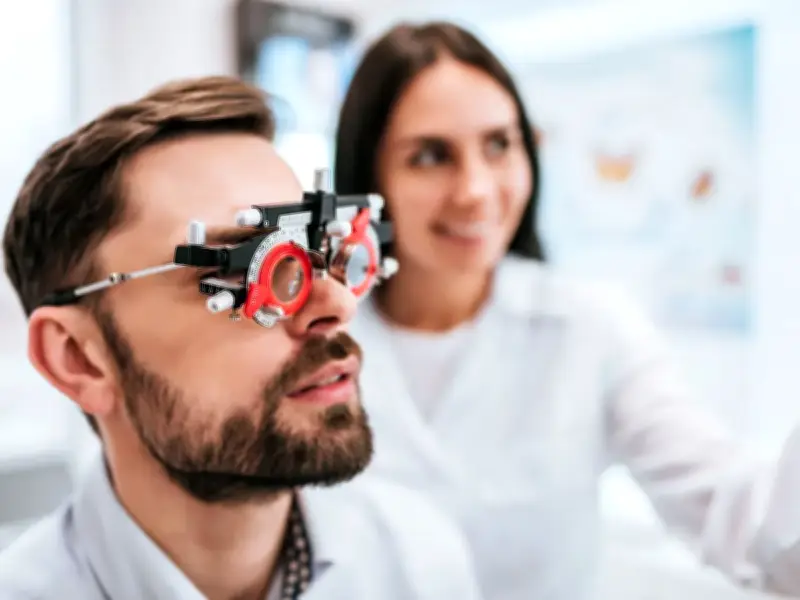
Glaucoma typically develops without symptoms and accounts for 10% of all blindness, despite being detectable through routine sight tests with an optometrist. The Association of Optometrists (AOP) is calling on the Government to ensure glaucoma is detected early by offering outreach services in high-risk areas.
What is glaucoma?
Glaucoma is an eye disease that affects the optic nerve, the main nerve between the eye and the brain. The NHS explains that glaucoma is usually caused by a build-up of pressure in the eye, which occurs when the fluid in the eye does not drain as it should. This increased pressure damages the optic nerve and can lead to vision loss.
There are several types of glaucoma, including primary glaucoma, the most common type that usually develops slowly over many years; secondary glaucoma, typically caused by another condition or eye injury; and childhood glaucoma, a rare type affecting young children.
Warning signs of glaucoma
Glaucoma usually affects both eyes but can be worse in one eye. When symptoms are present, the NHS says they can range in severity and include intense eye pain, a red eye, tenderness around the eyes, seeing rainbow-coloured circles around bright lights, blurred vision, feeling sick or being sick, and a headache.
Research shows that the populations at highest risk of glaucoma are the least likely to attend routine sight tests. The AOP warns that widening health inequalities are leaving thousands of people at risk of irreversible vision loss.
Who is at extra risk?
Adam Sampson, Chief Executive of the AOP, said: "We are seeing preventable sight loss become yet another measure of inequality in the NHS – but it does not need to be this way. Glaucoma is an eye condition that can be detected early and managed effectively, yet our data shows thousands of people are being diagnosed only after irreversible damage has occurred."
Black African and Black Caribbean communities face around three times the risk of glaucoma, with high-risk groups often developing the condition around a decade earlier. Both groups were also more likely to say they did not know that regular sight tests are advisable, at 9% and 14% respectively, compared with 6% of all adults.
Victor, a 46-year-old Black African man from Belfast, had been experiencing blurry vision for months but had not heard of glaucoma and thought it was nothing to worry about. He said: "Sometimes it would come and go. So, I thought it was just normal." Following a local Glaucoma UK event, Victor was given an urgent referral by an optometrist after it was discovered that pressure in his left eye was more than double what is considered normal. He said: "That was the first time I heard about glaucoma. The information gave me that boldness to go and get it tested. I think something would have gone wrong with my eyes. So, it's good that I did."