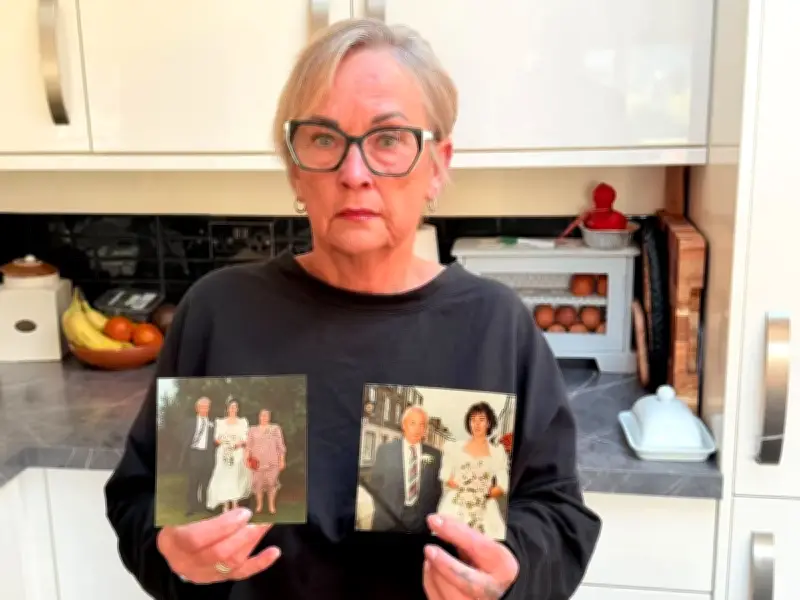
A retired psychiatric nurse from north west Wales, who lost her father, mother and sister to brain tumours, is calling on the Welsh Government to invest urgently in research into the disease. Iola Williams, 68, of Llanfrothen, says the three diagnoses in one family were all random and not hereditary, but the experience has left her with severe health anxiety.
Her father, William, and sister, Helen, both died within weeks of being diagnosed with glioblastoma, an aggressive form of brain cancer with a prognosis of 12 to 18 months. Her mother, Eleanor, died from a non-glioblastoma brain tumour. Iola, a great-grandmother, says: “I’d lost my dad, my mum and now my little sister to brain tumours. Lightning didn’t just strike twice in our family, it struck three times. It beggars belief.”
Father and sister died within weeks of diagnosis
William, a retired groundsman, was diagnosed in August 2004 after collapsing while gardening for a local lady. He had six brain tumours and, despite radiotherapy and chemotherapy, died eight weeks later, aged 72. Iola says: “Dad was fit and healthy. He’d been active all his life as a groundsman. The speed at which it all happened was horrendous. He was gone in four weeks.”
In August 2013, Eleanor, then 74, was diagnosed with a brain tumour. She had recovered from breast cancer 11 years earlier, but the cancer returned as a brain tumour. Her first symptoms were headaches and changes in her handwriting. During treatment, steroids thinned the lining of her bowel, leading to sepsis. She died in August 2014, 12 months after diagnosis.
In January 2024, Iola’s sister, Helen, was diagnosed with glioblastoma on her 56th birthday after suffering seizures. Helen chose not to have treatment, having seen what it did to their father. She died 12 weeks later, leaving a daughter, son and four granddaughters.
Doctors say the tumours were random
Despite three brain tumours in one family, doctors told Iola the tumours were not hereditary or genetic. She says: “They were completely random. It’s unfathomable.” Iola now fears for her children, grandchildren and great-grandchild, saying: “What’s to say it won’t happen a fourth time?”
Brain tumours are the leading cause of cancer death in people under 40 in Wales. Survival rates remain low, with only 17.2% of patients surviving five years or more after diagnosis, compared to 61.5% across all cancers. Around 3,200 people are diagnosed with glioblastoma in the UK each year, according to Brain Tumour Research.
Call for increased investment in research
Iola supports Brain Tumour Research’s manifesto for Wales, which urges the Welsh Government to commit to improved access to clinical trials and increased investment in research. She says: “My message to them is to act now. People are dying all the time. And nothing has changed in 20 years.”
Dr Karen Noble, director of research and policy at Brain Tumour Research, describes Iola’s story as one of cruel coincidence. She says: “To lose three members of one family is extremely rare and brain tumours are typically not hereditary. Just one in three patients survives for more than a year following diagnosis and no new treatments for glioblastoma have been approved since 2005. Despite this, just 1% of the national spend on cancer research was allocated to brain tumours between 2002 and 2021.”
The charity is calling for national investment in brain tumour research to increase to at least £45 million a year, to close the gap with funding for other cancer types such as leukaemia. Iola’s appeal follows a tearful TV appeal by swimmer Archie Goodburn, 25, who was diagnosed with three inoperable brain tumours two years ago, which led to an action plan and a new national brain cancer clinical lead being announced.