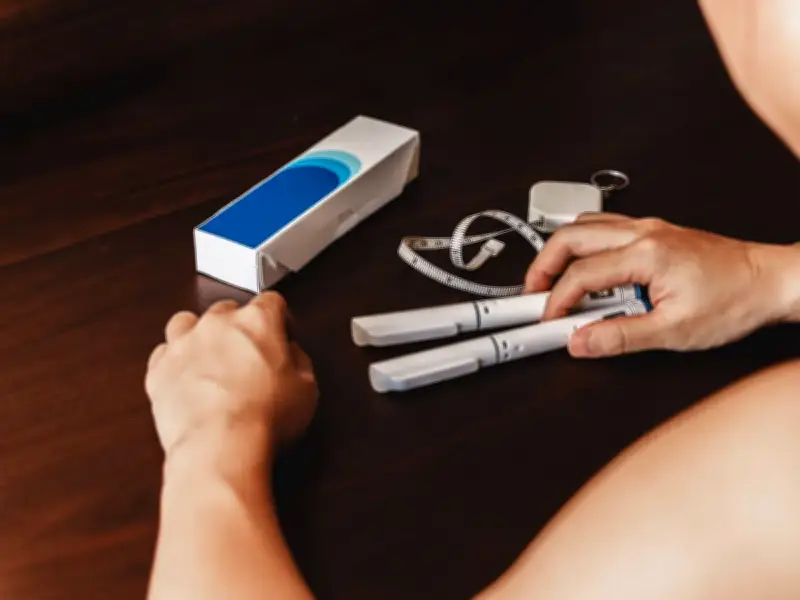
Monthly enforcement actions against illicit weight-loss drug sellers have soared by 684%, new data shows, as experts warned that consumers' health could be “at risk”.
According to data from Corsearch, enforcement actions against illicit GLP-1 listings across its monitored portfolio increased 684% between February and July 2026. Online marketplaces accounted for 58% of all detected infringements, followed by social media at 27%.
Scale of the counterfeit threat
Experts speaking to Newspage said there was increasing concern about a new wave of fake slimming pills and bogus injections being sold, with criminals exploiting everything from bargain prices to glowing online reviews to lure customers in.
According to the data, 35% of GLP-1 enforcement actions involved listings offering medicines without a prescription, the leading infringement type. Trademark infringement followed closely, accounting for 33% of actions.
Industry reaction
Mike Sweeney, vice president at Corsearch, said the scale of the counterfeit weight-loss problem is staggering. He said: “Counterfeit GLP-1 medicines are already a rapidly growing threat online. Our enforcement data shows just how quickly criminal activity is responding to demand, with monthly enforcement actions across our monitored portfolio increasing by 684% between February and July.”
Sweeney added: “The arrival of weight-loss pills creates another opportunity for criminals to exploit consumer demand. Counterfeiters don't care whether they're copying an injection pen or a tablet, they follow demand. As more legitimate products enter the market, we should expect illicit sellers to broaden their operations and impersonate trusted brands across multiple formats.”
He continued: “What's particularly concerning is the extent to which criminals are attempting to bypass legitimate prescription routes. More than a third of the GLP-1 infringements we identified involved offers to sell without a prescription, showing how consumers looking for easier or cheaper access can be targeted.”
Sweeney concluded: “The challenge now isn't just counterfeit weight-loss jabs; it's counterfeit and illicit weight-loss medicines in every form. That's why consumer awareness has never been more important. Buying from regulated providers and being sceptical of deals that seem too good to be true can make the difference between receiving genuine treatment and taking an untested counterfeit product.”
Fake reviews and consumer advice
Daniel Mohacek, CEO of TruthEngine, said he was increasingly concerned about how criminals could fake five-star reviews to make dodgy sellers look legitimate. He said: “With up to half of online reviews now showing signs of being suspicious, consumers need to be cautious online generally. In a sector like this, the consequences of getting it wrong can be far more serious than simply losing money.”
Mohacek added: “If something looks too good to be true, it may well be. A wall of glowing five-star reviews should not automatically reassure you. In some cases, it should actually be treated as a warning sign.”
Francis West, CEO of Security Everywhere, reminded consumers that the safest place to buy weight-loss drugs is through a registered pharmacy – never a marketplace. He said: “I can't speak to the health side, that's for a pharmacist, but the scam mechanics are exactly what I see across every sector. Criminals go where people are in a hurry and want a shortcut, so a search ad or social post promising quick, cheap access works the same way a fake job offer or fake invoice does.”
West added: “My advice: only buy through a registered pharmacy, never a marketplace listing or a DM sliding into your inbox, and if the price looks too good, assume it's because there's no real product or no real company behind it. Urgency and a bargain together is the tell every time.”
Nouran Moustafa, practice principal and IFA at Roxton Wealth, said the increase in counterfeiters had the potential to put consumers' health “at risk”. She said: “The danger is that convenience creates opportunity for criminals. Once weight-loss medication becomes mainstream, counterfeiters are no longer targeting a niche market. They are targeting millions of consumers who may be actively searching online for quicker, cheaper access.”
Moustafa added: “A fake handbag wastes your money. A fake medicine can put your health at risk. Consumers should treat any seller offering GLP-1 medication without a proper consultation or prescription as an immediate red flag.”
Pharmacies in Great Britain must be registered with the General Pharmaceutical Council, which keeps a public online register.