
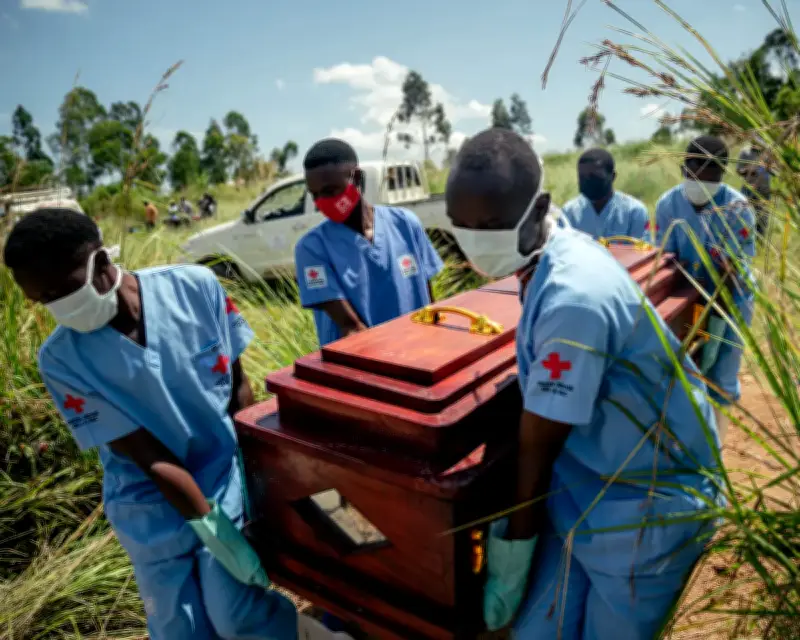
The Ebola outbreak in the Democratic Republic of the Congo (DRC) is on track to be the deadliest ever, according to global health experts. It is already the second-worst Ebola outbreak in history, with the fastest community transmission ever seen. At least 4,900 cases and more than 2,300 deaths have been estimated, giving a mortality rate close to 50%.
Why the outbreak is not getting attention
Despite the severity, the outbreak is not attracting much media or public attention. Compared with the 2014 Ebola outbreak, when Ebola was one of the most Googled terms and covered regularly on broadcast news, the current silence is astounding. Covid-19 fatigue may be a factor, as people are tired of hearing about infectious diseases.
A perfect storm of factors
The spread is hard to contain due to a perfect storm of factors. Most cases and deaths are happening in the community before patients reach hospital, with local health workers reaching only 30% of cases. Children make up a quarter of confirmed cases and almost a third of all deaths. Routine health services, such as childhood vaccination campaigns against measles, have been disrupted, leading to higher indirect deaths. Maternal deaths in Ituri, the worst-hit province, have doubled due to childbirth complications and lack of trained personnel, as well as Ebola infection during pregnancy being linked to foetal loss.
The virus itself is a new species, Bundibugyo, for which there is no effective vaccine or antiviral. Previous outbreaks were the Zaire species. Viral mutation may have made this species more transmissible, as community spread is large and faster than before. The location is also difficult: Ituri province is unstable, with roaming militias and ongoing conflict. The virus may have been spreading for three months before being confirmed, misdiagnosed as malaria or typhoid.
Global political changes hamper response
In the 2014 west Africa outbreak, the US, UK and French governments worked with the World Health Organization (WHO) to escalate a response with military-like coordination. Now, the US is no longer part of the WHO, favouring a go-it-alone response, amid defunding of foreign aid, censorship of scientists, closure of USAID, and the implosion of the Centers for Disease Control and Prevention. Britain has also cut foreign aid. These political choices have consequences for countries with fewer resources to fight the disease.
Hope in vaccine and social science
Oxford University has started human trials of a Bundibugyo vaccine using the same technology as the Oxford-AstraZeneca Covid vaccine. The WHO is sponsoring a clinical trial in the DRC on two existing antiviral therapies. Social science and humanities have been engaged to understand how to reach remote communities and build trust, given the history of colonial health interventions. Budget cuts to higher education are consequential, as outbreaks demonstrate why knowledge and research matter, and how political decisions in one part of the world affect lives in another.




