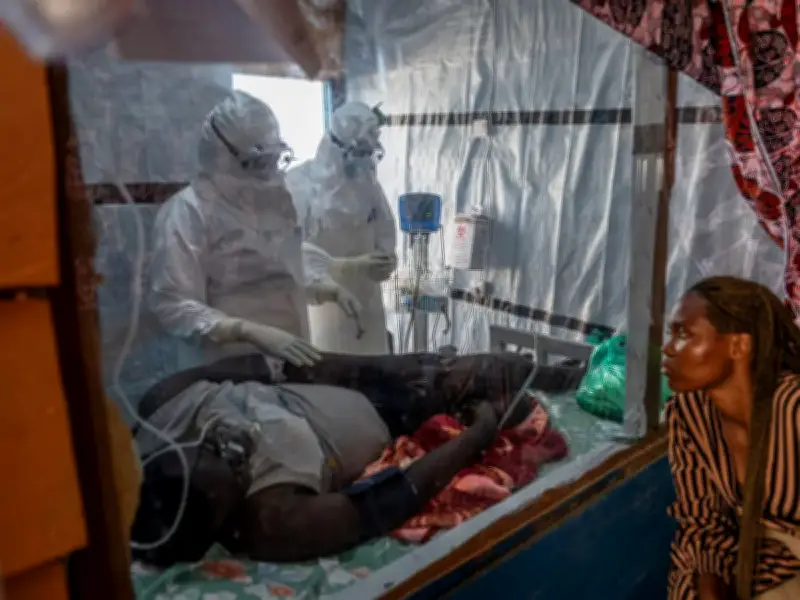
More than 2,300 people have died as the world’s fastest-growing Ebola outbreak became the Democratic Republic of Congo's deadliest on record.
The country's 2018-20 epidemic led to the deaths of 2,299 people. But the latest outbreak has now seen 2,325 deaths recorded since it was declared on May 15. Almost 5,000 infections had also been confirmed, with health officials recording another 101 cases in just 24 hours on Sunday.
Rapid Spread and Warnings
UN humanitarian chief Tom Fletcher warned last week that “the epidemic is killing someone every 30 minutes”, with the outbreak already the fastest growing on record.
The disease had reached six of DR Congo’s 26 provinces, while the World Health Organisation described the rate of transmission as “exceptional”. Its rapid spread has been compared with the devastating West Africa Ebola epidemic of 2014 to 2016.
Comparison with Past Outbreaks
The 2014-2016 outbreak took almost five months to reach 1,000 deaths, according to Reuters. The current crisis passed 2,000 fatalities in around three months, though researchers believed the virus may have been circulating undetected since February.
Adding to concerns was the fact there was no approved vaccine for the Bundibugyo species of Ebola behind the outbreak. It is a particularly rare form of the disease, with only two previous outbreaks known to have occurred.
Vaccine Development and Global Cases
Scientists are racing to develop protection against it, with the UK’s medicines regulator giving permission for the first human trials of one potential vaccine to begin.
Researchers at the University of Oxford were developing the jab using the same technology behind the Oxford-AstraZeneca Covid vaccine, while three other groups were working on alternatives. The WHO was also backing a trial in DR Congo to establish whether two existing antiviral treatments could improve survival rates.
Cases beyond the country had so far remained low. As of August 12, 20 had been confirmed in neighbouring Uganda, while two people were treated in Germany and one case was declared in France.
The WHO's regional director for Africa, Dr Mohamed Yakub Janabi, said: "We are chasing the virus - the virus is ahead of us." The WHO said it hoped transmission could be brought under control within three months, although it warned that would not mean the outbreak itself had come to an end entirely.
Ebola is a rare but deadly viral disease spread through direct contact with infected bodily fluids, including blood and vomit. Early symptoms can include fever, headaches and tiredness before the illness can progress to vomiting and diarrhoea and, in severe cases, organ failure. The latest crisis marked the 17th Ebola outbreak recorded in DR Congo since the virus was discovered 50 years ago.