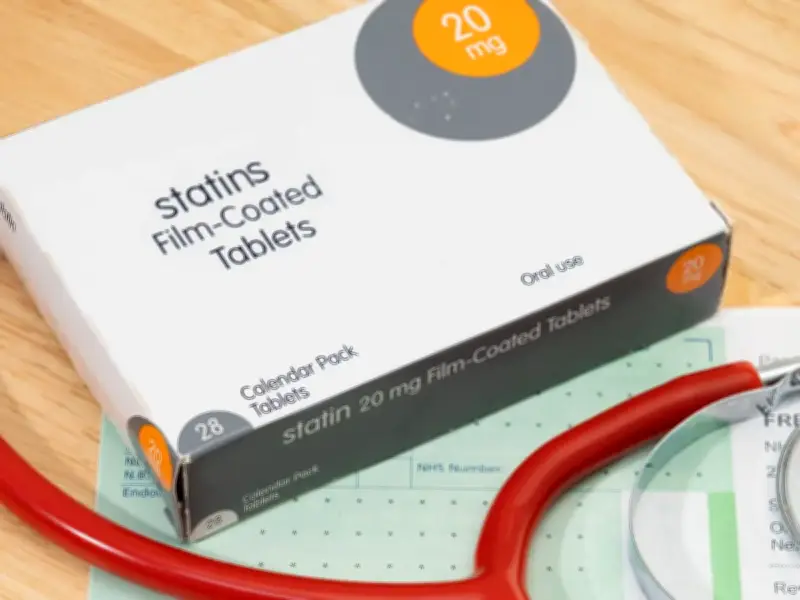
Dr Amir Khan has a message for anyone with high cholesterol, especially if they are taking statins and are struggling. Speaking on the latest episode of his podcast, No Appointment Necessary, with co-host Cherry Healy, the NHS GP and ITV resident doctor discussed the common medical condition after a listener with high cholesterol sent in a question about being unable to tolerate statins.
Cherry read out the question: "Hi, I'm a 71-year-old female with a cholesterol level of eight. I can't tolerate any statins, having tried three different types. I'm worried sick. I will have a stroke or heart attack. Please, can you help me? I'm a non-smoker and a non-drinker."
Familial hypercholesterolemia and statin alternatives
Dr Amir Khan said that if a person has high total cholesterol levels, often above 7 or 7.5, it may indicate familial hypercholesterolemia (FH). It is a genetic condition in which the body produces high levels of cholesterol, and thousands are affected by it.

In the UK, it's estimated that between 220,000 and 270,000 people have FH, which means about one in every 250 people. Even though this condition is quite common, health organisations say that less than 10% of those with FH are officially diagnosed or recognised.
"So the first thing I would say is if you've got a total cholesterol above 7 or 7.5, there's probably a good chance you've got something called familial hypercholesterolemia", Dr Amir Khan said. "So that is where the genetics in your family make you produce high levels of cholesterol. So it's nothing you're doing, it is in your genes."
"Normally, for that, we would refer you to see a specialist in cholesterol, and they can talk you through the options. But there are still options your GP can prescribe for you. So I'm glad you've tried the statins. Don't try anymore. If you've tried three, that's that's enough. Statins are not for you."
Available treatments through GP surgeries
Regarding statins, Dr Amir Khan advises that if a patient has already tried three different types without success or tolerability, they should not continue to try more. Instead, he suggests several alternatives, such as: ezetimibe, bempedoic acid, and inclisiran.
Ezetimibe is an oral tablet that can be prescribed alongside statins or instead of them if statins are not tolerated. Bempedoic acid is another tablet option for those who may tolerate it better. Inclisiran is an injectable treatment that can be administered sporadically. Dr Amir Khan says that these treatments are increasingly available directly through local GP surgeries rather than requiring a referral to a specialist lipid clinic.
"Before these drugs, we had to refer to the lipid or cholesterol clinic," Dr Amir Khan said. "But now more and more of these things are coming into your GP surgery, and there are local GP surgeries working together to provide these services for their patients."
"So the best thing I would advise you to do is go and see your GP first of all, ask about this drug ezetimibe, which they can prescribe without any questions, and see if you respond to that. If not that, then it's bempedoic acid. If not that, then it's an inclisiran injection. There are lots of options available for you."
FH diagnosis and risks
According to the NHS, FH is a genetic disease which results in the reduced clearance of atherogenic LDL-cholesterol ('bad cholesterol') in the blood, and an increased risk of early heart disease. It says: "People with FH have elevated LDL cholesterol levels from birth and children with FH show an increased thickness of their arteries compared to their non-FH siblings by the age of 11, showing the process of atherosclerosis development starts early in life.
"As a result of their FH, the incidence of fatal or non-fatal myocardial infarction without treatment is about 50% by the age of 50 years in men and about 30% by the age of 60 years in women."
The British Heart Foundation says that diagnosing FH begins with a routine blood lipid panel to evaluate LDL cholesterol levels. This is typically followed by specific DNA genetic testing, which can be conducted using a blood sample or a cheek swab. Doctors also assess physical signs and the family history of early heart disease, applying diagnostic criteria such as the Simon Broome or Dutch Lipid Clinic guidelines.