More than 150 clinicians have warned that children face a physical and developmental health "crisis" linked to screen-based learning, in an open letter to two ministers. The group, which includes GPs, ophthalmologists, audiologists, paediatricians and speech and language therapists, has written to Yvette Cooper and Lucy Powell, the health secretary. They describe the absence of any child-focused health scrutiny of "EdTech" as "a serious safeguarding concern" for both departments.
£900 million spent on EdTech each year
In the letter, the clinicians state that £900 million is spent on "EdTech" in English schools per year, but that products are not required to demonstrate they are safe for children's health before they are purchased by schools. The clinicians warned that the EdTech devices and platforms used by millions of people across the UK are not required to meet the same standards as products like toys or food.
They wrote: "No drug, food product or toy is given to millions of children without a single safety check. Yet, astonishingly, EdTech devices and platforms currently used by millions of pupils in schools and for homework every day of the week face no equivalent child-focused health scrutiny."
Nearly one million children affected
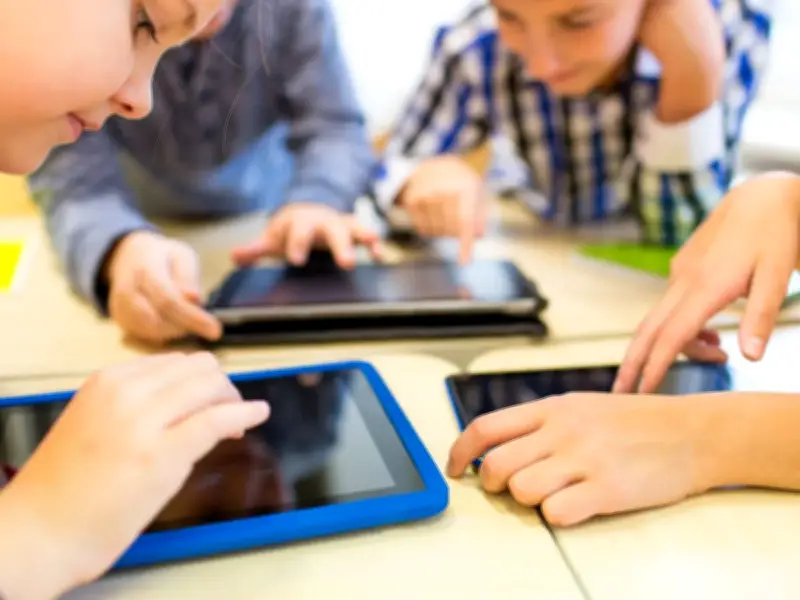
The clinicians cited analysis stating that nearly one million children spend almost every lesson glued to screens of some kind, and that the time spent outpaces the amount recommended in a day. While the time varies by age, parents are generally advised not to allow their children to have more than two hours per day between the ages of two and 12.
As a result of more excessive screen use, the clinicians said, the proportion of short-sighted children has more than doubled since the 1960s. Screen use of three hours per day, they added, would see the average three-year-old miss an estimated 194 conversational turns and 1,139 adult words daily.
Impact on speech and learning
Missed opportunities like this mean more than two million UK children are now struggling with speech and language, and around a third of children start school not ready to learn, according to the clinicians. They raised particular concern for children who have special educational needs and disabilities (SEND), saying they are often "disproportionately steered towards" screen-based learning when they should otherwise have close adult supervision.
Jane Rowland, from the campaign group SafeScreens, said: "No other product is put in front of millions of children without a single safety check, yet screens now dominate the school day and follow children home in the evening. We are gambling with the health and safety of millions of children, every single day." She added: "Before another penny of public money goes into this experiment, ministers must commission a fully independent review of 1:1 devices and EdTech in schools."
Becky Foljambe, from Health Professionals for Safer Screens, said: "Health professionals can't keep prescribing glasses and speech therapy for a problem that schools are making worse. We worry about school meals and sport, as part of ensuring children are in the best possible health in their learning environment and yet we are throwing caution to the wind with these screens, which we now know are adversely impacting on children's development and their learning." Foljambe added: "We now also have the grim knowledge that our most vulnerable children are being pushed onto screens posing as education the fastest, to ease pressures that have very little to do with their health and educational needs."