
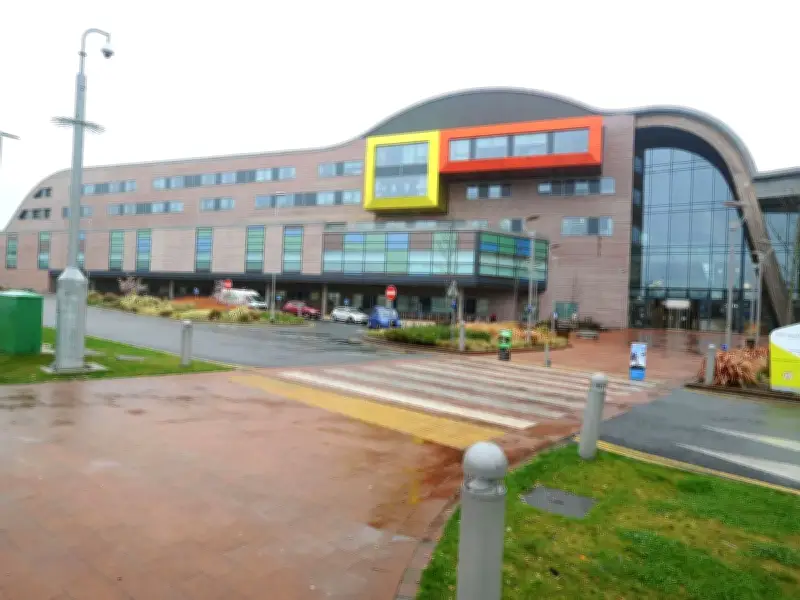
A teenager being treated at Alder Hey Children's Hospital was so hungry and had so little food at home that he was eating the emergency glucose prescribed to save his life during severe hypoglycaemia. Another young person with asthma stopped eating because she was terrified of rats in her kitchen and subsequently developed an eating disorder.
These harrowing stories have been told as a warning from a paediatric doctor in Liverpool that too many children and young people are being harmed because they and their families cannot afford food.
Doctor warns of food insecurity's impact
Ian Sinha, a consultant respiratory paediatrician at Alder Hey Children's Hospital, has spoken of the children and young people he regularly sees in the city's famous hospital who are becoming unwell because of food insecurity.
Mr Sinha explained: "As a consultant respiratory paediatrician, I increasingly see the impact of food insecurity on child health. It changes children's life trajectories and increases long-term risk. When I see preterm babies who have spent months in intensive care, I tell families that nutrition is crucial for preventing future heart and lung disease, yet many are limited to buying the cheapest ultra-processed food."
He added: "Some families of children with cystic fibrosis rely on food banks, yet the parcels often contain almost nothing suitable for children, let alone those living with a life-limiting condition. Support for gluten-free food for children with coeliac disease is being withdrawn, despite uncontrolled disease causing stunted growth and increasing the risk of cancer."
Changing the fundamental biology of disease
The Alder Hey doctor said food security is "changing the fundamental biology of disease", adding that around half the children in the hospital's severe asthma clinic are obese, with greater symptom burden and poorer responses to treatment.
He said: "One teenager with asthma stopped eating because she was terrified of rats in her kitchen and subsequently developed an eating disorder."
The doctor said: "We know that hunger reduces a child's capacity to learn and develop and that food insecurity in childhood is linked to poorer academic, behavioural and emotional outcomes from infancy. From the very beginning of their lives the life outcomes of millions of children are being pre-destined by their exposure to food insecurity."
He pointed to physical signs, noting that height is a strong indicator of general living conditions, including illness and infection, stress, poverty and sleep quality. The height of five-year-olds in the UK has been falling since 2013, and children are also shorter than those in almost all other comparable countries.
NHS data and calls for action
He pointed to NHS data, which shows that around 700 children a year are admitted to hospital with malnutrition, rickets or scurvy in England and how dietary inequalities in children from poorer backgrounds are driving higher rates of problems including obesity, type 2 diabetes and dental decay.
Dr Sinha added: "This evidence represents a profound national failure and speaks to a profound economic and political failure."
His experience of working with children has led Dr Sinha to be involved with the Right to Food Commission, which was established by the Right to Food campaign, led by Liverpool West Derby MP Ian Byrne.
The objective of The Right To Food UK Commission was to shine a light on the unacceptable nature of food insecurity in Britain, map out solutions to endemic food insecurity and apply pressure on politicians and policy makers in all UK jurisdictions, to tackle and end food insecurity in the UK.
The commission's official report was launched at this week's Labour Party Conference, with a special event at the Love Lane Brewery in the Baltic Triangle. The report provides a 'roadmap to food security for all by 2035'.
Dr Sinha, who was on the commission team, said: "Too many children's lives are being hindered before they have even started. The new Prime Minister has stated openly that our politics and economics have failed people over the past 40 years. Nowhere is this more evident than in our collective failure to ensure all of our children are fed.
"However, there is now a glimmer of hope that things will change under the new PM, given his stated focus on addressing the cost of living pressures facing people. We say to the PM and his government that his first priority must mean that he helps support people to access and afford the basic requirements, such as food, needed to give people the foundation they need to get on and progress in their lives.
"We urge the PM to read The Right to Food Commission report, listen to the sobering reality of food insecurity in this country and implement our recommendations. If he is serious about helping to address the cost of living difficulties facing people (and we think and hope he is) then he must take radical action and end food insecurity.
"The Government should take an interventionist approach and develop and introduce a Beveridge style report for the 21st Century. Nothing less will help ensure all our children are able to live healthy lives and have the foundation to realise their potential."




