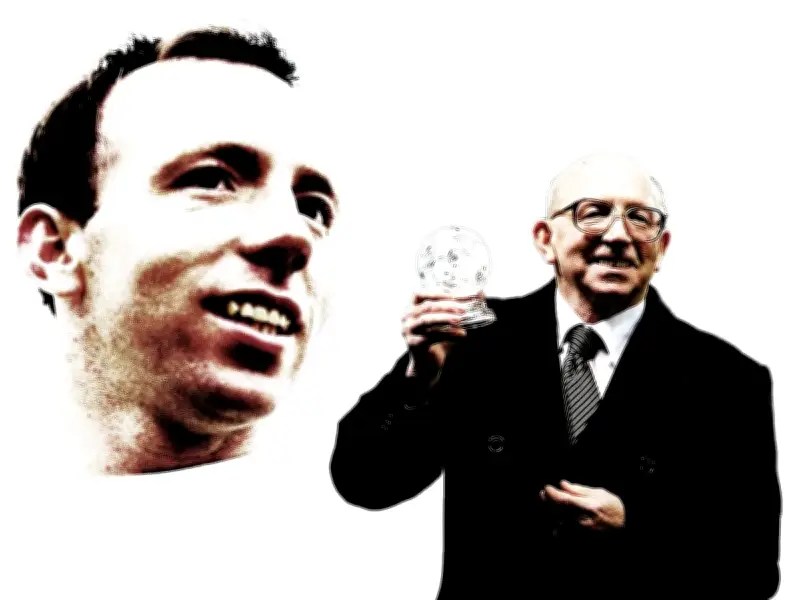
A coroner has written to the Football Association and the government warning of the dangers of heading balls following the death of Manchester United and England great Nobby Stiles. The Collyhurst-born 1966 World Cup winner died in 2020 aged 78.
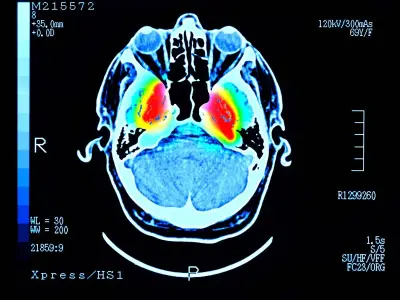
An inquest into Stiles' death heard an examination of his brain revealed that along with Alzheimer's Disease, he had chronic traumatic encephalopathy (CTE) - a progressive brain disease linked to repeated head injuries or blows to the head.
Coroner's report highlights risk to players
Senior coroner Alison Mutch, sitting at Stockport Coroners' Court, ruled the CTE had 'significantly contributed' to his death and that she was 'entirely satisfied' the reason he developed the condition was due to 'repeated heading of the ball'.
Now Ms Mutch has officially raised a series of concerns to prevent future deaths. The Coroners and Justice Act 2009 provides coroners with the duty to make reports to a person, organisation, local authority or government department or agency where they believe action should be taken to prevent future deaths.
Ms Mutch has sent her report to the FA and the Secretary of State for Education, Manchester MP Lucy Powell.
"During the course of the inquest I heard evidence giving rise to concern," the coroner said in her report. "In my opinion there is a risk that future deaths could occur unless action is taken."
The inquest heard evidence that repeated heading of the football caused CTE in Mr Stiles. The evidence was that anyone who repeatedly headed a football was at risk of developing CTE as a consequence. The evidence given was that footballers whether amateur or professional adults and children are still repeatedly heading footballs in training and matches creating a risk of them developing CTE in the future.
Stiles' career and brain condition
Born in Manchester in 1942, tough-tackling midfield dynamo Stiles made 395 appearances for United between 1960 and 1971 and earned 28 England caps, including playing every minute during the legendary World Cup winning campaign of 1966. The inquest into his death heard he may have headed the ball more than 136,000 times during his career.
Neuropathologist Dr Daniel Du Plessis, who examined samples of Stiles' brain after his death was referred to the coroner in 2024, said he had a 'complex mix of conditions', but there was 'absolute proof' he was suffering from 'high stage CTE'.
Ms Mutch, in her report, said Stiles, as a professional footballer, was 'required to repeatedly head the ball both in training and in games'. He died on October 30, 2020, at Manorhey Care Centre in Urmston.
Ms Mutch said: "His health had significantly deteriorated in the years prior to his death. He had become immobile and bed bound prior to his death due to his profound neurological disability. Examination of his brain following his death confirmed an in-life diagnosis of Alzheimer's disease."
"In addition, he was found to have high stage chronic traumatic encephalopathy (CTE), stage 3 Limbic-predominant age related TPD-43 encephalopathy (LATE) and small vessel cerebrovascular disease. All of which contributed to his death. The CTE was caused by the requirement to repeatedly head a football throughout his time playing football."
FA and government respond
The FA, in its response to the report, said Stiles was a 'much-loved player who will be remembered as a 1966 World Cup winner and a devoted family man'. It also detailed civil action being taken in the courts by more than 90 former footballers and the families of deceased players, including the Stiles family.
The association said the heading of footballs was 'an area which is hugely important to us' and that it was supporting research into neurodegenerative disease in football.
"The FA has been a prominent supporter of a great deal of groundbreaking and valuable research into head injuries and brain health in football. We have established expert groups to assist in assessing areas for development," it said.
"The FA introduced a new rule to phase out deliberate heading in grassroots football across under-7 to under-11 over the course of the following three seasons in line with the parameters established by IFAB [the International Football Association Board]. The removal of deliberate heading at under-11 level from the 2026-27 season is the culmination of that phased process."
Civil proceedings were issued in the High Court in 2022 on behalf of more than 90 former footballers and the families of deceased players, including the Stiles family, against football's governing bodies, including The FA.
"The issue of causation is a central part of those proceedings and will be the subject of detailed expert medical, technical, and biomechanical evidence, which will be considered and examined in great detail as part of the litigation process."
The issue of brain health and the impact of heading in football is vastly complex and a matter we take very seriously. It continues to be the subject of ongoing medical and scientific research. We remain committed to supporting this research and, where appropriate, issuing guidance and guidelines with supporting educational measures where we have authority to do so. We are aware of the public importance of the issue and keep it under constant review.
The Department for Digital, Culture, Media and Sport said 'mitigating the causes and effects of head injuries in sport' was 'a priority' of the Government. "Beyond preventative measures, DCMS is committed to ensuring former players with neurodegenerative diseases, and their families, receive the support they need," added the department in its response.
The Government said it has also asked the Industrial Injuries Advisory Council to 'look at whether dementia in footballers should be classed as an industrial injury'.