
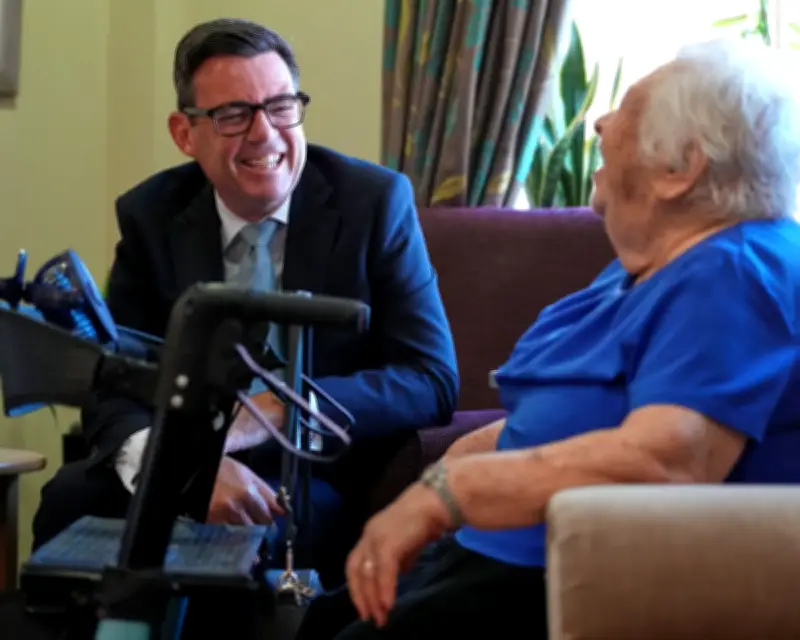
Prime Minister Andy Burnham has stated that the assisted dying debate must wait until palliative care and social care are reformed. Speaking during a visit to a care home in north London on Wednesday, he said it would be “very challenging” to introduce assisted dying legislation until the care system is improved.
Prioritising End-of-Life Support
Burnham, who previously indicated he would likely vote for a private member's bill on assisted dying, now believes the priority should be to enhance end-of-life support. He told reporters: “I take the view that that debate – and I don’t say that there shouldn’t be a debate at some point about those issues – personally, I think there’s something that needs to happen first. That is the fixing of the funding of palliative care and social care.”
He added: “I think it is very challenging to introduce that wider debate in a context of people not receiving that care and having the peace of mind about that care. That’s the way I kind of see this, and that’s the position that I will stick to.”
Previous Stance and Personal Experience
When Burnham was an MP, he abstained from a 2015 vote on assisted dying due to concerns over safeguards and pressure on individuals. However, in 2024, he said his family experience – his father Roy was in a care home with dementia – had changed his view. “I think we do allow people to suffer and families to suffer too much,” he said at the time. He caveated his support, insisting that hospices should be “properly funded and sorted out” before any new law is implemented.
Funding and Cross-Party Approach
Burnham indicated that his plan would likely require tax rises, though integrating the NHS and care system could initially help. He repeated his promise to stick to Labour’s manifesto on tax for this parliament. “I think more is possible from within existing resources,” he said. He also noted that life had “moved on” from his 2010 proposals as health secretary, suggesting a “more voluntary approach” may work now.
The prime minister has invited the Conservatives and Liberal Democrats for talks in Downing Street to find common ground. He acknowledged that compromises may be needed: “We are in a difficult world from a financial point of view. I can feel whatever I want to feel, but if I want to persuade others and get a cross-party consensus, you don’t just go in and say: ‘It’s got to be my way, and that’s it.’” Burnham added that in an ideal world, nobody would have to sell their home to pay for care.
New Developments
Burnham announced that Louise Casey will bring forward her independent review into social care options by a year, to summer 2027. He also confirmed that the fair pay agreement for care staff will begin to bring the sector closer to NHS standards. Yvette Cooper, the health secretary, will appoint a dementia tsar this summer.




