
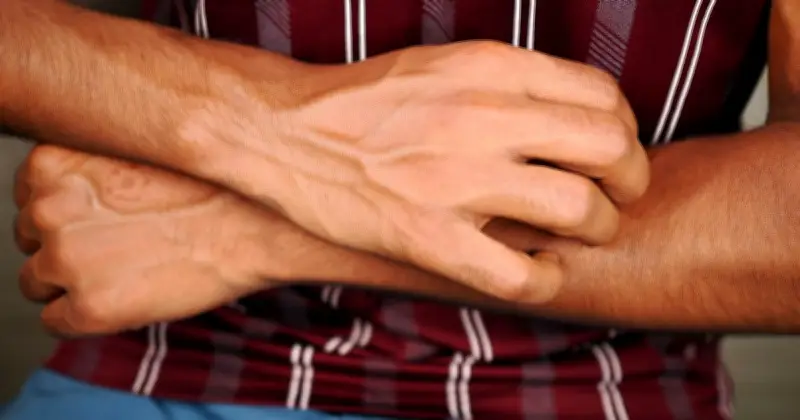
Brits with 24 skin diseases may be able to claim Personal Independence Payment (PIP), according to the latest official figures from the Department for Work and Pensions (DWP). PIP is a benefit paid out by the DWP that can help with extra living costs if you have both a long-term physical or mental health condition or disability, and difficulty doing certain everyday tasks or getting around because of your condition.
How PIP works
PIP comes in two parts: daily living and mobility. The daily living component is based on whether you're able to do a range of household tasks like washing and cooking, while the mobility component is based on your mobility and travel requirements. It's available to people aged 16 and over and under State Pension age. You'll continue getting it beyond that point if you have an approved claim, but you generally can't make a new claim after reaching State Pension age.
PIP is paid out at two rates, depending on your needs. For daily living, the lower rate is £76.70 per week, while the higher rate is £114.60 per week. For the mobility part, the lower rate is £30.30 per week, and the higher rate is £80. It means you can get £194.60 per week in total if you meet the eligibility for the higher rate on both.
Skin diseases covered
Below is the full list of skin diseases that were identified in the last quarterly totals to July 2026 as the primary disabling condition on successful PIP claims that unlocked the daily living component, the mobility component, or a combination of the two:
- Cellulitis
- Infections - Other / type not known
- Acne vulgaris
- Eczema - varicose
- Eczema (dermatitis)
- Papulosquamous and inflammatory rashes - Other / type not known
- Psoriasis
- Rosacea
- Urticaria
- Bullous disease - Other / type not known
- Dermatitis herpetiformis
- Epidemolysis bullosa
- Pemphigoid
- Pemphigus vulgaris
- Blood vessels/lymphatics - Other diseases of / type not known
- Leg ulcers (arterial)
- Leg ulcers (venous)
- Lymphoedema
- Pressure sores
- Venous insufficiency - chronic
- Collagen and elastic tissue - Other diseases of / type not known
- Ehlers Danlos syndrome
- Burns
- Skin disease - Other / type not known
Eligibility and assessment
Many people were awarded the enhanced rate for both components. However, it's important to note that PIP is not awarded on the basis of a diagnosis alone; entitlement depends on how a long-term health condition or disability affects someone's ability to carry out specific daily living and mobility activities, rather than the specific condition itself, as per The Daily Record. This assessment is made by the DWP based on independent medical advice.
Northern Ireland has PIP, and though it's a devolved matter, the rules largely run in parallel with those in the rest of the UK. PIP has been replaced with the Adult Disability Payment (ADP) in Scotland, though it also has most of the same eligibility criteria.




