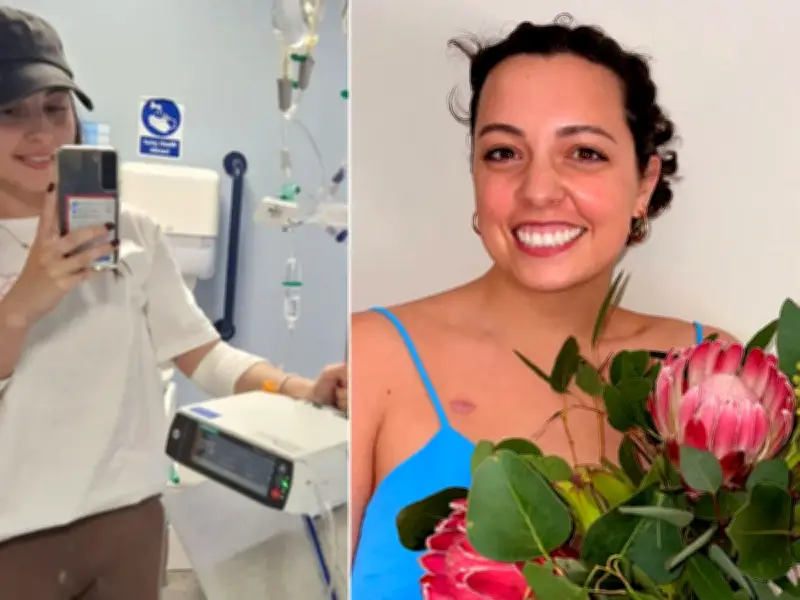
Up to 95 percent of higher-risk women under 50 are being missed by NHS breast cancer screening criteria, according to an alarming new report, with three young patients sharing their diagnoses with The Mirror.
Screening age and rising rates
Women over 50 are offered routine mammograms, but since the early 1990s, the rate of breast cancer in women under 50 has soared by 20 percent, making it the leading cause of cancer-related death among women aged 25 to 49 in the UK. Under National Institute of Health and Care Excellence (NICE) guidelines, women under 50 can only be referred for screening if they have a strong family history or diagnosed genetic mutations, such as BRCA1.
However, a study by Cambridge University and the Institute of Cancer Research, based on a new risk assessment tool, identified eight times as many women under 50 who developed the disease. Seventy percent of women under 50 who develop breast cancer have no known family history.
Lily's story
Lily Ward, 27, a hairdresser from Suffolk, had an itch on her breast before noticing a lump the size of a blueberry. Her doctor initially thought it was a fibroadenoma and assured her it was nothing to worry about. She was told to come back if it got bigger. Three months later, she returned and was cleared after an ultrasound, and the same happened on her third visit three months later.
Asked about family history, she told doctors there was nothing from her mum's side but a strong history of cancer on her dad's side. By her fourth visit, the lump was significantly bigger and her nipple had changed. Lily saw a different consultant and was told it needed to be removed, but there was still nothing to worry about. Just over a year later, Lily underwent surgery and was horrified to learn it was cancer, another lump had been found underneath, and it had spread to her lymph nodes.
CT scans, MRIs, and blood tests revealed she has the BRCA2 gene mutation. She had a double mastectomy in November, six months of chemotherapy and immunotherapy, and three weeks of radiotherapy after surgery. She is now waiting for reconstruction surgery. She decided to share her cancer journey publicly to help others her age, saying: "I felt so alone going through this at such a young age that I thought if I could help anyone similar age to me not to feel alone via my page then that would be amazing, so I changed my page to public."
"There definitely needs to be more done for testing younger people and acknowledging that they can get breast cancer young," she added.
Laura's story
Laura Marfell-Williams turned 50 on May 18 and was just on the cusp of being eligible for screening when she found a lump on her breast on May 29. Laura, a travel PR from Norfolk, said she could have easily missed it. She was diagnosed with breast cancer after a mammogram, ultrasound, and biopsy, and three further lumps were found on her other breast.
"Based on the conversations that I've had with people as a result of my diagnosis, the amount of other people my age, or a couple of years either side that I didn't know had breast cancer, and it seems that either they picked up purely by chance or because they felt it. I definitely think they need to lower the age for the screenings," she said.
Alex's story
Alex Reddington was diagnosed with breast cancer in April 2025 aged just 26, and is now coming to the end of her treatment over a year later. Alex, who works in commercial services for ITV and lives in London, found a lump in her left breast while in the shower. As a swimmer, she put it down to an injury from intense swimming sessions a few days before.
Alex revealed that seeing Lorraine Kelly's breast cancer awareness promotion stickers around her office prompted her to check her breasts. After three weeks, the lump was still there, and she booked in to see her GP. "I'd never thought to check my breasts before and I've never had any history of breast cancer in my family and no genetic dispositions, I was perfectly healthy up until I was diagnosed with cancer. I never considered breast cancer would have been something to consider but when I saw it [the lump] I thought I should go and check it," she said.
Alex was left in shock when she was officially diagnosed after mammograms and a biopsy. She believes the age for testing should be lowered, calling 50 "too old" to start getting checked. Since documenting her journey, she has shared tips and information to younger women on how to check their breasts and what signs to look out for. After 15 rounds of chemotherapy and radiation therapy, she is on the road to recovery: "It's definitely lingering, but it's momentum in the right direction."
Expert response
Dr Sowmiya Moorthie, senior strategic evidence manager at Cancer Research UK, told the Daily Mirror that more needs to be done to give younger women the tools to manage their personal risk, but that change needs to be managed responsibly. "Exploring different ways to identify women with a higher risk of breast cancer could help people receive more personalised care. The current UK approach, which relies on women under 50 self-presenting, misses many women with a higher risk of breast cancer who could benefit from targeted support and guidance on how to manage their risk," she said.
A NICE spokesperson said that despite the findings, there are no plans to update screening guidelines. "NICE welcomes the findings of this study and recognises the potential of multifactorial risk models in improving the identification of women at increased risk of breast cancer in the future," they said. "However, the current evidence does not warrant a change to our existing familial breast cancer guideline at this time."