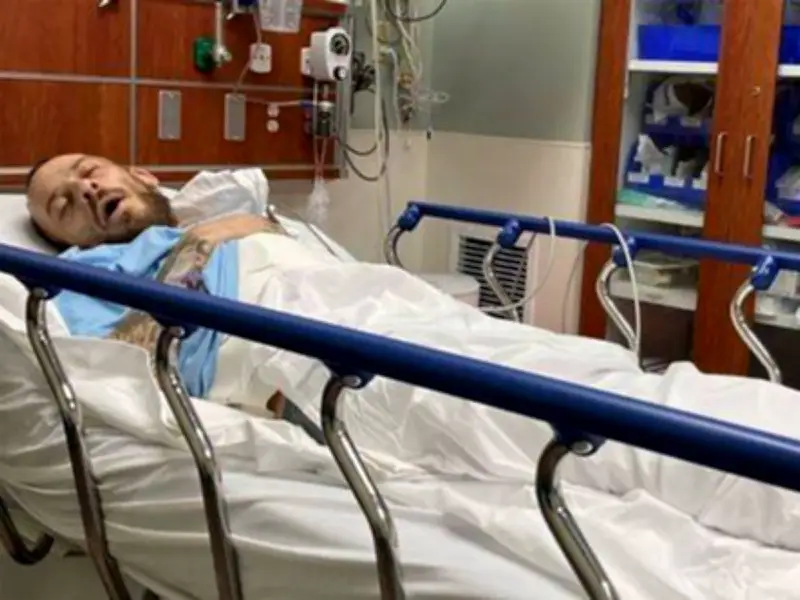
Anthony Thomas 'TJ' Hoover, a 36-year-old man declared brain dead after a cardiac arrest caused by a drug overdose, reportedly regained consciousness and began crying as surgeons were preparing to remove his organs for transplant at Baptist Health Richmond Hospital in Richmond, Kentucky, on October 25, 2021. The incident has sparked federal and state investigations into the oversight of organ procurement organizations.
Family Told to Remove Life Support
Hoover was rushed to the hospital after suffering cardiac arrest from a drug overdose. His sister, Donna Rhorer, stated that doctors informed the family the following day that Hoover exhibited 'no reflexes' and 'no brain activity, no brain waves.' Based on the medical team's assessment, the family made the heartbreaking decision to withdraw life support. Hospital staff then informed the family that Hoover had registered as an organ donor, leading them to proceed with organ procurement procedures.
Waking Up During Surgery
During the 'honor walk' — a ceremony to honor organ donors — Rhorer noticed her brother's eyes opening and tracking family members across the room. However, doctors dismissed this as 'just reflexes' and 'a normal thing.' Rhorer recounted: 'We had his honor walk Friday afternoon. During his honor walk, his eyes started opening up. He was tracking. His eyes were tracking us around. We were told it was just reflexes, just a normal thing. Who are we to question the medical system?'
As medical personnel prepared to remove Hoover's heart for transplant, he suddenly regained consciousness. Rhorer described the moment a surgeon emerged from the operating room and said Hoover 'wasn't ready' for the operation. 'Probably about an hour into [the surgery], the doctor came out and got us. He said he wasn't ready. He woke up,' Rhorer told WKYT News. She also revealed that Hoover had woken up during a heart catheterization earlier that morning, but the family was not informed — a fact that would have contradicted the brain death diagnosis.
Ongoing Care and Investigation
Despite waking up, doctors advised Rhorer to take Hoover home to keep him comfortable, as his prognosis remained grim. However, three years later, Rhorer continues to care for her brother, who struggles with walking, balance, speech, memory, and vision due to the cardiac arrest and severe drug overdose. It was not until January 2024 that a former employee of Kentucky Organ Donor Affiliates (KODA) contacted Rhorer, alleging that Hoover was 'thrashing' on the operating table and 'crying visibly' during the attempted organ harvest.
Hospital and Regulatory Response
Baptist Health issued a statement emphasizing patient safety as their 'highest priority' and stating, 'We work closely with our patients and their families to ensure our patients' wishes for organ donation are followed.' The incident has prompted federal and state inquiries into the oversight of organ procurement organizations, raising questions about protocols for confirming brain death and communicating with families.