
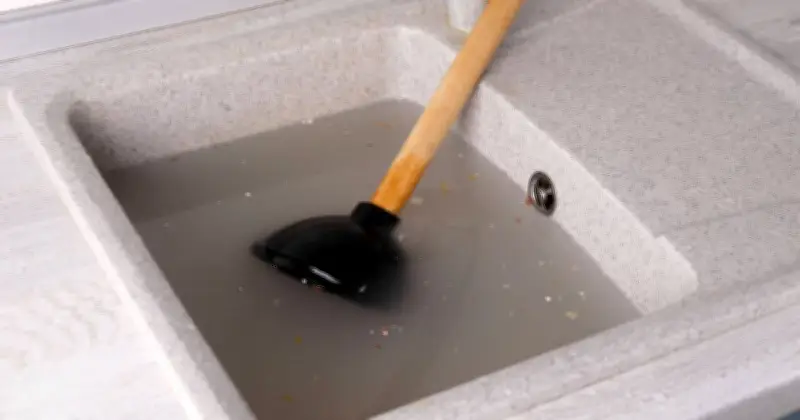
Seven plumbing and bathroom experts have agreed on a simple, low-cost first step to clear a smelly drain: pouring boiling water down it. This method can help melt and loosen grease or scum that may be causing the blockage.
Boiling water recommended by all
Andy Ellis, shower and bathroom specialist at Vidalux, said: "It can help fix drain clogs by melting and loosening any grease or scum that is in the pipes." Olivia Young, cleaning specialist at Astonish, agreed: "Start by pouring a kettle of boiling water down the drain to loosen residue."
Jess Thomas, managing director of Drainage Central, suggested doing it in stages: "Fill your kettle with the maximum amount of water that it can hold and boil it. Slowly pour the water down the blocked drain in two to three stages, allowing a few seconds between each stage to give the water time to work. This can be repeated if needed, and adding washing-up liquid can help if you think that the blockage is caused by grease."
A specialist at Plumbworld agreed: "One of the easiest cleaning hacks is to pour boiling water down the drain regularly to help dissolve grease."
Baking soda and vinegar as a popular second method
Six out of seven experts also recommended a combination of baking soda (or bicarbonate of soda) and white vinegar. James Roberts, director of Sanctuary Bathrooms, said: "Using a solution of baking soda, vinegar, and water can easily unblock a bathroom sink. Vinegar's acidic nature enables it to dissolve dirt, grease, grime, and eliminate bacteria, making it an ideal cleaner for your bathroom."
Andy at Vidalux recommended: "Pop in about four tablespoons of bicarbonate of soda, pour over roughly 250ml of white vinegar, let it fizz for five to 10 minutes, then flush it through with more boiling water." Olivia at Astonish suggested: "Add half a cup of bicarbonate of soda, followed by half a cup of white vinegar, and let it fizz for around 10 minutes before flushing with more boiling water."
Plumbworld backed this method: "For more stubborn blockages, a natural mixture of baking soda followed by white vinegar can create a fizzing action that loosens debris." However, Jess from Drainage Central warned: "Leaving the two to sit in a drain for too long can cause them to harden and add to the blockage, and the acidity of vinegar may corrode older, metal pipes."
Prevention and tools
Several experts highlighted the importance of preventing blockages. Andy at Vidalux said: "The trick is to keep on top of them before they get bad. Once a month, pull out any hair or gunk you can see, then pour boiling water down to clear things through." Olivia at Astonish recommended drain covers: "A simple drain cover can catch hair before it causes problems." Plumbworld suggested strainers in the kitchen: "Regular use of drain strainers is also a great preventive measure to stop hair and food particles entering the pipes."
If boiling water and baking soda do not work, more hands-on tools may be needed. Aspect's drainage engineer recommended a drain snake: "Carefully extract any obstructions you find using a drain snake, but be careful, as using too much pressure with a drain snake can cause damage to plastic pipes." Plumbworld added: "If you need a tool, a manual drain snake or a plunger designed for sinks can help physically remove clogs without harsh chemicals." Jess from Drainage Central suggested a low-cost DIY option: "You can use a wire coat hanger to make a homemade drain snake to attempt to fish out the blockage or dislodge it. Bend the wire of the hanger into a hook, and insert this into the drain to remove clogs."
Caution with chemical cleaners and other hacks
Experts urged caution with chemical cleaners. Aspect's drainage engineer warned: "Caustic soda or 'lye' (sodium hydroxide) is a type of corrosive unblocker that can eat away at uPVC pipes when used excessively. Unless the crystals fully dissolve and clear the blockage right away, they can harden like cement - creating an additional blockage. You may then need to replace the pipe entirely." Plumbworld advised avoiding harsh chemicals altogether: "Enzyme-based drain cleaners like Bio-Clean or Green Gobbler break down organic matter safely without damaging your pipes. Avoid chemical-heavy cleaners where possible to protect your plumbing and the environment." Jess from Drainage Central added that bleach should be a last resort: "Bleach should be used as a last resort, as it can corrode some pipes."
Other household remedies suggested by experts include salt and lemon juice, effervescent tablets, washing powder, vodka, or Coca-Cola. These can help with upkeep or clearing minor blockages, but the boiling water method remains the first step recommended by all seven experts.




