A Frankfurt Airport worker has died after contracting malaria from a mosquito believed to have been trapped on a plane. Five other employees were taken to hospital following the rare outbreak.
Outbreak traced to imported mosquito
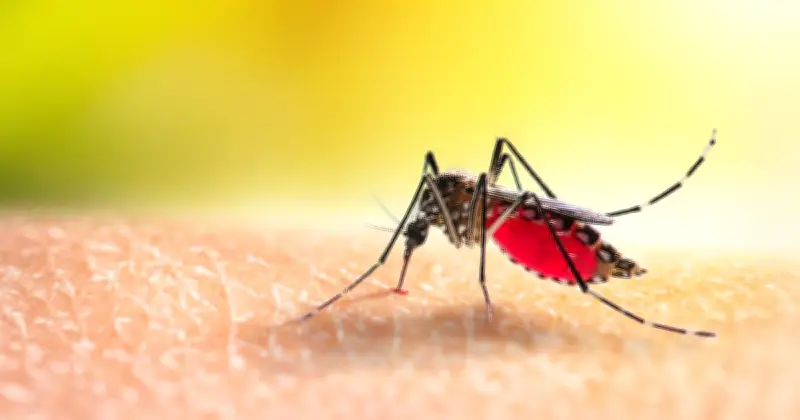
The employees contracted the disease between July 4 and July 6 this year. According to the Robert Koch Institute, Germany's national public health and research agency, the likely cause was an imported Anopheles mosquito.
The institute confirmed that one worker died while five other patients are currently receiving medical care for the form of malaria known as airport malaria.

Fraport response and measures
Airport operator Fraport said: "A total of six employees have contracted a form of malaria known as airport malaria in connection with their work at the airport."
"Sadly, we must confirm that one employee has died as a result of the infection. We have provided comprehensive information to all employees and encourage them to consult a doctor if they experience any symptoms," they added.
"Employees are also advised to inform their doctor that they work at the airport and that cases of airport malaria have been reported at Frankfurt Airport, to help ensure they receive appropriate medical examination and treatment."
What is airport malaria?
Airport malaria, otherwise known as Oyssean malaria, is a rare form of the disease that happens when an infected mosquito travels as a stowaway on an aircraft and then bites someone at or near an airport. Mosquitoes can ride in the cabin, cargo hold, or passenger luggage on a long-haul flight before escaping after landing.
The disease mostly affects airport workers, such as maintenance crews and baggage handlers, as well as people living close to runways. It can often take a while to diagnose as most patients have not travelled abroad so doctors fail to suspect malaria.
The early signs of airport malaria include fever, headache and chills. The disease can quickly turn more severe or even life-threatening in some cases if it is ignored.
In addition, mosquito traps have been installed at the airport. Mosquitoes captured in these traps will be genetically analyzed by the Institute of Tropical Medicine in Antwerp, Belgium, to determine their species and origin. Fraport said: "We are deeply saddened by the loss of our colleague, and our thoughts are with the employee's family and friends."