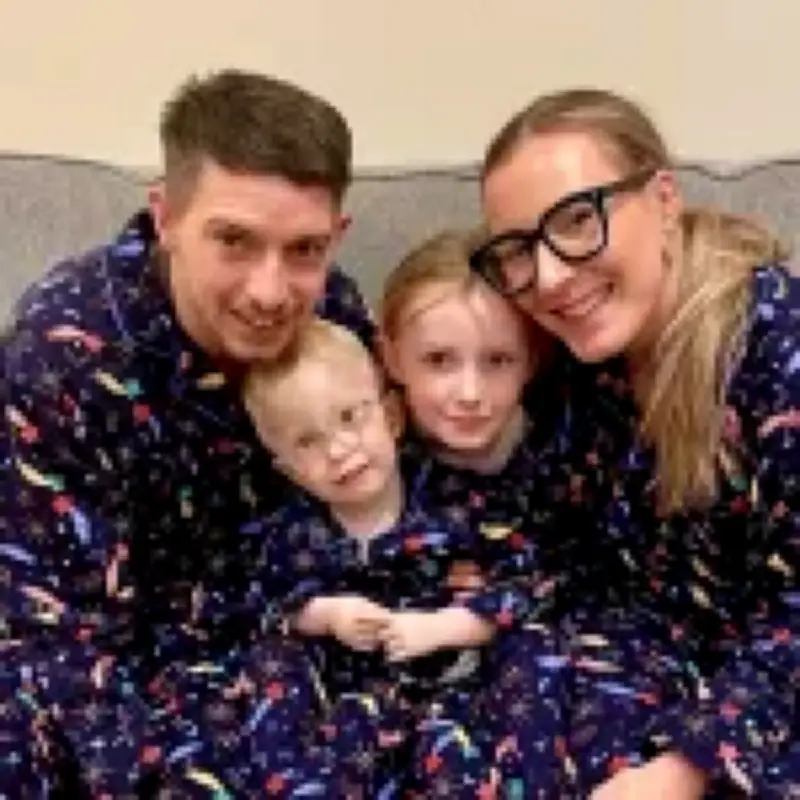
When Ruth Parkinson found her three-year-old son Chester standing up in his cot, she was amazed. Chester has Prader-Willi syndrome (PWS), a rare genetic condition that includes weak muscle tone, feeding difficulties, and developmental delays. Standing up in his cot was a milestone Ruth never expected to see.
A Difficult Start
Ruth and her husband Jonathan, 38, first learned Chester might have additional needs at a 30-week scan, which showed he was measuring very small with excess amniotic fluid. A further scan a week before his birth raised more concerns. Doctors decided Ruth needed a C-section, and Chester arrived seven weeks early, described by Ruth as 'floppy, like a rag doll'.
Chester was taken straight to neonatal intensive care, leaving Ruth to recover without her newborn. Jonathan took photographs so she could see their baby. Ruth recalls the heartbreak of being on a ward with other new mothers while Chester was in an incubator receiving breathing support and tube feeding. Doctors were also concerned he wasn't moving his arms and legs.
Diagnosis and Grief
When Chester was two weeks old, test results confirmed he had Prader-Willi syndrome. Ruth described the news as 'a smack in the face', and her first thought was anger: 'Why me? Why did this happen to me?' She began to grieve the future she had imagined for her son, including growing up with his sister Lola, now nine, and reaching milestones like getting married and living independently.
After Chester came home, Ruth gave up working at the hairdressing salon she owned to become his full-time carer. Despite the challenges, she describes Chester as the 'happiest little boy' who enjoys singing, dancing, watching Harry Potter, and attending swimming classes. He has even been on his first family holiday to Cyprus.
Managing Food and Diet
Children with Prader-Willi syndrome develop hyperphagia, an insatiable feeling of hunger and an inability to feel full after eating. The Prader-Willi Syndrome Association advises giving small portions, swapping foods for healthier alternatives, meal prepping, and boiling, baking, or microwaving food rather than frying.
While Chester is not currently showing food-seeking behaviours, Ruth is already planning how the family might manage food access, including potentially locking kitchen cupboards as he gets older. Chester is on a diet, eating 70% of the caloric intake compared to children without PWS, because his low muscle tone means he burns fewer calories. He has never had chocolate or sweets, and his version of crisps is vegetable sticks.
Ruth tries to make meals similar for both children, such as giving Chester homemade chicken nuggets with veggie chips when Lola has chicken nuggets and chips. The family's main focus is eating together and reassuring Chester that he is getting a meal, but it's not time yet.
Looking Forward
Ruth often thinks of how Lola, then just five, reacted to learning about her brother's condition: 'She said: "It's okay, Mum, all children are different." I just thought if everybody could just think like that, then there would be a better place.'
Ruth reflects on Chester's progress: 'I often look at where Chester came from, to where he is now. It's the little moments that mean more than anything.' Her friend will be running a marathon for the Prader-Willi Syndrome Association next year, and Ruth is hosting a ball to raise money and awareness for the condition.