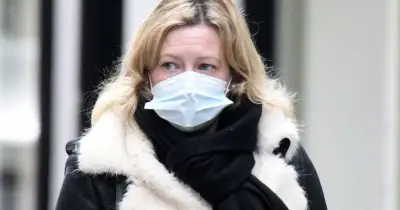
The NHS has confirmed a Covid isolation rule for anyone with one common symptom as the XFG variant drives up cases across the UK. The XFG variant, also known as 'Stratus' or 'American Covid', has been the main driver behind a sharp rise in Covid cases in the UK last month, with 4,589 new infections reported in September - a 230% increase from the 1,374 cases recorded in August.
Hospital admissions involving Covid-19 also jumped from 950 in August to 4,939 in September, with more than half of positive tests linked to the XFG Covid strain.
What is the XFG variant?
The 'American Covid' variant was first identified in January 2025, with the World Health Organisation identifying it as a mix of the LF.7 and LP.8.1.2 strains. It was given its nickname 'American Covid' as it is now the most common strain in North America, but it has since spread worldwide, including in the UK.
Symptoms of the XFG strain are similar to other variants that have circulated widely, including Omicron and Delta, with a sore throat typically being the earliest sign of infection, before later developing a cough and fever. Symptoms can also include shortness of breath, headache, a blocked or runny nose, aches and pains, and fatigue.
NHS isolation guidance
But if you get one key Covid symptom, the NHS urges that you follow its isolation rule, which means staying at home and avoiding contact with others until the symptom has passed. Under NHS guidance, you should self-isolate if you have a high temperature. This means you may feel hot and your skin is hot to the touch on your chest or back, and you may also feel cold or shivery.
You do not need to measure your temperature, but if you feel feverish it is recommended you stay at home and avoid contact with others until you no longer have a high temperature.
The NHS said: "Try to stay at home and avoid contact with other people if you or your child have symptoms and either: have a high temperature; do not feel well enough to go to work, school, childcare, or do your normal activities.
"You can go back to your normal activities when you feel better or do not have a high temperature.
"If your child has mild symptoms such as a runny nose, sore throat or mild cough, and they feel well enough, they can go to school or childcare."
Isolation rules after a positive test
If you have taken a test for Covid-19 and it has come back positive, NHS rules state you should isolate at home and avoid contact with others for three days after the test was taken if you are aged 18 or under, while those over 18 are advised to isolate for five days after the test.
For extra precautions, it is advised you avoid meeting people who are more likely to get seriously ill from a Covid-19 infection, such as those with weakened immune systems, for 10 days after you took the test.
Reiterating the isolation rule this week, the UKHSA said: "If you have symptoms of a respiratory infection, such as COVID-19, and you have a high temperature or do not feel well enough to go to work or carry out normal activities, you should avoid contact with vulnerable people and stay at home if possible.
"For those of us who absolutely can't stay at home, the guidance remains unchanged, and will reduce the chance of passing on your infection to others: wear a well-fitting face covering made with multiple layers or a surgical face mask; avoid crowded places such as public transport, large social gatherings, or anywhere that is enclosed or poorly ventilated; take any exercise outdoors in places where you will not have close contact with other people; cover your mouth and nose when you cough or sneeze; wash your hands frequently with soap and water or use hand sanitiser after coughing, sneezing and blowing your nose and before you eat or handle food; avoid touching your face."