Measles Resurgence in the United States: A Grim Harbinger of Future Health Threats
The United States officially eliminated measles in the year 2000, marking a significant public health achievement. However, the disease has now re-established itself as a persistent presence across the nation, with continuous circulation for over a year as of March 2026. This alarming development, detailed by researchers from Brown University's Pandemic Center, serves as a critical indicator of the country's deteriorating capacity to manage infectious disease threats.
The Return of an Eliminated Disease
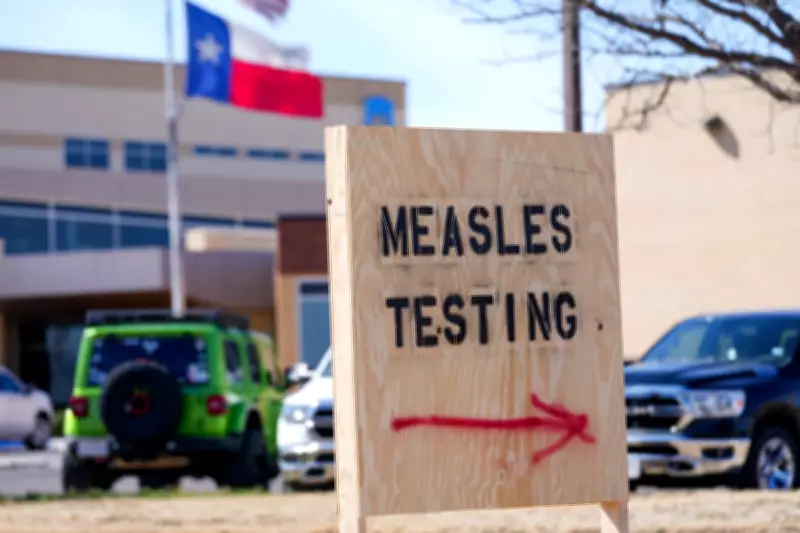
Between 1993 and 2024, measles cases in the U.S. remained relatively rare, typically numbering only a few hundred annually. The current situation represents a dramatic reversal. An outbreak in Texas that lasted from January to August 2025 was followed by ongoing outbreaks on the Utah-Arizona border beginning in August 2025 and in South Carolina starting in September 2025. As of March 2026, thirty states have reported measles cases this year alone, with forty-seven states affected since the beginning of 2025.
Health officials have confirmed approximately 1,300 infections by early March 2026, putting the nation on track to exceed the 2025 total of 2,283 cases, which was the highest number recorded in thirty-five years. The fundamental cause of this resurgence is clear: declining vaccination rates. The overall MMR (measles, mumps, rubella) vaccination coverage has fallen below the critical 95% herd immunity threshold since around 2019-2020, with some regional rates dipping below 60%.

Serious Health and Economic Consequences
The human cost of this resurgence is severe. In 2025, three measles-related deaths occurred in the U.S., the highest annual toll since elimination. Eleven percent of confirmed cases required hospitalization, with actual numbers potentially higher due to inconsistent reporting requirements, as seen in South Carolina. Measles can lead to devastating long-term complications including pneumonia, encephalitis, deafness, intellectual disabilities, and a compromised immune system.
In rare instances, particularly when infection occurs in childhood, patients can develop subacute sclerosing panencephalitis (SSPE), a progressive and invariably fatal dementia that emerges years after the initial infection. A school-age child in Los Angeles recently died from SSPE contracted from a measles infection in infancy.
The economic burden is equally staggering. Containing measles outbreaks often costs tens of thousands of dollars per case. A relatively small 2018-2019 outbreak in Washington state involving 72 cases incurred $3.2 million in public health response, medical expenses, and productivity losses. The Common Health Coalition estimates that a sustained 1% drop in MMR vaccination coverage could cost the U.S. economy billions of dollars across healthcare systems and broader economic productivity.
A Proxy for Broader Public Health Failures
Experts argue that a nation's ability to control measles serves as a proxy for its capacity to manage a wide range of infectious diseases. The core strategies—vaccination, case detection and isolation, contact tracing, and safe treatment—are fundamental to pandemic response. The failure to maintain measles elimination reveals systemic cracks in public health infrastructure.
Beyond measles, other previously controlled infections like whooping cough have seen sharp increases in 2024 and 2025 compared to pre-pandemic levels. This trend is linked to eroding public trust in health institutions. Polling from 2023 to early 2026 by the health policy organization KFF indicates that less than half of Americans trust the government "a fair amount" to provide reliable vaccine information, reflecting declining confidence in the Centers for Disease Control and Prevention.
International Implications and Future Threats
The U.S. is not alone in this regression. Both Mexico and Canada have also seen vaccination rates fall below the 95% threshold, with Canada losing its measles elimination status in November 2025. The Pan American Health Organization postponed a decision on the U.S. status until November 2026, but current trends suggest the designation may be revoked.

The resurgence of measles represents more than a single disease outbreak; it signals a weakened public health armor that will complicate responses to future biological threats, whether from natural outbreaks, pandemics, or potential bioterrorism. The low vaccination rates enabling measles transmission create vulnerabilities that extend far beyond this specific virus, posing a long-term threat to national health security and preparedness.