
The World Health Organisation has declared the Ebola outbreak in the Democratic Republic of Congo and Uganda a "public health emergency of international concern," as the death toll and number of confirmed cases continue to rise. The current epidemic is caused by the Bundibugyo virus, one of several Orthoebolaviruses that can cause Ebola disease, and for which there are no approved vaccines.
Ground Zero Images Reveal Chaos
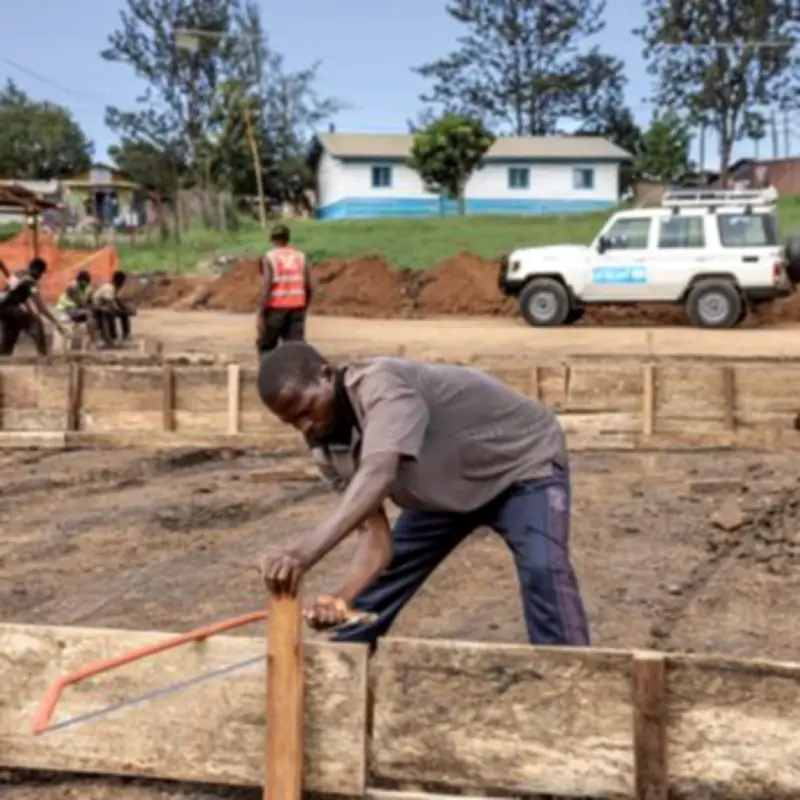
New images from inside "ground zero" have emerged, showing chaos, with rundown health centres filled with staff wearing the bare minimum of PPE, locals in the streets screaming and crying over their deceased loved ones, and even local workers digging holes to bury the dead. One set of images taken this week show mourners gathering outside a mortuary during a traditional funeral ceremony near the Evangelical Medical Institute.
Communities in the region are trying to continue to observe traditional burial practices while health authorities promote infection prevention measures, despite the increase in deaths.
WHO Statement on Cases
A WHO spokesman said: "As of 6 June, a total of 515 confirmed cases, with 91 deaths among these confirmed cases, have been reported from the Democratic Republic of the Congo; Uganda has reported 19 confirmed cases including two deaths, as well as one probable case who has died. In Uganda, the outbreak remains epidemiologically linked to transmission originating in the Democratic Republic of the Congo, with evidence of both imported infections and secondary transmission among contacts and healthcare workers."
"National authorities, in collaboration with WHO and partners, are undertaking a wide-ranging package of response measures. On 5 June, the Africa Centres for Disease Control and Prevention (Africa CDC) and WHO, together with partners, launched a joint Ebola continental preparedness and response plan, with an ask of $518 million to support African countries to prepare for, rapidly detect and respond to the outbreak."
Virus Characteristics
The WHO also shed more light on the virus itself, claiming that BVD is now classed as a "severe and often fatal form," and that it has an incubation period of two to 21 days. Early symptoms such as fever, fatigue, muscle pain, headache, and sore throat, are non-specific, which complicates clinical diagnosis and can delay detection. These symptoms then progress to gastrointestinal symptoms, organ dysfunction, and in some cases haemorrhagic manifestations. Case fatality rates in the past two BVD outbreaks, reported in Uganda and in the Democratic Republic of the Congo in 2007 and 2012 were 30% and 50% respectively.
No Travel Ban Advised
Despite all of this, the WHO has NOT introduced a travel ban, and said: "WHO advises against any restriction of travel to, or trade with, the Democratic Republic of the Congo or Uganda based on the currently available information. WHO continues to closely monitor and, where necessary, verify travel and trade measures in relation to this event."




