
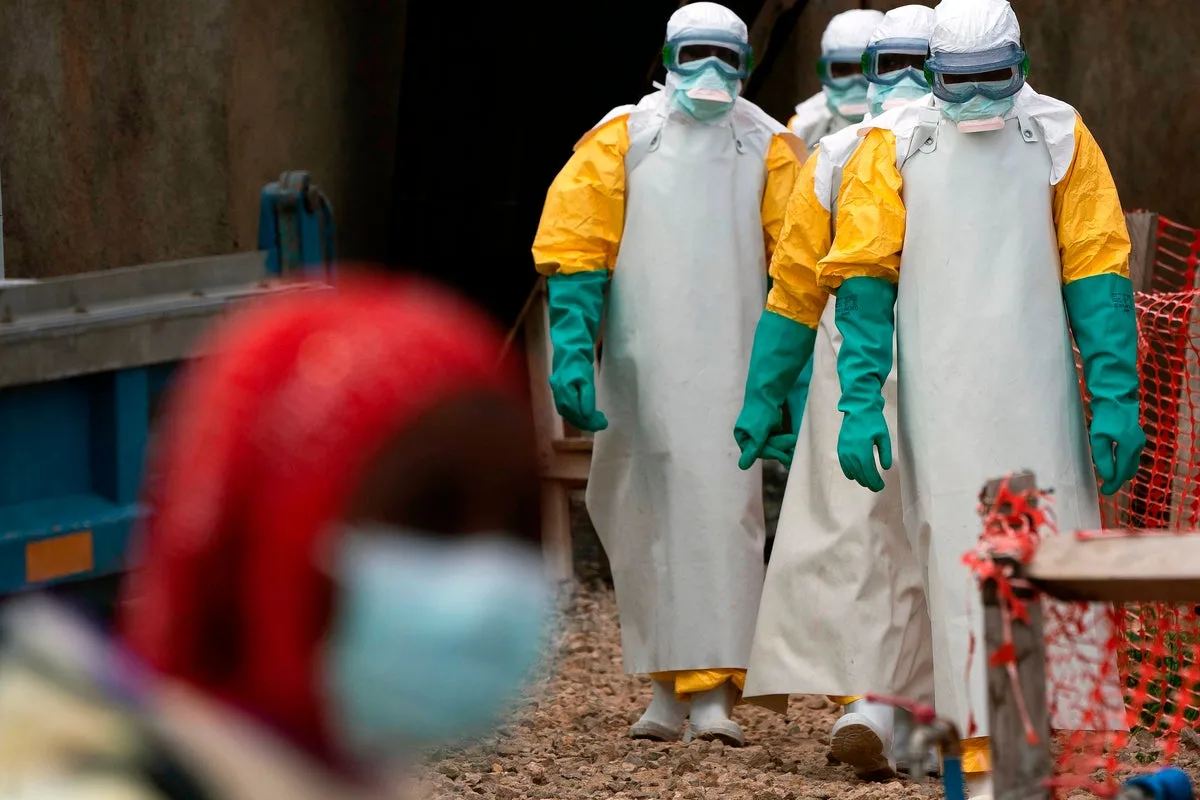
A new Ebola outbreak in the Democratic Republic of Congo and Uganda, coupled with a rare hantavirus incident on a cruise ship, is accelerating African governments' drive for health sovereignty as international aid dwindles. Official development assistance to Africa has halved from about $26 billion in 2021 to around $13 billion in 2025, according to the Africa Centres for Disease Control and Prevention (Africa CDC). The Trump administration's sweeping cuts have exacerbated the decline, leaving the continent facing what Dr Jean Kaseya, director-general of the Africa CDC, called 'an unprecedented financing crisis'.
Speaking at the launch of an initiative for African self-reliance in health financing, Dr Kaseya noted that 'every time we have an outbreak, many countries start to ask for partners because they don’t have in their budgets funding to respond'. The current Ebola strain has no approved therapeutics or vaccines, heightening the urgency. Africa's population, now over 1.5 billion, continues to grow rapidly, straining health systems further.
African leaders have long pledged to allocate at least 15% of national budgets to health, a commitment made in 2001. Yet only Rwanda, Botswana and Cape Verde are on track among the 54 nations. Dr Alex Ajangba, a health financing expert, said the conversation was 'theoretical because the donor system was still functioning. But now that cushion is gone.' He added that the funding decline is not a temporary dip but a structural shift.
Governments are now accelerating efforts toward 'health sovereignty', aiming to finance and manage systems with far less reliance on external aid. Initiatives such as Ghana's 'Accra Reset' and the Africa Health Security and Sovereignty Agenda, adopted by African leaders in February, focus on long-term resilience. Proposed domestic solutions include higher taxes on tobacco, alcohol and sugary foods, pooled procurement of medicines, expansion of local pharmaceutical and vaccine manufacturing, and tackling inefficiencies.
The Africa CDC reports that health emergencies surged from 153 outbreaks to 242 between 2022 and 2024, while the continent imports over 90% of its health commodities. The target is to produce 60% of vaccines locally by 2040. Experts point to Africa's vast mineral wealth—about 30% of global reserves—but note that much value is lost through opaque contracts, illicit financial flows, and limited local processing. The United Nations Economic Commission for Africa estimates the continent loses about $40 billion annually to illicit flows in the extractive sector.
Co-financing is another key pillar. Gavi, the global vaccine alliance, says lower-income countries contributed a record $302 million toward vaccines in 2025. Gavi chief executive Sania Nishtar said this 'creates predictability' and reduces reliance on aid. However, the shift is contentious, as the Trump administration has made co-financing a condition of 'America First' health deals with nearly two dozen African nations, requiring increased domestic spending or risk losing support.




