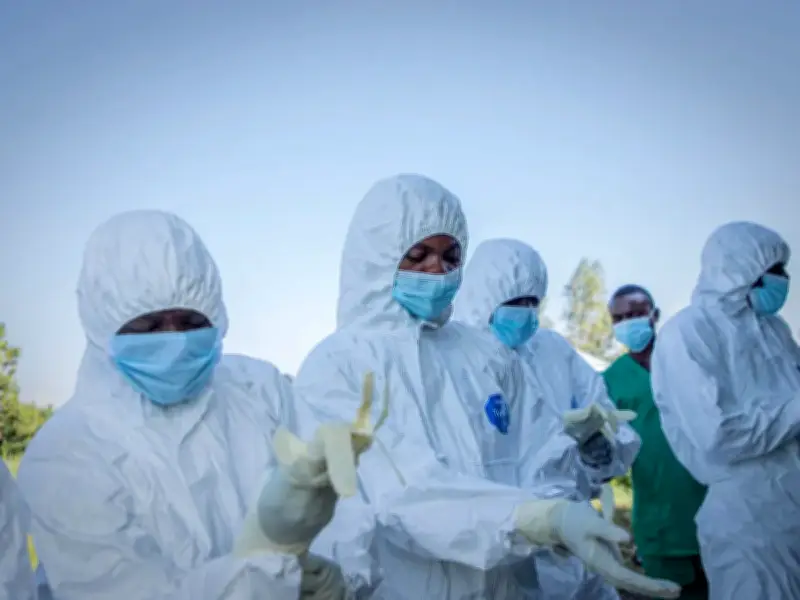
The Ebola outbreak in DR Congo could be three times bigger than first thought, scientists have said. The current spate of cases in the Central African nation is now the fastest Ebola outbreak in history - and is on track to become the world's deadliest.
A total of 2,516 people have died, with a total of 5,290 confirmed cases, but the true number of infections could be as much as three times higher, according to estimates from authorities and Africa's top public health agency. Only 30% to 40% of all Ebola cases are thought to have been detected.
Half of deaths in last 20 days
Half of all the deaths came in the last 20 days, a top World Health Organisation official warned, with the disease "growing exponentially" in the north and east of DR Congo. Julien Harneis, the WHO's Ebola co-ordinator, told reporters: "It is growing faster and wider than the Ebola response."

Less than 10% of cases are meanwhile being traced from contacts already known to doctors, suggesting the disease is spreading widely in the community. That figure is far below the 90-95% rate when the outbreak can be said to be under control, according to experts.
Deadliest outbreak on record
This week, the WHO said the current outbreak is on track to surpass that of 2014 to 2016, the deadliest on record, which saw over 11,000 deaths across West Africa. It is now believed the outbreak began spreading from the mining town of Mongbwalu as early as February, months before authorities declared the outbreak on May 15.
A lack of infrastructure, poor sanitation and ongoing clashes in the country between the Congolese military and rebels have hampered efforts to contain the cases, while widespread distrust of medical authorities has also played a role.
Deaths outside treatment centres rising
Deaths outside Ebola treatment centres have been on a steady rise in recent days - making up 97% of the deaths reported on August 17 - reflecting a reluctance for people to bring themselves or family members to hospital. Aid workers on the ground have reported misinformation among local people that the outbreak isn't real, preference for traditional medicine, and a fear of being kept in isolation or mistreated by doctors.
On Thursday, it was announced that DR Congo will be sent 70,000 doses of the Ervebo vaccine from the UN's international stockpile in a bid to reverse the rising trend of cases. The Ervebo vaccine was initially developed to target the Zaire ebolavirus behind the 2014-16 outbreak, and it has not been proven it will work on the current Bundibugyo virus - but doctors say there are some promising initial signs.
"Early laboratory and animal data suggest it may provide some protection", a WHO spokesman said. "Thus, the clinical trial is expected to provide important new evidence, which is essential for policymakers to inform future use of the Ervebo vaccine."