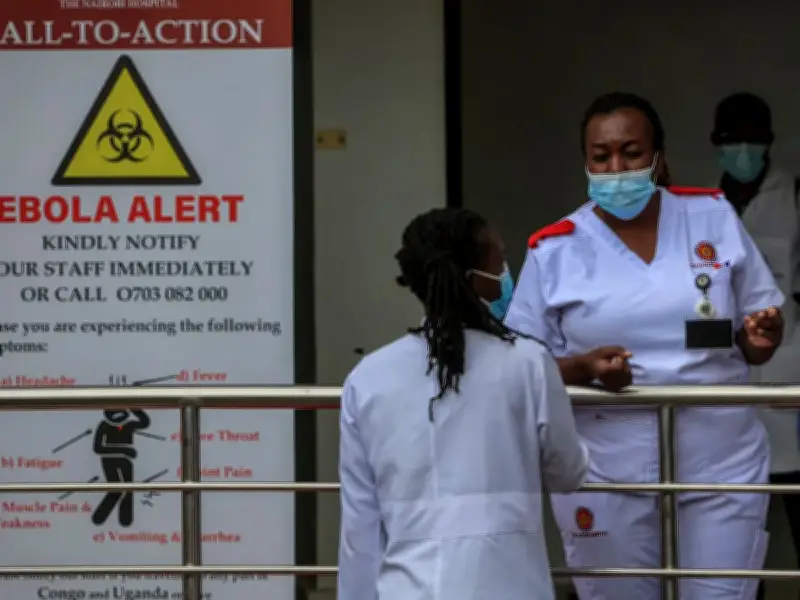
A British healthcare worker in the Democratic Republic of Congo (DRC) who has tested positive for Ebola is set to be flown back to the UK for treatment, the Government has confirmed.
The patient, identified as a healthcare worker by the news agency Reuters, is expected to be brought back to Britain by medical evacuation, though the timing of the flight has not been disclosed.
Government Confirms Case
A Government spokesperson said: “A British citizen currently in the DRC has tested positive for Ebola. The UK has well-established procedures for dealing with cases like this, and those processes have been activated.
“Further information will be shared in due course as appropriate. The risk to the UK public from Ebola remains low.”
The ongoing outbreak, which began in the DRC in May, has become the most geographically widespread Ebola outbreak in history, with more than 9,600 confirmed cases reported worldwide. Around 5,000 people have died in the outbreak.
Risk to UK Public Remains Low
The World Health Organisation (WHO) declared the outbreak a public health emergency of international concern in May. African health ministers have also been invited to an “extraordinary virtual meeting” to discuss the spread of Ebola, set to take place on October 28.
Despite the spread across several countries, the UK Health Security Agency (UKHSA) has said the risk to the UK population from the current outbreak is low. In a blog post published earlier this month, health officials said imported cases of Ebola are extremely rare, with only four confirmed cases reported in the UK since 1976 and no deaths from the disease in the UK.
Only four cases of Ebola have ever been confirmed in the UK, including three involving health workers who responded to the outbreak in West Africa between 2014 and 2015.
How Ebola Spreads
Ebola spreads through direct contact with the bodily fluids of an infected person, including blood and vomit, or through contact with contaminated materials and surfaces, such as bedding and clothing.
The NHS has established procedures and specialist centres for managing suspected cases, should anyone arrive in the country with the infection, the UKHSA added.
Professor Hunter previously explained why Ebola does not spread as easily as some other infectious diseases, saying: “Ebola is not that transmissible, and you usually have to have close contact with a case, particularly a case with severe or end stage disease, or their body fluids.
“This is one of the reasons why health care workers are at a particularly high risk as they care for dying patients. Actual events that could be classed as an exposure could include a needlestick injury, skin to skin contact, having blood splash on your skin, or into your mouth or eyes.”