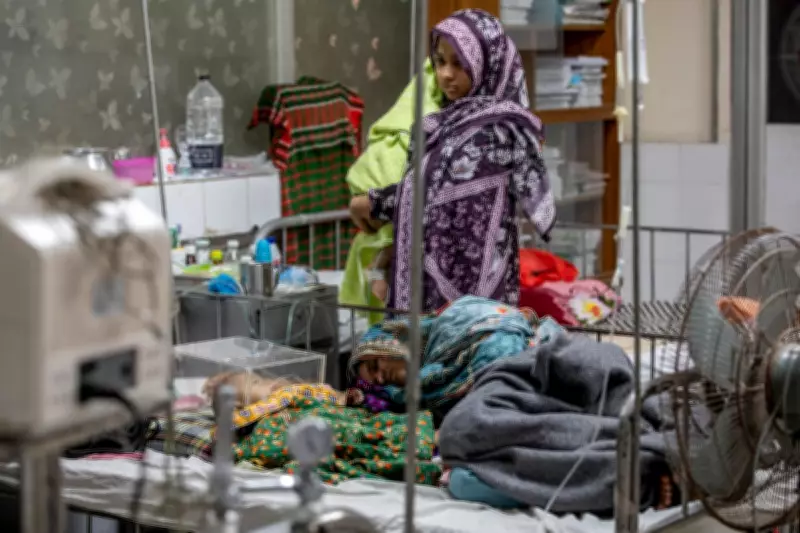
Bangladesh has reported nearly 600 deaths related to measles as the South Asian country struggles to battle the worst outbreak of the disease in decades. Seven more children had died by Wednesday morning, taking the toll to 601, the director general of health services said. While 90 succumbed to measles, 511 died from measles-related symptoms.
Hospitalizations and Government Response
The federal health department said about 60,000 suspected measles patients had been hospitalized since 15 March, when the outbreak was first recorded. The alarming rise in cases prompted the then newly elected government to launch an emergency nationwide immunisation campaign to contain the spread of the disease. Health officials claimed the infection rate was declining now and that 18.4 million children had been vaccinated.
"As infections decrease, deaths will also fall. It is important to remember that children commonly develop pneumonia at this time of year and some of them die from it. Therefore, not every death is attributable to measles," Zahid Raihan from the Health services directorate told local newspaper Prothom Alo.

Virus Strain and Vaccination Gaps
Children in Bangladesh have been contracting an older strain of the measles virus known as the B3 strain, according to virologists. B3 has been the predominant variant for years, even as at least one other strain has also circulated in the country. Measles, one of the most infectious pathogens, requires 95 per cent of the population to be vaccinated in order to prevent its spread.
Health experts blame the rise in cases on gaps in immunisation, including long intervals between special vaccination drives due to socio-political instability. Bangladesh conducted its last nationwide measles vaccination campaign in 2020 and a follow-up in 2024 was shelved as the nation was gripped by bloody protests that culminated in the overthrow of Sheikh Hasina's government.
The Tarique Rahman government, which took power earlier this year, had lowered the vaccination age to six months from nine before launching the latest immunisation drive. The idea was to prioritise children aged six months to five years, especially those who had missed routine immunisation and faced the highest risk of severe complications.
Measles is a viral infection that spreads with alarming ease. Initial symptoms often mimic a common cold, followed a few days later by a distinctive rash, which typically begins on the face and behind the ears before spreading across the body, presenting as raised, blotchy patches that are usually not itchy. The virus spreads through respiratory droplets when an infected person breathes, coughs, or sneezes. It has been breaking out across the world as vaccination rates have fallen.