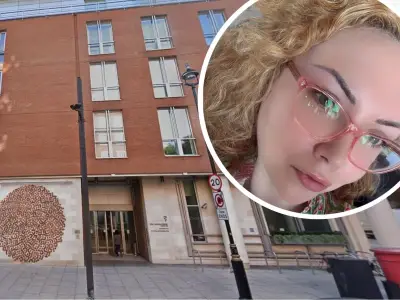
Lara Vivo, 41, was diagnosed with a rare eye cancer after she complained to colleagues that office lights were flickering. The supermarket store assistant from Bournemouth began noticing the lights during work meetings in March 2019, which gave her headaches, despite colleagues insisting the lights were working fine. She initially put it down to stress but later went for an eye test, thinking she needed glasses.
Instead, Lara was referred straight to an emergency eye unit at Royal Bournemouth Hospital, where further tests led to a consultant diagnosing her with uveal melanoma, a rare malignant cancer found in the eye's uvea, the middle layer of tissue in the wall of the eyeball. She flew from her home in Bournemouth to see a highly-recommended private specialist eye doctor in Barcelona, who found a 1cm tumour on her right eye and confirmed it had caused her retina to detach, leading to the flashing lights and headaches.
Three Surgeries in Barcelona
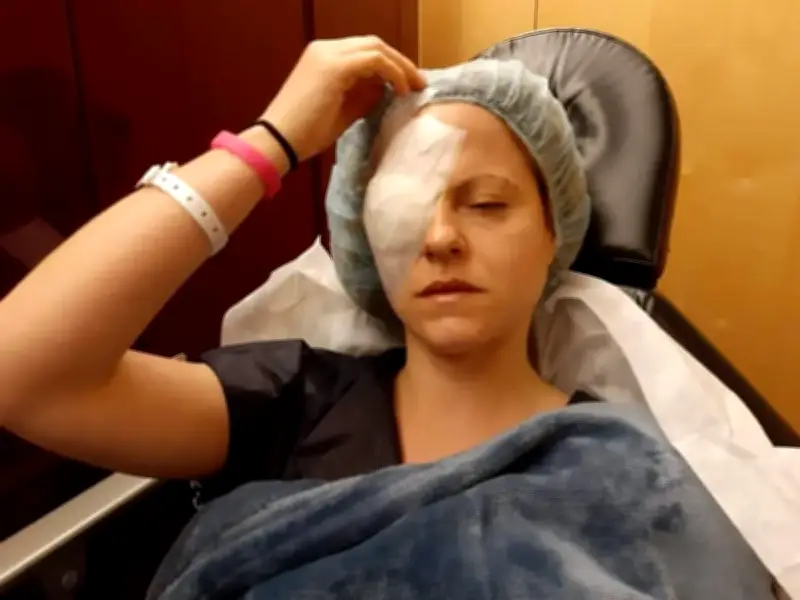
Lara, originally from Valencia, Spain, underwent three surgeries costing £30,000 in Barcelona, aiming to destroy the tumour and prevent the spread of cancer. The operations, which took place over six months, involved reattaching the retina, removing half the tumour, and applying a radioactive plaque to attack the remaining cancer, which was later removed. The procedures left her with just 10% vision in that eye but with hope that the cancer was gone for good.

For the following seven years, Lara had regular check-ups and was believed to be cancer-free. During this time, she and her partner, Roy Bettencourt, a 61-year-old firefighter, had discussed getting married and starting a family. However, in January this year, a scheduled MRI scan revealed that the cancer from her eye had metastasised in her liver.
Terminal Diagnosis and Fundraising
At this point, the cancer was deemed incurable, and NHS doctors told Lara and Roy that there was no NHS-funded treatment available for her. Because of the rarity of uveal melanoma, the NHS' Clinical Commissioning Policy of 2016 for chemosaturation states there isn't enough evidence of success to support making the procedure available on the NHS. The policy reads: "No studies were identified of high quality to draw firm conclusions on the safety of the procedure in patients with liver metastasis from ocular melanoma. No cost-effectiveness studies were identified to comment on the cost-effectiveness of this procedure."
Lara is now fundraising for £120,000 of private chemosaturation therapy, a targeted chemotherapy delivered by needle directly into the liver, which is not available on the NHS due to limited research and it not being considered cost-effective. She is fundraising via GoFundMe to cover the cost of a round of three £40,000-a-go treatments at Southampton General Hospital.
Lara told Talk to the Press: "I had this funny vision at work, but I couldn't explain it, it just didn't feel right. Everyone else said the lights hadn't bothered them at all. I went for this eye test and I was shocked to be referred straight to the emergency eye unit. Even then, I never thought it was serious - I just thought I needed glasses. So when the consultant told me it was cancer, it was like a stab in the heart. I had three operations over six months, where I had to move back to Spain and live with my family, leaving behind my partner and dog. After that I thought it wasn't coming back and even at the start of this year my oncologist told me I was past the point of it returning. Then they found cancer in my liver. Now this is life or death for me, if I don't do anything this will kill me. But I'm not giving up, I want to live."
Fighting for Life
Lara's vision issues first started in early 2019, although she struggled to pinpoint the exact issues beyond "flickering lighting". She said: "I asked my colleagues 'did that lighting bother you?' after the meeting. But they said it didn't. Then I was scrolling through Facebook and it showed me an advert for a free eye test, so I went, thinking I must need glasses." The optician referred her straight to the emergency eye unit instead, where she was diagnosed by a consultant.

Despite her impression that 'melanoma' would be related to skin, Lara later learned it had been caused by a random cell mutation at the back of her eye. She said: "I had originally been told I was a high risk for metastases in the liver, but by now I thought maybe I was fine. But as of March 2026, I am considered stage four terminal."
Lara said it was her only hope and added: "I've been given a grim diagnosis, but I've been researching and I'm not giving up, I want to live. These seven years it's just been appointments, cancer, hospitals. We had planned to get married and maybe have children. It will never happen now. It's ruined my life. I don't look ill, but I'm fighting for my life now. And this cancer is persistent, but I'm not giving up. If you're sensing something is wrong with your eye, get it checked." Lara's fundraiser is on GoFundMe.