A physically active woman from Flintshire who was told by her GP that a breast lump was likely nothing to worry about was later diagnosed with a rare and aggressive form of breast cancer at the age of 37.
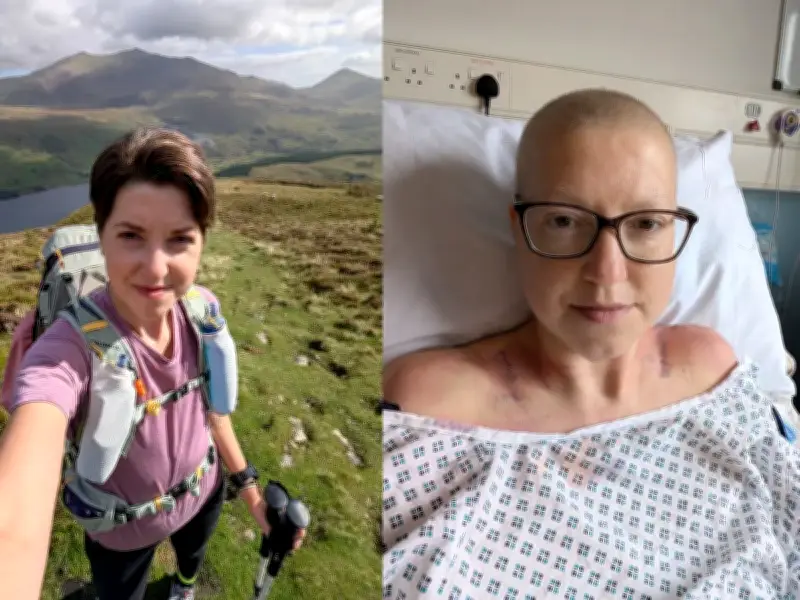
Rasa Stonyte, now 38, first noticed the lump on the side of her left breast in mid-February 2025. Speaking to PA Real Life, she explained that she has always been very active and outdoorsy, enjoying mountaineering with her partner William and their two Hungarian vizslas.
Given a family history of breast cancer through her paternal grandmother, Rasa had been having regular check-ups. A routine examination around five years earlier had detected lumps that proved benign and later disappeared.
Diagnosis and shock
When Rasa found another lump on the side of her left breast that appeared to come out of the blue, she initially assumed it was not cause for concern. A GP on March 4 suggested it was likely nothing to worry about but referred her for an ultrasound at Glan Clwyd Hospital in Bodelwyddan three weeks later.
Rasa described it as a huge shock when a nurse encouraged her to undergo a biopsy that very day. She said: "My expectation was that everything was fine, so that started ringing alarm bells and I panicked because I have an extreme injection phobia."
"The nurse tried to calm me down and we had a very long chat where she convinced me that I should get that biopsy done," she added. "And thank goodness she did because I think if I left the hospital, I'm not sure I would have returned back because the anxiety around injections was always a huge issue."
On April 1, Rasa received the biopsy results with William beside her. Her oncologist told her: "I'm really sorry, but it's cancer." She was diagnosed with triple-negative invasive metaplastic ductal carcinoma with squamous differentiation, a rare variant accounting for less than 1% of all breast cancers.
Treatment journey
As it was April Fools' Day, Rasa's immediate first thought was, "Is that a joke?" She described bursting into a flood of tears before William asked follow-up questions about the diagnosis, prognosis and next steps.
Within a fortnight, Rasa began a three-month course of chemotherapy, which proved very stressful due to her needle phobia. She suffered side effects including fatigue, dizziness and hair loss, and endured self-administered immunotherapy injections that caused shooting pains throughout her body for days.
"The worst came when I had the Red Devil because it is very potent and knocked me out for weeks on end," Rasa explained, referring to a second round of chemotherapy lasting a further three months. "I was extremely fatigued, I had mouth ulcers and all of my hair – including eyelashes and eyebrows – fell out. It's very difficult to describe the feeling, but it was as if everything inside of me was dying."
Surgery and recovery
Following six months of treatment, genetic testing revealed Rasa carried the BRCA1 gene mutation, meaning she was at high risk of developing several cancers. This prompted her to undergo a double mastectomy on October 23.
She chose not to have breast reconstruction surgery, saying she wanted to get back to her normal life as soon as possible and was concerned about potential complications. "Having implants would have been a very long and painful journey," she said. "I'm very happy with my decision; I feel a sense of freedom now that I'm flat."
In early November 2025, Rasa was told there was no evidence of disease. "I'm really happy and I'm very grateful," she said. "I live a better life than I did before, but there's no end to my worry and I don't think there ever will be."
Rasa credited her health to medical professionals, including nurses at Glan Clwyd Hospital and the cancer centre, whom she described as "absolute angels". She also received support from her fiancé, William McManus, 47, and her parents, who flew from Lithuania to assist with her care.
Staying active and raising awareness
To maximise her chances of survival, Rasa has emphasised the importance of keeping active by walking her dogs and scaling mountains, despite ongoing bone pain from treatment. "I feel free, happy and strong when I'm hiking," she said. "Since it helps me mentally, it automatically helps me physically. And I definitely feel more alive when I'm outdoors."
Dr Sophie Ketchen, director of research and charitable impact at Breast Cancer UK, told PA Real Life: "Studies show that people who are the most physically active after a breast cancer diagnosis have a 30-40% lower risk of dying from the disease than those who are least physically active."
Rasa also emphasised the importance of sharing her experience to raise awareness. "When I started talking about all this on social media, a former colleague reached out to me and said that I was the reason why she checked herself and got diagnosed with breast cancer," she said. "The reality is, I'm not strong, I'm not special and I'm not different to anyone else. I just didn't have a choice and every cancer patient will say exactly the same – if we want to live, there is no real other choice. But I want to show that there is life after cancer and it can be a really beautiful life."