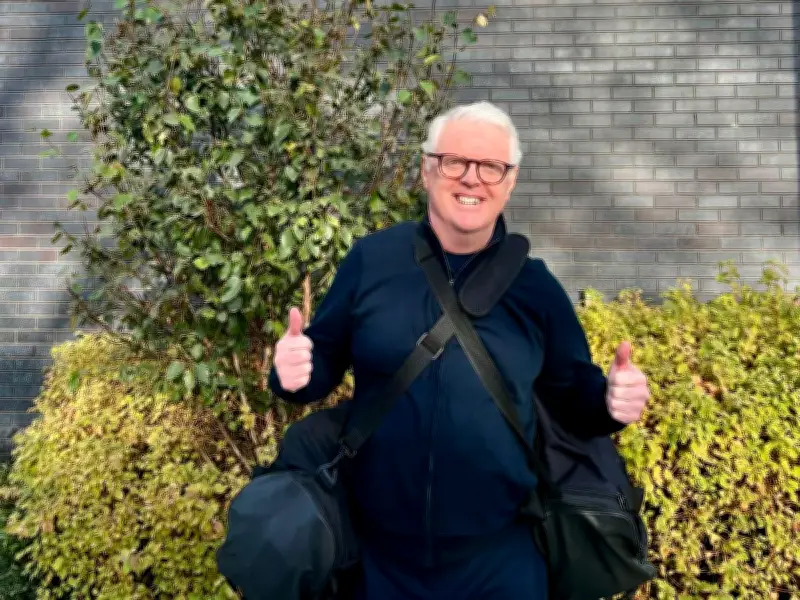
Tommy Dunning, 63, from Widnes, was diagnosed with acute myeloid leukaemia (AML) after a phone call from his doctor told him to "pack a bag" and get to hospital. The former soldier, marathon runner and chemical plant operational manager initially thought he had caught Covid when he fell ill in the summer of 2024.
He called in sick but recovered in time for a holiday to Spain with his wife, Anne. However, the day after returning home, he woke up shivering again and contacted his doctor, who arranged blood tests.
Urgent hospital admission and diagnosis
Tommy was stunned when his doctor called back with an urgent message. He said: "He rang and said 'you need to get to hospital - pack a bag and I've got a letter here to try and get you a bed'. I said, 'What on earth is happening?'"
Doctors initially suspected sepsis, but further tests revealed he had AML, an aggressive form of blood cancer that can be life-threatening. He said: "I didn't want to get upset because Anne was crying her eyes out. I was just trying to deal with it, but thinking how upset our children Liam and Sarah would be."
Search for a donor
Following a bone marrow biopsy, Tommy was told a stem cell transplant offered his best hope of survival. Before the procedure could go ahead, he needed five rounds of chemotherapy at Whiston Hospital to reduce the number of cancerous cells in his body.
His two sisters were tested as potential donors, but neither was a suitable match. For many people with blood cancer and other blood disorders, a stem cell transplant can offer potentially life-saving treatment. However, only around one in three patients will find a suitable donor within their family, making the search for an unrelated match crucial.
Tommy admitted he was acutely aware of the risks he faced. He said: "I knew I might die. On the same ward as me was a lad with AML - he developed complications, they couldn't go ahead with his transplant and tragically he passed away."
Life-changing news and recovery
Tommy feared the worst when he was called to a meeting with his medical team, but the news was life-changing. He said when he got there, the nurse was smiling at him. "I said, 'This is good news, isn't it?' She said, 'It's the best news ever. We've got three potential donors that match you, and one is a perfect match, with all of the 10 genetic markers we were looking for'.
"Anne was over the moon. We were just beside ourselves." Tommy underwent his stem cell transplant at the end of 2024. Now retired, he has experienced some mild reactions to the donated cells but continues to recover and now only needs hospital check-ups with a nurse every three months.
Although he may not have returned to running marathons, Tommy has been keeping busy with DIY projects, including repointing the gable end of his son Liam's house. But it is the time he has been given with his family that means the most to him.
Tommy's donor is a young man from London. Strict rules protect the anonymity of stem cell donors and recipients in the immediate aftermath of a donation, but the pair have already been in contact anonymously and hope to meet once the two-year anonymity period ends. Tommy joked: "I just want to kiss him!" He added: "Thanks to him I'm living life to the full, every second."
Encouraging others to register
The transplant has also given Tommy the chance to become a grandad and watch his family grow, something he said he may never have experienced without his donor. He said: "Our Annie, the youngest one, was only born this year, so without treatment and his donation, I wouldn't have seen her. Stem cell donors aren't just saving someone's life, they're giving a gift to their families of recovery and hope. You could end up giving someone like me the chance to see their family grow up, and that's massive."
Despite being long-standing blood donors, Tommy and Anne knew little about stem cell donation before his diagnosis. Now, Tommy has joined forces with blood cancer charity DKMS UK to encourage more people to sign up to the stem cell donor register. According to the charity, only 7% of eligible people in the UK are registered as potential donors.
DKMS UK spokesperson Deborah Hyde said Tommy's experience showed the difference a donor could make to patients and their loved ones. She said: "Tommy is the living proof that stem cell transplants offer second chances at life. Everyone who signs up to the stem cell donor register is a key link in a worldwide chain of hope for people waiting to have a compatible transplant, as well as their families and all who love them."
She added that people who register may never be called to donate, but that when they are, the process in nine out of 10 cases involves a straightforward outpatient procedure similar to donating blood platelets. People aged between 16 and 55 who are in general good health can join the DKMS register by answering a few health questions and completing painless mouth swabs. Anyone interested in becoming a potential donor can order a free registration kit at dkms.org.uk.