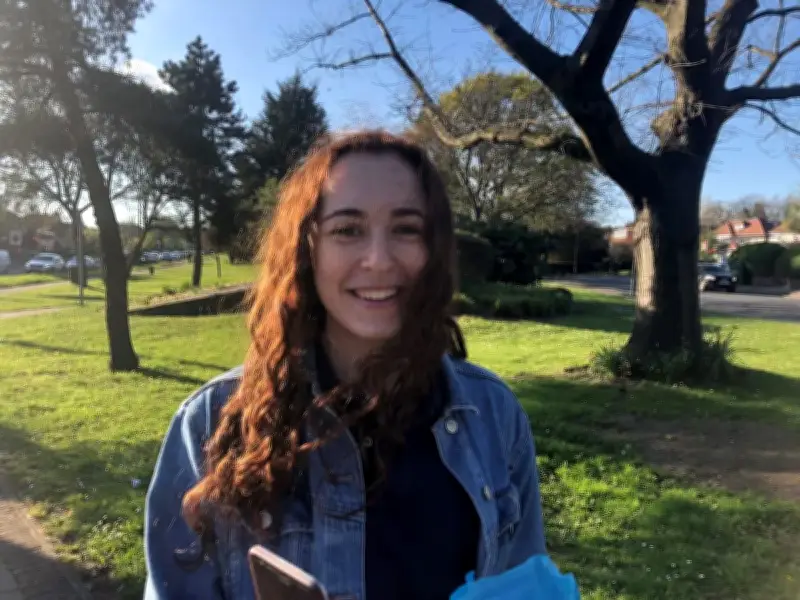
A teenage girl has said doctors dismissed her health concerns due to her age — before she was diagnosed with cancer aged just 17.
When Sophie Cohn noticed she had stopped getting her period, she went to visit her GP. But her missed periods were attributed to her age and the stress of being a busy teenager at school. But six months later, Sophie still had not had a period and returned to the doctor — yet was given more of the same advice and to wait and see if it came back.
Dismissed Concerns
Her period did not return and Sophie, from Hertfordshire, became noticeably tired and felt unfit in the weeks which followed. She said: "I went back to the GP in June and said, ‘Hey, something still isn't right here. I still have no period'."
"And then he just told me the same thing saying, 'You've got the summer off, see if it comes back, you won't be stressed with school anymore'."
By September of that year - 2019, when Sophie was 17 - she had gone about nine months without a period. Her GP prescribed medication to ‘kick start’ it, but when her period came she experienced severe stomach pain.
Road to Diagnosis
Speaking to the Mirror, Sophie said: "I found towards the end of the summer, I was getting very tired, and I felt like I was very unfit, but then I put that down to being away all summer, and going out a lot. He (a doctor) gave me the pills, I took them, my period came, I then got the worst stomach pains I have ever had."
As her pain got worse, Sophie’s parents contacted a gastroenterologist who lived a few doors down, who told them to take her straight to A&E. It was there, almost nine months after she first realised something was wrong, that doctors began investigating what would eventually lead to a diagnosis of Hodgkin lymphoma.
Looking back, Sophie wonders whether her initial concerns should have been taken more seriously.
The young woman, who works in sustainability, added: "I'm not saying that when I first went to the GP and I stopped getting my period it meant that I had cancer, I'm never going to know that. But it was my body telling me something was wrong."
Sophie believes her age and gender may have influenced how her symptoms were perceived. She added: "I do think it's partly to do with my age, and a lot of the time, I think doctors tend to put a lot of issues that women and girls have when they're in their teens down to periods and hormones."
Delayed Diagnosis
But even after reaching hospital, Sophie’s diagnosis was not straightforward. Doctors carried out blood tests and a chest X-ray, finding she was severely anaemic with a slightly high white blood cell count.
Sophie said she was initially told the results were otherwise normal and sent home. She added: "They said I was severely anaemic and referred me to someone to sort that out. Other than that, they said that my bloods were fine, my chest x-ray was normal… ‘it's all normal, you can go home’."
But a week later, her mum received a call from the hospital.
"My mum got a call saying someone else had reviewed my chest x-ray, I need to come in immediately. So, she called me while I was at school and she said, ‘We need to go to the hospital.’"
Doctors told Sophie they were concerned she could have picked up an illness during a recent trip to South Africa and began investigating three possible conditions: tuberculosis, sarcoidosis or lymphoma.
"People were coming in wearing masks, and this was pre-Covid, and I asked, ‘Why are you wearing masks? What is happening?’ And no one was telling me anything. But they said either way, 'there's something in your chest'."
Weeks later, doctors attempted a biopsy but were unable to sedate Sophie because she was too anaemic, but that was not communicated to her. She was referred to London, where surgeons cut into the side of her ribcage to perform the biopsy under general anaesthetic.
Treatment and Remission
Another week later, Sophie was given the news that she had Hodgkin lymphoma. Doctors initially believed it was stage two, but further tests at a teenage cancer unit revealed it had progressed to stage four and had spread. Sophie began six months of gruelling chemotherapy, spending five days a week travelling to London for treatment while dealing with nausea, "horrendous" stomach pain, shooting pains in her legs and extreme tiredness.
The treatment was made even harder as Sophie was still recovering from a biopsy that was not healing properly due to her compromised immune system. Her hair began falling out just 10 days into treatment. Sophie said: "That was probably the worst, because that was the biggest physical sign of, understanding that, yeah, I'm ill now." Sophie was also missing out on school and normal teenage activities.
"I couldn't go to any crowded places or parties, because my immune system was so bad. I would go to school, but I would go in for my lessons and then I would go home again."
By June 2020, Sophie had finished the intense course of treatment and was officially in remission and she and her family could finally breathe a sigh of relief. But she still wonders whether her cancer could have been caught earlier had her symptoms been taken more seriously.
"I try not to think about it too much, but stage one cancer is a lot better than stage four. By the time that I had my PET scan, it was all over my body.
"It was in my spleen, so I have to take lifelong antibiotics now because the radiotherapy essentially radiated my spleen, so it doesn't work properly. So, I sometimes wonder, could I have had two months of chemotherapy instead of six."
The experience also took a heavy toll on Sophie’s mental health, something she says she did not fully recognise until afterwards.
"I was of the mindset of just get through this. You have six months of this and then you can kind of think about your feelings on the other side. There's no time to deal with feelings now."
Although Sophie had emotional moments during treatment, she largely pushed her feelings aside to focus on getting through it.
Sophie, now 24, said: "Obviously, I did still cry. But, not as much as you would have thought I would. And then, the years following, there was lots of therapy and lots of coming to terms with what I went through." Now, Sophie is advocating for greater awareness of cancer symptoms in young people. She added: "The symptoms can be quite ordinary, and they're symptoms that I would brush off, or my parents would brush off. It is easy to just put it down to being a teenager who's going out too much.
"But if a doctor hears those symptoms, they should take it a bit more seriously, so you don't have to go back three times and feel like you're being really silly." For Sophie, the hope is that other young people will be listened to before their symptoms have a chance to become something more serious.