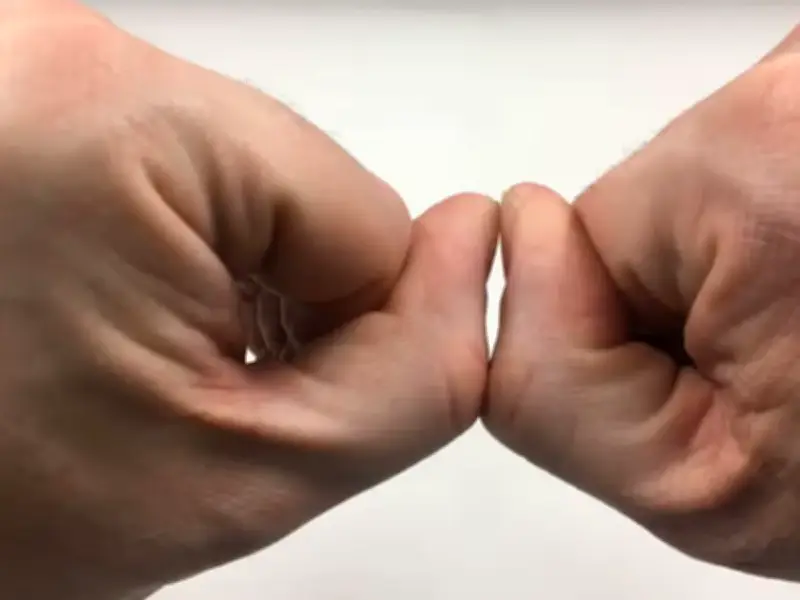
A simple finger test that can be done at home may provide an early warning sign of lung cancer. Lung cancer, which spreads more rapidly than other forms of the disease, sees nearly 40,000 people diagnosed every year.
Often, symptoms of lung cancer do not appear until the cells have spread throughout the body. However, potential patients can identify several early indicators of the illness.
Lung cancer statistics in the UK
There are around 50,200 new cases of lung cancer diagnosed each year in the UK (nearly 140 every day), making it the third most common cancer. It causes around 32,800 deaths per year, making it the leading cause of cancer death in the UK.
Typical symptoms include breathlessness, wheezing, and a persistent cough accompanied by blood or phlegm. While many symptoms are respiratory in nature, there is one early telltale sign of lung cancer that manifests on your fingertips.
Cancer Research UK says lung cancer mortality rates in the UK are projected to decrease by 8% between 2024-2026 and 2038-2040, with around 41,500 deaths each year by 2038-2040. Around 1 in 10 (11.1%) people diagnosed with lung cancer survive their disease for ten years or more.
Almost 1 in 5 (18.1%) people diagnosed with lung cancer in England survive their disease for five years or more. For people who have already survived for one year, more than 4 in 10 (43.5%) survive their disease for five years or more (2015-2019).
What is the early sign on the fingertips?
When you press your fingernails together, can you spot a tiny diamond-shaped gap of light? If this gap is absent, you could be experiencing finger clubbing, whereby the tips of your fingers become swollen - and this could indicate lung cancer.
The condition develops in stages, beginning at the base of the nail, which turns soft. The skin adjacent to the nail bed then becomes shiny, after which the nails start to curve more than usual when observed from the side. Finally, the fingers may enlarge and become swollen due to fluid accumulating in the soft tissues of the fingers.
While the absence of this diamond-shaped gap between fingernails doesn't necessarily indicate lung cancer, it could potentially be a symptom. As such, the wisest course of action is to seek medical advice should you notice it.
Medical advice and common symptoms
Brian Gemmell, a lung cancer patient whose sole symptom was finger clubbing, urges: "Go and see your doctor If you've got anything that you're concerned about – that's what a GP is for. Go as soon as you can." Catching it early can lead to swifter treatment, with West Lancashire-based GP Dr Helen Piercy advising: "If you notice any signs or symptoms that concern you, see your GP. First phone for an appointment. You will be assessed. You will be invited in, if you need to be seen face-to-face. Don't be afraid. Pick up the phone."
Lung cancer symptoms can differ considerably from one individual to another. Some may experience multiple symptoms while others may have none whatsoever. Common lung cancer symptoms to be aware of include a persistent cough that lasts three weeks or more, breathlessness, wheezing, frequent chest infections, a cough that changes or gets worse, chest and/or shoulder pain, coughing up blood or blood in your phlegm, unexplained fatigue or lack of energy, hoarseness, and swelling in the face or neck.
These indicators don't necessarily confirm lung cancer, but it's advisable to speak to your GP if you're experiencing any of the above.