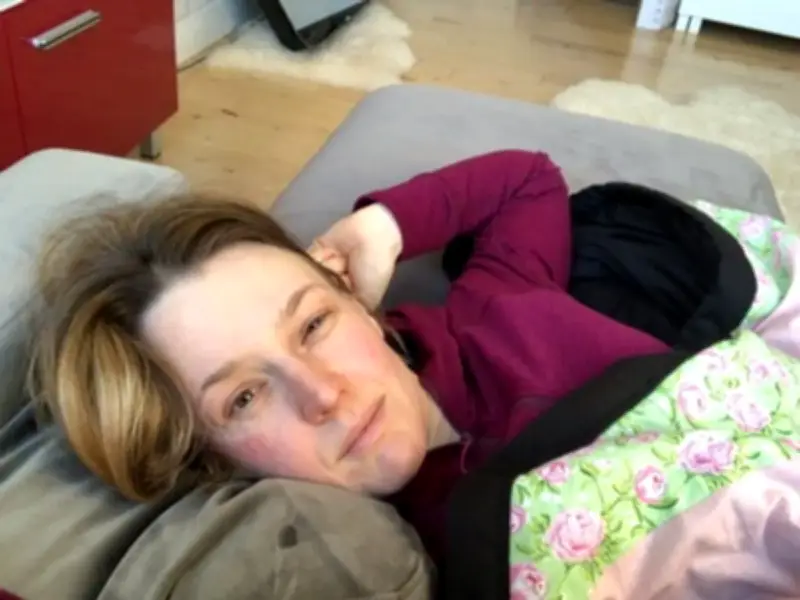
Jenny Davis, a Commonwealth silver medallist in track cycling from Fife, was diagnosed with stage three bowel cancer after ignoring a small symptom. The 43-year-old, who spent her childhood into her 30s as an athlete, assumed she was in top condition.
After retiring from sports, she noticed a sharp stabbing pain in her bowel. It lasted only a few seconds, once or twice a month, so she disregarded it. A year later, she was rushed into emergency surgery and diagnosed with stage three bowel cancer. Twelve months after that, she was told it had spread to her lungs and liver.
Athletic career and retirement
Jenny's athletic career began at age eight with judo, practised five times a week, with weekends at training camps. "It was quite an intense childhood," said Jenny, who now runs her own health company, Geno3, providing health assessments and personalised coaching. "I would compete in the judo squad in the UK, Europe and America."

She later transferred to track cycling and won a silver medal at the Delhi Commonwealth Games. "I was in the top ten in the world and top three in the country. I trialled for London Olympics and only missed out by a fraction."
Her retirement came after a training accident on the road in Fife, when she clashed with a car. "I hit the back windscreen with my face and it smashed. I was going quite fast, and I had a short-term neck injury, and a big facial cut that needed about 40 stitches."
Miscarriages and worsening symptoms
After retiring, Jenny planned to settle with her partner and have children. She then experienced two miscarriages. "After the first miscarriage, I noticed this sharp stabbing pain in my bowel. It only lasted three or four seconds, so I ignored it. I just assumed it was the miscarriage."
After the second miscarriage, symptoms worsened. "I was really constipated and I wasn't able to go to the toilet," she said. "I was still getting these shooting pains, as well. But the doctors just assumed it was the hormone changes from the pregnancy causing constipation."
Diagnosis and surgery
When Jenny saw her GP before Christmas, they advised an x-ray. That night, the hospital performed a CT scan, and Jenny was rushed into emergency surgery. "They told me that night that it was likely I had colon cancer. I had a blockage - and it was a tumour they had to remove."
She had emergency open surgery, with 30cm of her large intestine removed, and had a stoma for 18 months. She underwent three months of chemo, which turned into about four.
Two years after the initial surgery, an annual scan showed the cancer had spread to her lungs and liver. "They said: 'Usually, at this point, Jenny, we'd be putting you on palliative care, and making sure you're comfortable.' But then they said: 'but because you're young and stubborn, and an athlete, we'll give you a chance at surgery'."
In January, Jenny had surgery on her liver, in May on her left lung, and in July on her right lung. Last year, doctors found a small tumour missed during surgery in her left lung, so she had one final surgery to remove it. "After that surgery, I said, 'That's me done. I'm not doing any more surgery. I have a lot of scars now.'"
Focus on health and recovery
Jenny has now focused on her diet and lifestyle. "To give myself a bit longer, I built an unofficial medical team around me – it's exactly what an athlete would do." She tracks her sleep, fitness, and has transformed her diet. "I can feel my health has improved. If I had one wish, if a genie could grant me one wish, it would be to have known the importance of being this healthy when I was 16."
Jenny has been clear of tumours for two years, but still goes for check-ups every four months. "I don't feel the trauma of it all now. I think I processed it all as it was happening, even the loss of the children," she said. "We have to treat ourselves with compassion and love. I have less trauma because I pulled it out of the bag at the time and worked through it, rather than pushing it down."