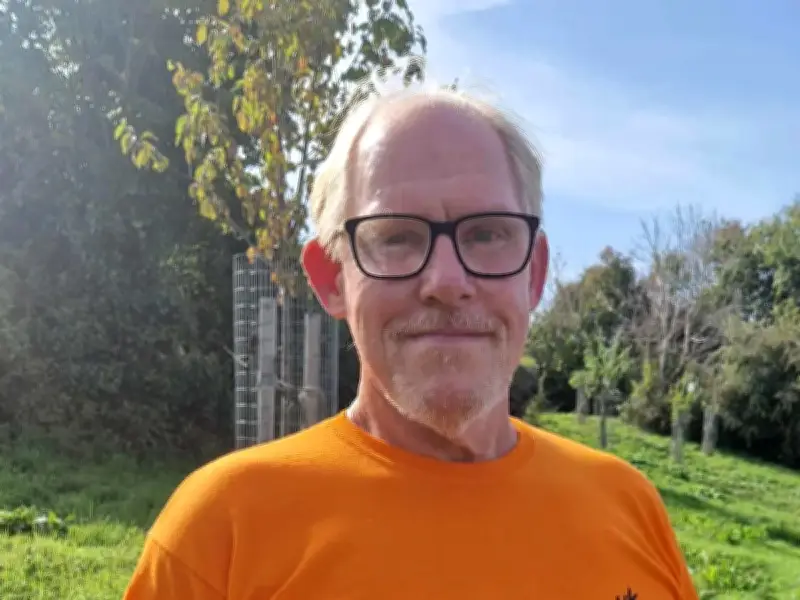
Gerard Watson, 64, from Kingswood, South Gloucestershire, was diagnosed with acute myeloid leukaemia (AML), an aggressive form of blood cancer, in February 2024, after noticing bruises on his arms that looked like a black sleeve. He is now in remission and sharing his story to raise awareness for Blood Cancer Awareness Month.
First signs of illness
Gerard first noticed his energy was lower around July 2023. By Christmas, his condition had worsened to the point where he had to lie down on his bed in the afternoons and could not climb stairs without feeling breathless.
Worried something was wrong, Gerard visited his GP. A simple blood test showed his white blood cells were a little high but within normal limits. By January 2024, he was also experiencing stomach upsets, night sweats, a loss of appetite and unintended weight loss. Then he noticed large bruises developing on his arms.

Diagnosis and treatment
“One side looked like I was wearing a black sleeve,” Gerard recalled. “I’d had a fall a few weeks before and thought it was from that. But then bruises appeared on my legs, and I had a huge lump on my calf after brushing against a car door. That’s what got me to the doctor for the final time.”
Concerned about the bruises, the GP told Gerard to go to Southmead Hospital in Bristol immediately, where he underwent more tests, including a full blood count test, which is key to diagnosing leukaemia. On February 19, 2024, Gerard was given the news he had AML.
Every year, almost 3,100 people in the UK are told they have AML, and nearly 80% of those diagnosed will not survive beyond five years. Gerard began chemotherapy pills immediately, before being transferred to Bristol Royal Infirmary (BRI) the next day once a bed became available.
Recovery and remission
Gerard stayed in hospital for seven and a half weeks through his first stage of chemotherapy, which came with brutal side effects. He experienced neutropenic sepsis, pneumonia and blood clots, ran a fever every day for 40 days straight, and later suffered a minor stroke due to the leukaemia and treatment, which knocked out a quarter of his vision.
Gerard experienced fewer side effects during his second round of chemotherapy. He was told he would also need a stem cell transplant to give him the best chance of staying in remission. He returned home just 13 days after his transplant and is now in remission.
“I am now back at work part-time, my hair has grown back, and I have put the lost weight back on,” said Gerard. “But I still get overwhelmingly tired at odd times, my lost vision will probably not come back, and I will have to take a fistful of meds twice daily for the rest of my life. I remain in remission, but every bone marrow biopsy is, of course, an anxious time.”
Gerard has since returned to his Parkruns and singing in a choir. “The doctors said my level of fitness probably helped me with my recovery. Last year, I completed my 500th Park Run with a time of 39 minutes 59 seconds,” he said.
Raising awareness
September is Blood Cancer Awareness Month. Gerard is sharing his story in support of Leukaemia UK, to raise awareness about the signs and symptoms of leukaemia. Every day, 28 people in the UK are diagnosed with leukaemia. However, the symptoms are varied and not specific, meaning it can often get overlooked or misdiagnosed.
The most common symptoms of leukaemia are extreme tiredness (fatigue), bruising, unusual bleeding, and repeated infections. Leukaemia UK is urging the public to familiarise themselves with the signs and symptoms of leukaemia, and to contact their GP and ask for a full blood count test if something doesn’t feel right.
Fiona Hazell, chief executive of Leukaemia UK, said: “We’re so grateful to Gerard for sharing his story to help raise awareness of leukaemia. Most of the signs and symptoms are not specific, so can often get mistaken for other illnesses or be explained away. Early diagnosis saves lives. That is why we encourage anyone with symptoms to make sure it’s nothing serious by speaking to their GP and asking for a full blood count test.”