
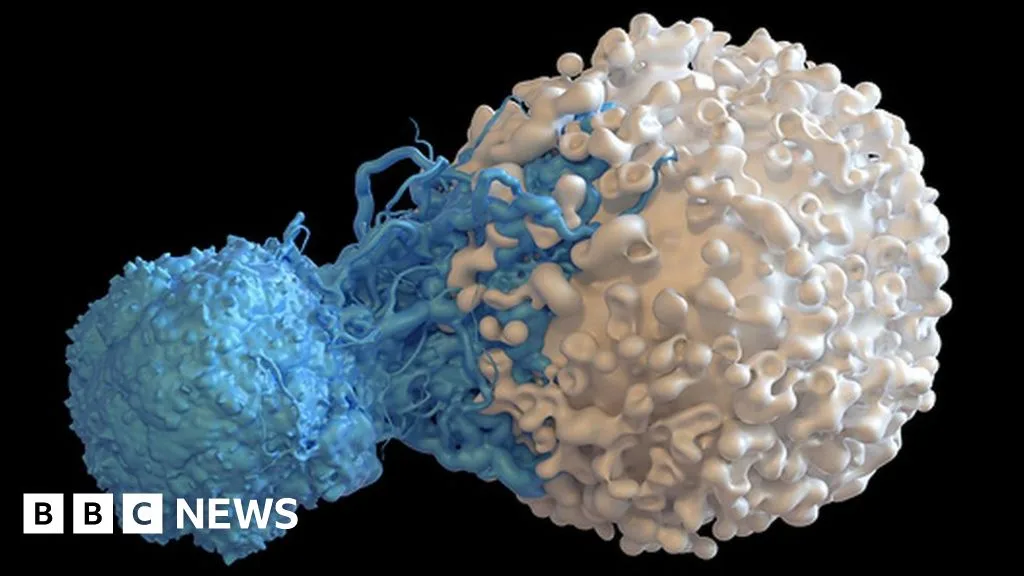
Scientists at Cardiff University have discovered a new part of the immune system that could potentially be harnessed to treat all cancers. In laboratory tests, the team found a method of killing prostate, breast, lung, and other cancers using a previously unknown type of T-cell.
The findings, published in Nature Immunology, have not yet been tested in patients, but researchers say they have 'enormous potential'. The T-cell, found in human blood, can scan the body to assess threats and attack a wide range of cancers by interacting with a molecule called MR1, present on the surface of all cells.
'There's a chance here to treat every patient,' said Professor Andrew Sewell. 'It raises the prospect of a one-size-fits-all cancer treatment.' The T-cell receptor targets MR1, which flags the distorted metabolism inside cancerous cells. This approach could overcome limitations of existing CAR-T therapies, which are highly specific and ineffective against solid tumours.
The proposed treatment would involve extracting a patient's T-cells, genetically modifying them to express the cancer-finding receptor, growing them in large quantities, and reinfusing them. However, the research has only been tested in animals and lab cells, and further safety checks are needed before human trials.
Experts caution that the work is at an early stage. Professor Daniel Davis of the University of Manchester said: 'There is no question that it's a very exciting discovery, both for advancing our basic knowledge about the immune system and for the possibility of future new medicines.'




