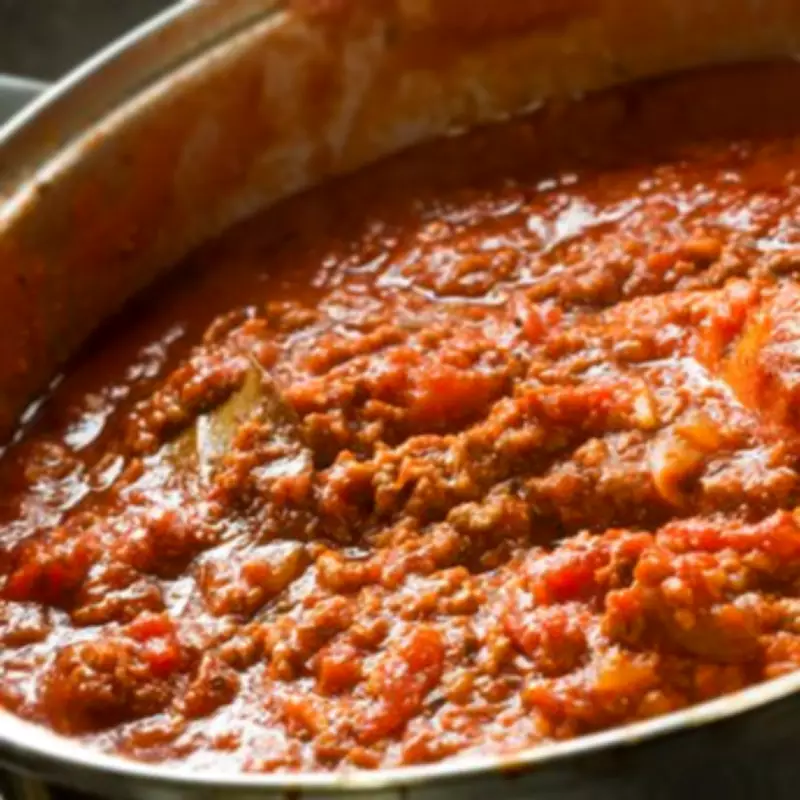
Bolognese sauce, or ragu bolognese, is considered one of the cornerstone dishes of Italian cooking. Like any traditional recipe, you will find it prepared with slight variations and local adaptations. However, the core components of the dish remain unchanged. These include starting with a finely diced mixture of celery, carrot, and onion called the soffrito, a combination of minced pork and beef, quality tinned tomatoes, and red wine.
Key to creating an exceptional bolognese is performing each preparation step correctly, with patience and care, avoiding any shortcuts. Indeed, gentle cooking proves essential for building the right flavour and texture. However, there is one ingredient that genuinely transforms everything. That ingredient is milk, which my Italian nonna would add to the basic recipe without fail every single time.
The lactic acid and calcium in milk help to soften the beef, while the milk counteracts the acidity of the wine and tomatoes, creating a smoother, more indulgent sauce.

Ingredients
- Two tablespoons of olive oil
- Two carrots
- Two celery sticks
- One onion
- 150g of pork mince
- 150g of beef mince
- Three tins of chopped tomatoes
- One tablespoon of tomato puree
- Half a cup of red wine
- One cup of milk
- Salt and pepper
Method
When making bolognese, the first job is assembling the soffrito base. This involves chopping the onion, carrots, and celery into minuscule pieces, which usually takes quite a bit of time. To speed things up, I use a food processor. While manually cutting the vegetables would ordinarily take five to ten minutes, the food processor completes it within seconds.
With the soffritto base prepared, I add oil to a large pan before adding the chopped vegetables. I prefer leaving the onions, carrots, and celery to cook gently for five to ten minutes before moving forward, as they need sufficient softening to release their flavours.
My next step is adding the meat, allowing it to brown thoroughly before mixing in the tomato puree, salt, pepper, and red wine to deglaze the pan. This stage is incredibly important because it is when the flavour elements that enhance the sauce form, and because any remaining alcohol needs to evaporate entirely – otherwise, it could leave an unwelcome sharpness in the sauce.
Next come the tinned tomatoes. For the finest results, I am committed to the Mutti brand. As I favour a velvety-smooth sauce, I consistently blend the tinned tomatoes. After the tinned tomatoes are processed, I add them to the pan, mix everything thoroughly, then add the milk before combining the sauce again.
I heat the sauce until boiling, then lower it to a low heat and allow it to bubble away with the lid on for three hours. The lengthy cooking period only intensifies the flavour – I merely stir it every half an hour during this time. Shortly before the sauce is ready, I taste it to determine whether it needs a pinch of salt or pepper. Whenever I make a big batch of bolognese, I usually freeze some of it, and it keeps perfectly well for up to three months.