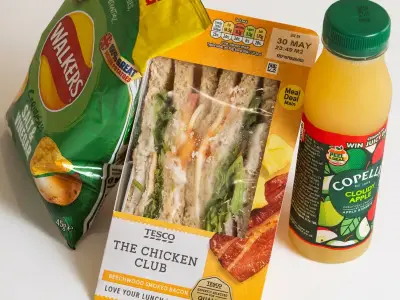
Nutritionist Holly Caske (ANutr), one of Biomel's leading nutritionists, has shared guidance on which meal deal items to avoid and what to look out for when choosing a healthier combination.
Meal deals have become a popular lunchtime choice for people across Britain, but they can be notoriously unhealthy, depending on what combination you get. Thousands across the country buy a meal deal from the supermarket close to their home or workplace every week, if not every day.
The healthiest meal deal combinations
Caske told the Daily Express: "When choosing a meal deal, the healthiest option is usually one that combines fibre-rich carbohydrates, a good source of protein, vegetables or fruit, and some healthy fats. Instead of focusing on calories alone, it’s worth looking at how filling and nutritionally balanced the meal is."
She advises shoppers to avoid the following nine items:
- All-day breakfast sandwiches, which combine processed meat, cheese, sauces and refined bread.
- Large pasta pots with cream-based sauce, as they can be very calorie-dense and offer relatively little fibre.
- Sausage rolls and pasties, which tend to be high in saturated fat and salt, with little fibre.
- Most crisps, because they often add a significant amount of salt and calories without providing much protein or fibre.
- Chocolate bars, which can add a substantial amount of sugar and saturated fat.
- Cakes, muffins, cookies and flapjacks, which can be surprisingly calorie-dense and contain as much sugar and saturated fat as a full dessert.
- Sweets, which provide very little nutritional value.
- Full-sugar Coke, lemonade, and energy drinks, which add a large amount of sugar without making you feel fuller.
- Large bottled frappes, sweetened iced coffees, milkshakes, and chocolate-flavoured milk, which often provide little nutritional value but contain a lot of sugar and calories.
Long-term health risks
"Over time, regularly consuming too much salt can contribute to raised blood pressure, and a diet high in saturated fat can increase LDL cholesterol," Caske added.
"Consistently eating more calories and added sugar than your body needs can be a leading cause of weight gain and increase the risk of developing type 2 diabetes and cardiovascular disease."
She also warned that a diet with "very little wholegrain, fruit, vegetables, nuts and legumes" means that people are missing out on "many of the different types of fibre that support a diverse gut microbiome and encourage healthy digestion".
Caske's go-to rule
"My go-to rule when choosing a meal deal is looking at what I can add rather than just what to avoid," she said. "I’d suggest always looking for a main that has protein and vegetables, choosing a fibre-rich snack, and making water or a low-sugar drink the usual choice."
"Of course, the occasional packet of crisps, chocolate bar or sugar drink is not going to cause any long-term effects. The most important thing is having a healthy pattern, especially if you are having a meal deal multiple times a week."