
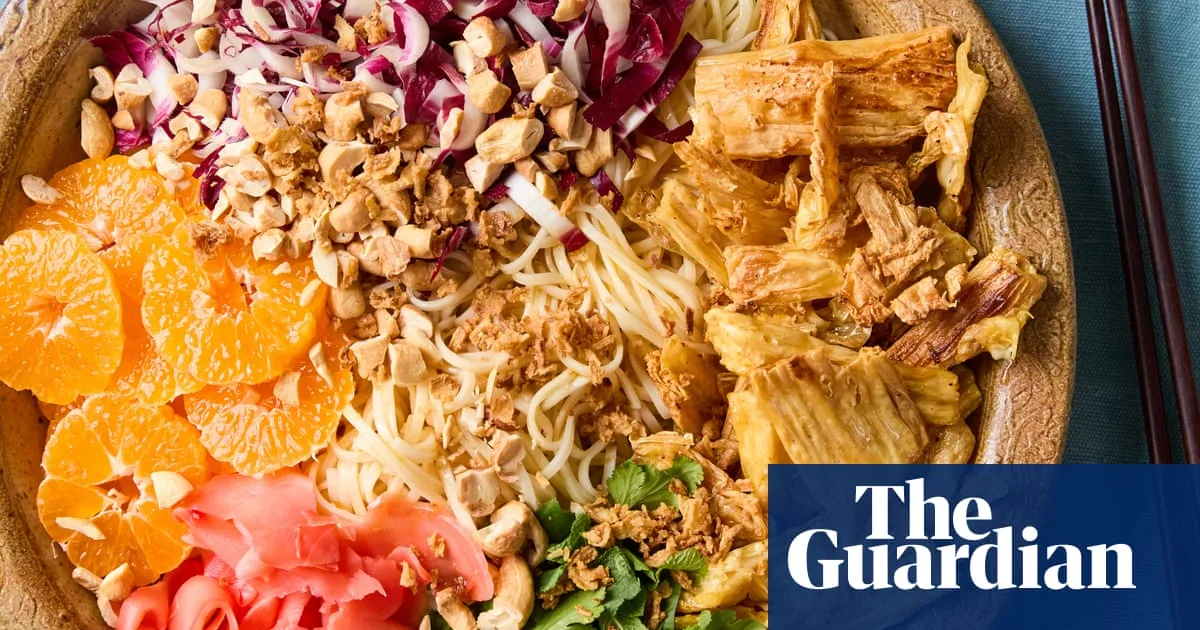
This Tuesday marks the start of the lunar new year and the year of the fire horse, symbolising fresh opportunities, personal growth and good fortune. To celebrate, Meera Sodha shares her vegan recipe for a prosperity toss noodle salad, a variation on a dish she first ate at Mandy Yin's restaurant, Sambal Shiok. Eaten across Malaysia and Singapore, the tradition involves everyone at the table tossing the salad high into the air with chopsticks; the higher the toss, the more luck it is said to bring.
The recipe requires some preparation, with the only cooking being frying the beancurd sticks and cashews and boiling the noodles. Dried beancurd sticks and pink sushi ginger can be found in Chinese supermarkets or online. When soaked, the beancurd sticks become chewy, like thinly sliced tofu. You will need a large lipped bowl or platter and four pairs of chopsticks.
Ingredients include 120g dried beancurd skin sticks, 6 clementines (2 sliced, 4 juiced), 3 tbsp rice vinegar, 2 tbsp light soy sauce, 4 tsp toasted sesame oil, 8 tbsp rapeseed oil, 150g dried wheat noodles, 100g roasted cashews, fine sea salt, 2 small red chicory, 30g fresh coriander, 30g mint, 30g pickled pink sushi ginger, and 4 tbsp crispy fried onions.
To prepare, soak the beancurd sticks in boiling water for 30 minutes until soft, then drain. Make a dressing by whisking clementine juice, rice vinegar, soy sauce, 2 tsp sesame oil, and 4 tbsp rapeseed oil. Cook the noodles according to packet instructions, rinse under cold water, drain, and dress with 2 tbsp rapeseed oil. Toast the cashews in a dry pan for about five minutes until browned. Fry the drained beancurd skins in 2 tbsp rapeseed oil with salt and remaining sesame oil for five minutes until crisp.
Assemble by placing noodles in the centre of a lipped bowl, arranging chicory, herbs, beancurd skin, clementine slices, and pickled ginger around the outside, then scattering cashews and crispy onions on top. Pour over the dressing and encourage everyone to toss the salad together with chopsticks, shouting 'Lo Hei!' if willing.




