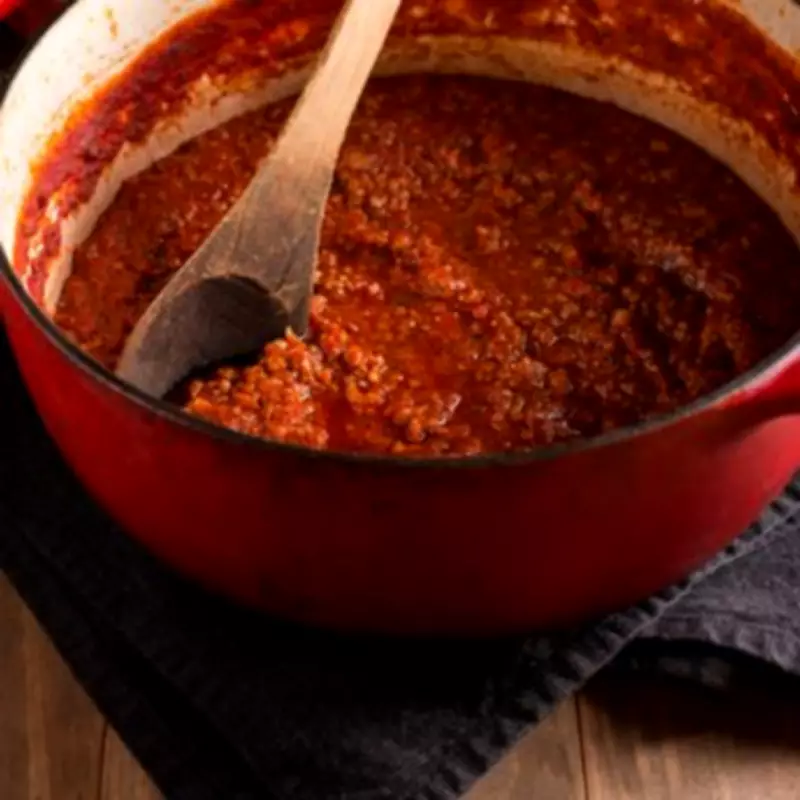
The Italian Grandmother's Secret to Perfect Bolognese Sauce
Bolognese sauce, known traditionally as ragu bolognese, stands as one of the foundational pillars of Italian culinary heritage. This classic dish, celebrated across generations, often features subtle variations and regional adaptations that reflect local tastes and traditions.
The Core Components of Authentic Bolognese
Despite these variations, certain essential elements remain constant in any authentic bolognese preparation. The process begins with a finely chopped base of celery, carrot, and onion, collectively known as soffrito, which forms the aromatic foundation of the sauce.
This is followed by a balanced blend of minced pork and beef, quality tinned tomatoes, and, crucially, red wine. Each ingredient plays a specific role in building the complex flavor profile that characterizes this beloved dish.

The Importance of Patience in Cooking
Achieving an outstanding bolognese requires meticulous attention to detail throughout each cooking stage. Rushing the process can compromise the final result, making patience a key virtue in the kitchen.
Slow cooking proves particularly crucial, as it allows flavors to develop fully and creates the ideal consistency that distinguishes exceptional bolognese from ordinary versions.
The Transformative Secret Ingredient
However, there exists one simple ingredient that truly elevates bolognese sauce to extraordinary levels—a secret faithfully employed by Italian grandmothers for generations. That ingredient is milk.
The lactic acid and calcium present in milk work to tenderize the beef, while simultaneously balancing the sharpness of the wine and tomatoes. This results in a silkier, more luxurious sauce with enhanced depth of flavor.
Complete Bolognese Recipe with Traditional Techniques
Ingredients
- Two tablespoons of olive oil
- Two carrots
- Two celery sticks
- One onion
- 150g of pork mince
- 150g of beef mince
- Three tins of chopped tomatoes
- One tablespoon of tomato puree
- Half a cup of red wine
- One cup of milk
- Salt and pepper to taste
Preparation Method
The preparation begins with creating the soffrito mixture. This involves dicing the onion, carrots, and celery into tiny pieces—a task that traditionally requires considerable time and attention.
To streamline this process, many modern cooks utilize a food processor. While manual chopping typically occupies five to ten minutes, a food processor can accomplish the same task in mere seconds with proper technique.
Begin by using the pulse function to process the onion. After peeling and quartering, place it in the processor with the main blade—typically requiring just three pulses to achieve a fine chop.
Next, process the carrots and celery, which generally need approximately five pulses to reach the same consistent texture as the onion.
Cooking Process
Once the soffrito mixture is prepared, pour oil into a large pan and add the vegetable medley. Allow the onions, carrots, and celery to sizzle gently for five to ten minutes, as proper softening is essential for unlocking their full flavor potential.
The next step involves introducing the meat, letting it brown thoroughly before stirring through the tomato puree, salt, pepper, and red wine to deglaze the pan. This phase proves absolutely vital, as it develops the flavor compounds that elevate the sauce while ensuring complete evaporation of any lingering alcohol that might otherwise leave an unpleasant tang.
Then add the tinned tomatoes. For optimal taste, many experienced cooks recommend specific brands known for quality. To achieve a silky-smooth sauce consistency, consider blending the tinned tomatoes before incorporation.
The Crucial Milk Addition
Once the tinned tomatoes are prepared and added to the pan, give everything a thorough stir before pouring in the milk—the secret ingredient that transforms the sauce. Stir the mixture once more to ensure even distribution.
Bring the sauce to a boil, then reduce to a gentle heat and leave it to simmer with the lid on for approximately three hours. This extended cooking time significantly deepens the flavor profile, with occasional stirring every half hour recommended throughout the process.

Just before completion, sample the sauce to check whether additional seasoning with salt or pepper might be required. For those preparing larger quantities, bolognese sauce freezes exceptionally well, maintaining quality for up to three months when properly stored.
This traditional approach, passed down through Italian families, demonstrates how one simple ingredient—when combined with proper technique and patience—can transform a classic dish into something truly extraordinary.