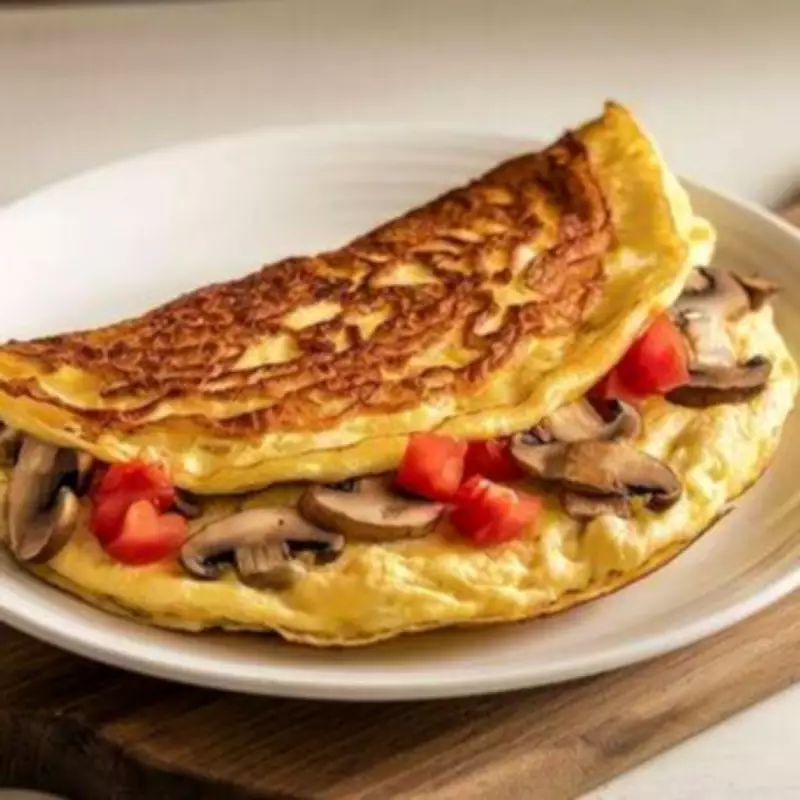
The Essential Technique Every Chef Recommends for Perfect Omelettes
Omelettes represent one of the most versatile and quick dinner solutions, yet achieving that ideal delicate, silky texture can prove surprisingly challenging. A poorly executed omelette often results in a rubbery, overcooked disappointment that lacks flavour and appeal. To uncover the secrets to omelette perfection, we consulted multiple culinary professionals who all emphasised one fundamental step that transforms ordinary eggs into extraordinary dishes.
The Universal Agreement: Whisking Is Everything
Henry O'Connor, founder of Better Eggs and an egg specialist, explains that proper whisking introduces air into the mixture, creating the light, fluffy consistency that distinguishes excellent omelettes from failures. "A well-whisked mixture introduces air, creating the light, fluffy texture that separates a great omelette from a flop," he states. O'Connor notes that insufficient beating represents a common mistake among home cooks, leading to dense results.
He further advises seasoning eggs during the whisking stage to ensure flavour permeates throughout the omelette. For cooking, O'Connor recommends medium-low heat to allow eggs to "set gently so the omelette is tender and melt-in-the-mouth," cautioning that "quick cooking may be convenient, but it sacrifices texture." His preference for butter over olive oil comes with specific instructions: "Melt until foamy, then pour in the eggs. It should sizzle lightly, not aggressively."

International Perspectives on Omelette Preparation
José Pizarro, celebrated as the "Godfather of Spanish cuisine in the UK," advocates for gentle whisking to achieve a smooth, natural texture while warning against over-beating. "I whisk the eggs briefly, just enough to break them up. I like the texture, silky and natural, no over-whisking. I season at this stage with a pinch of salt so it dissolves properly," he explains.
Pizarro shares his "lazy omelette" technique that eliminates folding or mixing fillings into the egg mixture. "For my lazy omelette, I keep everything as simple as possible. I heat a small non-stick pan with a little olive oil. While it warms, I whisk the eggs lightly, nothing too vigorous. When the oil is hot, I pour the eggs in and let them set gently. Once it's cooked but still soft on top, I simply slide it straight onto the plate." His preferred topping combination features 5J jamón paired with crisps for salty, crunchy contrast.
Professional Recipes and Techniques
Sergio Martino, head chef at The Wesley in London, recommends gently whisking eggs until smooth but not excessively frothy to achieve delicate omelettes. He provides a straightforward recipe showcasing seasonal mushrooms and rich Parmesan:
- Prepare mushrooms: Cook sliced mushrooms in extra-virgin olive oil until golden and softened, seasoning with salt and pepper.
- Whisk eggs: Break three eggs into a bowl and whisk until smooth but not overly frothy.
- Cook gently: Transfer eggs to a lightly oiled non-stick pan over medium-low heat, allowing them to set gradually while stirring occasionally.
- Add cheese: Scatter grated Parmesan over nearly set eggs for richness and nutty flavour.
- Finish and serve: Fold omelette over mushrooms, remove from heat briefly, and serve immediately while hot.
Barry D'Arcy, private yacht chef and founder of Ocean Earth Chefs, uses three lightly beaten eggs at room temperature combined with creme fraiche and unsalted butter. His technique involves warming butter until foamy without browning, then carefully sweeping eggs from outer edges toward the centre with a spatula while tilting the pan to distribute runny mixture. "As the eggs start to set, add the salt and creme fraiche. You could also add your favourite fillings at this stage," he suggests before folding the omelette at a 45-degree angle.

Michelin-Level Insights and Cultural Variations
Martyn Nail, culinary director at The Dorchester Hotel, advises whisking eggs thoroughly with a substantial fork or whisk before seasoning. His method involves creating an initial shell in the pan, then vigorously whisking this shell off the heat to create a creamy, soft mixture resembling scrambled eggs. The pan moves repeatedly on and off heat to prevent colour development, resulting in a pale yellow, cigar-shaped omelette that should be "baveuse" – the French term describing preferred creamy tenderness.
Simon Bonwick, Michelin-recognised chef at The Crown at Bray, recommends beating eggs with a fork before combining with cream, butter, and his preferred filling: sweet, fleshy cep mushrooms gathered from Marlow's woods. His recipe emphasises high-quality ingredients and maintaining the centre slightly undercooked, knowing residual heat will complete cooking after plating.
Mehak Kansal, chef and founder of Bindas in Mayfair, shares her cultural approach that avoids cream or milk, instead using an extra egg for richness and masala for flavour. Her method involves beating two to three eggs before folding in mature cheddar, diced red onion, cherry tomatoes, green chillies, and spices including chilli powder, cumin, and turmeric. Cooked in aromatic ghee until crispy and golden, she serves this spicy, cheesy omelette with buttered toast and chai for "pure comfort on a plate."
Common Mistakes and Pro Tips
- Insufficient whisking leads to dense, heavy omelettes lacking airiness
- Overcooking at high heat creates rubbery textures rather than tender results
- Overfilling transforms omelettes into messy constructions rather than balanced dishes
- Neglecting seasoning during whisking results in uneven flavour distribution
- Using wrong fats – most chefs prefer butter for its flavour and cooking properties
Whether preparing a simple French omelette, Spanish-inspired creation, or spiced Indian variation, chefs unanimously agree that proper whisking forms the foundation of omelette excellence. This crucial step, combined with gentle cooking and balanced fillings, transforms basic ingredients into restaurant-quality dishes suitable for any meal occasion.