

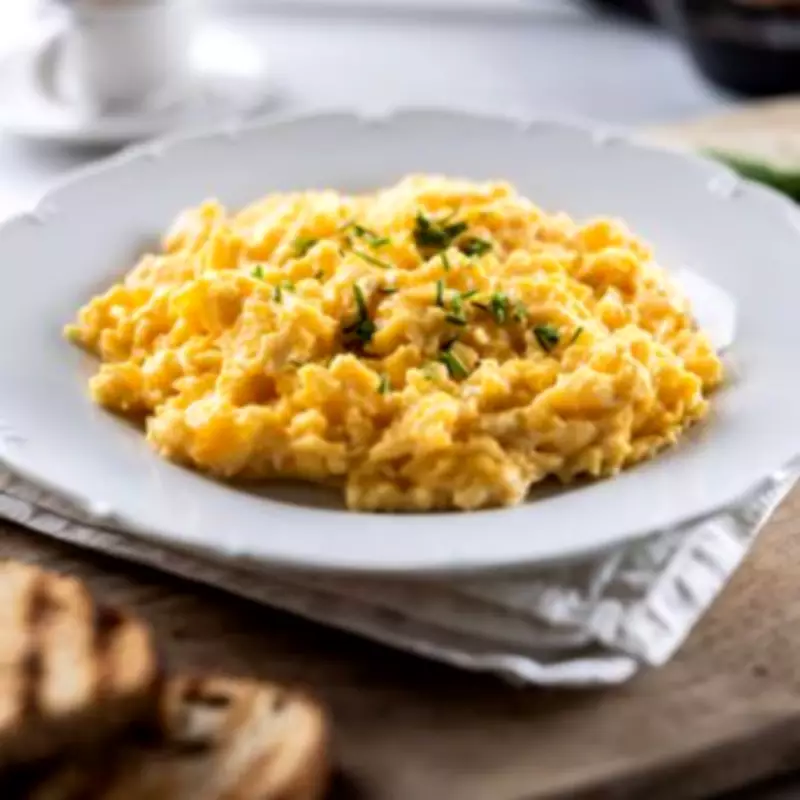
Chef's Secret for Creamiest Scrambled Eggs Uses Surprising Cupboard Staple
A much-loved chef's cooking hack creates incredibly creamy scrambled eggs in under two minutes with minimal stirring, revolutionising breakfast preparation for home cooks everywhere. This technique promises to deliver restaurant-quality results with minimal effort, using a common ingredient often overlooked in egg dishes.
The Surprising Ingredient That Transforms Scrambled Eggs
Food writer Molly Adams has praised a cooking trick from renowned chef and food journalist J. Kenji López-Alt, who utilises a common cupboard staple to achieve the creamiest scrambled eggs possible. According to Kenji and food blogger Lady & Pups, the secret weapon for creating luxurious scrambled eggs is cornflour, specifically prepared as a cornflour slurry with milk.
Molly wrote for Simply Recipes about her experience: "This dog food goo turned out to be the creamiest custard-like scrambled eggs she had ever made. Plus, it required little stirring and cooked in less than two minutes." The description highlights how this simple addition can dramatically transform a basic breakfast dish into something extraordinary.

The Science Behind the Creamy Texture
There is solid scientific reasoning supporting this technique, as Molly explained in detail: "The starch binds with the protein, preventing the eggs from getting overcooked and rubbery. Also, the starch ensures no water leaks out of the eggs once they are cooked through—every breakfast cook's worst nightmare is solved!" This dual action of the cornflour creates both texture protection and moisture retention, addressing common scrambled egg problems simultaneously.
Kenji described the recipe as "weekend eggs" and elaborated on the science: "Because we add that cornstarch slurry in there, the proteins just don't bind as tightly. And the other good thing is that they don't overcook as easily." The technique produces wonderfully soft curds that maintain their delicate texture throughout the cooking process.
Additional Techniques for Ultimate Creaminess
But the cornflour slurry isn't the only secret to achieving perfect scrambled eggs. Kenji also recommends incorporating cubed cold butter directly into the egg mixture before cooking. This additional step helps achieve a richer, creamier and softer consistency that elevates the dish even further.
The cold butter melts at a gradual pace during cooking, creating pockets of richness throughout the eggs while helping to control the cooking rate and preventing the eggs from drying out. Kenji explained in a TikTok video for New York Times Cooking: "As the butter melts into the eggs, it helps to keep them tender." This combination of techniques ensures maximum creaminess with minimal effort.
Practical Application and Recipe Details
For practical application, Kenji provides specific measurements: for four eggs, use two teaspoons of cornflour dissolved in one and a half tablespoons of milk. Water can also be substituted or used in combination with milk according to preference. The slurry should be thoroughly mixed with whisked eggs before cooking begins.
Introducing the slurry to the eggs acts as a clever shortcut that significantly reduces the amount of stirring typically required for creamy scrambled eggs. Molly noted: "And even though you can get a similar texture by cooking eggs slowly over low heat while constantly stirring, this smart shortcut saves time and energy. You should give it a try."
Complete Recipe for Creamy Scrambled Eggs
Ingredients:
- Two teaspoons potato starch, tapioca starch or cornstarch
- 1.5 tablespoons milk or water
- Four tablespoons cold unsalted butter, cut into ¼-inch cubes
- Four eggs
- Pinch of salt
Method:

- In a medium bowl, whisk together the starch with one and a half tablespoons of water until no lumps remain.
- Add half the butter cubes to the starch mixture.
- Add the eggs and salt, then whisk, breaking apart any clumps of butter that have stuck together, until the eggs are frothy and well combined. (There will still be solid pieces of butter throughout the mixture.)
- Position your serving plate close to the hob. Heat one tablespoon of water in a 10-inch non-stick frying pan over a medium-high heat, swirling gently until the water evaporates, leaving just a few small droplets.
- Straight away, add the remaining two tablespoons of butter and swirl briskly until the butter is largely melted and foamy, but not browned, for roughly ten seconds.
- Immediately pour in the egg mixture and cook, pushing and folding the eggs with a spatula, until they are slightly less done than you'd prefer, around one to two minutes, depending on how well cooked you like them.
- More vigorous stirring will produce finer, softer curds, while more gentle stirring will create larger, fluffier curds.
- Transfer straight away to the serving plate and enjoy immediately.
The technique produces scrambled eggs that Kenji describes as "much softer and more tender, and moister, and creamier, and all those other words that make you feel uncomfortable"—a testament to the remarkable transformation achieved through these simple kitchen hacks.





