

Cabbage Core: The Unlikely Vegetable Trend That's Here to Stay
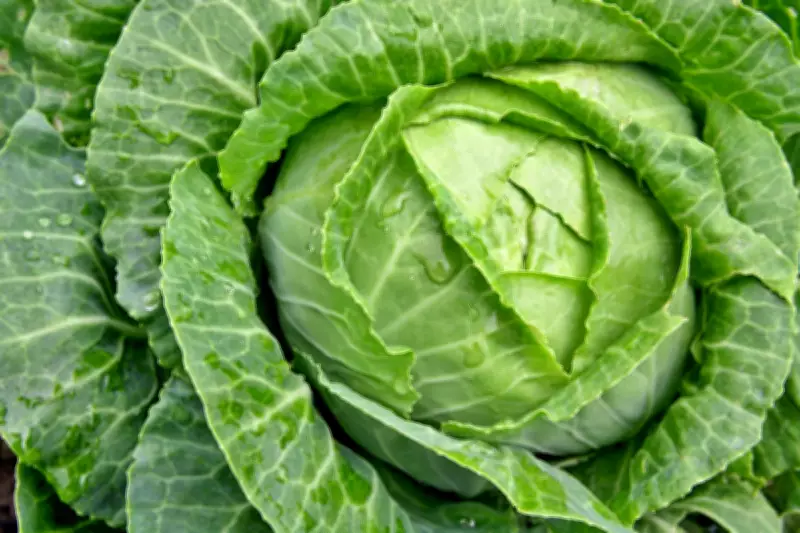
Cabbage, traditionally the least glamorous vegetable at the greengrocers, is having a moment. Trend forecasters have declared 2026 as the year of the cabbage, while Pinterest has announced the rise of "cabbage core," largely involving crockery shaped like cabbage leaves, reminiscent of something your grandmother owned in 1977. It has also become fashionable enough to appear in a Vogue spread and serious enough for Business Insider to pay attention, extolling cabbage's health virtues, digestive credentials, and renewed interest in cabbage soup.
This is not, on the face of it, intuitive. Cabbage has never enjoyed the glossy halo afforded to avocados, blueberries, or anything described as an ancient grain. It is the vegetable equivalent of sensible shoes: practical, reliable, and almost aggressively uninterested in seduction. Even its name lacks romance. No one has ever leaned across a candlelit table and whispered, "Shall we share the cabbage?" And yet, here we are.
The Curious Comeback of a Staple
The curious thing about cabbage's comeback is that it never actually left. Long before it became a Pinterest aesthetic or a wellness darling, cabbage was feeding people across continents and centuries with very little fuss. Its origins trace back thousands of years to Western Europe, where wild relatives of modern brassicas were first cultivated. From there, it travelled east to Russia, the Balkans, and Central Europe, in the form of soup and stuffed leaves, and further to Asia, where Korea turned it into kimchi, and west to Ireland, where cabbage fused itself to the national psyche alongside potatoes. None of this required a rebrand.

Cabbage's less flattering chapter arrived much later, courtesy of diet culture. The cabbage soup diet – that enduring relic of nutritional folklore – gained notoriety in the late 20th century, particularly during the calorie-obsessed 1980s and 1990s. The premise was simple: eat vast quantities of cabbage soup, lose weight at an improbable speed, repeat until bored or faint. Like many fad diets, it combined a grain of physiological truth with a heroic disregard for sustainability or enjoyment. Nutritionists have spent decades gently dismantling it.
"The soup itself can be nutritious," says Rob Hobson, registered nutritionist and author of The Low Appetite Cookbook, "but the extreme diet built around it really isn't that great. Very low-calorie cabbage-based diets tend to be low in protein and fat, and most of the rapid weight loss is water and glycogen." There is something almost poetic about cabbage's fate. A vegetable that nourished generations was reduced, briefly, to a vehicle for dietary self-punishment, less food than an endurance test. Its reputation suffered accordingly. Cabbage became associated with deprivation, austerity, and penance.
Nutritional Redemption and Modern Appeal
Part of cabbage's renewed appeal lies in how neatly it aligns with modern nutritional preoccupations, many of which are, ironically, more evidence-based than the diet fads that once weaponised it. Fibre, gut health, and blood sugar regulation now dominate food conversations once reserved for calories and fat grams. Volume eating – the idea of maximising satiety and nutrition without excessive energy intake – has shifted from niche dieting tactic to mainstream logic.
"Cabbage definitely earns its place nutritionally," Hobson says. "It's very low in calories but provides fibre, vitamin C, vitamin K and folate, plus glucosinolates, the sulphur-containing compounds found in all cruciferous vegetables." Compared with broccoli or kale, it's slightly less nutrient-dense per gram, but it still belongs to the same protective family. "Diets rich in cruciferous vegetables are associated with a lower risk of certain cancers, although that's about overall dietary patterns rather than cabbage acting as a single superfood. It's not magic, but it's genuinely good for you."

The gut health conversation is where cabbage's virtues become particularly compelling. Much of the benefit comes down to basic but powerful physiology. "Two main things," Hobson says. "First, the fibre adds bulk and holds water, which supports bowel regularity. Second, some of its carbohydrates reach the large intestine, where gut bacteria ferment them. That fermentation produces short-chain fatty acids, which help support the gut lining and regulate inflammation. So it's doing more than just 'keeping you regular.'"
Cabbage is quietly feeding the ecosystem within us. Does that make it a prebiotic? Sort of, with caveats. "Cabbage isn't a purified prebiotic ingredient like inulin, but it does contain fermentable fibres that can behave in a prebiotic-like way. So put simply: it feeds beneficial gut bacteria and helps create a healthier gut environment." Of course, the same fermentable qualities that underpin these benefits also explain cabbage's most infamous side effect: gas. The vegetable's digestive reputation is not entirely undeserved. "Certain carbohydrates in cabbage are broken down by gut bacteria, and gas is a natural by-product of that process," says Hobson. "If someone isn't used to eating much fibre or if they're sensitive, such as with IBS, then that fermentation can feel uncomfortable. Portion size and gradual introduction make a big difference here."
Culinary Versatility and Chef Endorsements
If cabbage's physiological credentials are strong, its culinary appeal is arguably even more persuasive. Chefs have long understood what diet culture temporarily obscured: cabbage is extraordinarily versatile when treated with respect. Will Murray, head chef and co-owner of Fallow, was evangelising cabbage long before Pinterest caught on. "Chefs love it as an ingredient because it's cheap, resilient and grows incredibly well locally," he says. "When it's cooked with care, it can deliver amazing texture, depth and sweetness, making it an excellent centrepiece rather than just a side dish."
The key is technique. "Cut into wedges and confit in a pan to add colour to the leaves, then gently cook through in the oven until caramelised. The leaves should be translucent and sweet. Pair with umami-rich fats such as brown butter or miso butter." This is cabbage reimagined not as boiled obligation but deeply savoury indulgence. Fermentation offers another route to transformation. James Cooper and Nat Preston of Shedletskys built an entire business on it. "Shedletskys really started with kimchi," they explain. "It's not uncommon for us to ferment batches for a month before we're happy with it." Their home-friendly adaptation acknowledges modern impatience while preserving flavour logic.
What emerges across these perspectives is a consistent theme: cabbage rewards care. Roast it, braise it, grill it, ferment it – each method reveals a different personality. Sweetness, bitterness, richness, funk. Perhaps cabbage's greatest strength is precisely its lack of glamour. It is inexpensive, widely available, and stubbornly seasonal. It asks little, delivers much, and carries none of the aspirational baggage of trendier ingredients. Cabbage is not new. It is just newly appreciated. Not magic. Just very, very good.
Recipes to Celebrate Cabbage
To showcase cabbage's versatility, here are a few recipes that highlight its potential:
- Confit January King Cabbage: Slow-cooked in butter and pushed to caramelised excess, this dish from Fallow explains why chefs never abandoned cabbage.
- Lacto-Fermented Chinese Leaf Cabbage: A home-friendly adaptation from Shedletskys, ready in days with a kimchi-like flavour profile.
- Simple Sauerkraut: Tim Spector's recipe for fermented cabbage, perfect for gut health and lasting for weeks.
- Cabbage Rolls: Benny Blanco's hearty, stuffed cabbage rolls, ideal for making ahead and freezing.
- Roast Cabbage with Tomato and Lentil Salad: A summer salad with roasted cabbage wedges, lentils, and chimichurri dressing from Mindful Chef.
- Roasted Cabbage Steaks with Apple-Dijon Vinaigrette: Antoni Porowski's meat-free dish with caramelised cabbage and a tangy dressing.
- Korean Chorizo and Sesame Roast Cabbage Jjigae with Rice: A bold stew from Sorted Food, absorbing spice and umami flavours.
These recipes demonstrate that cabbage is more than just a trend; it's a nutritious, versatile, and enduring staple that deserves its place in modern kitchens.





