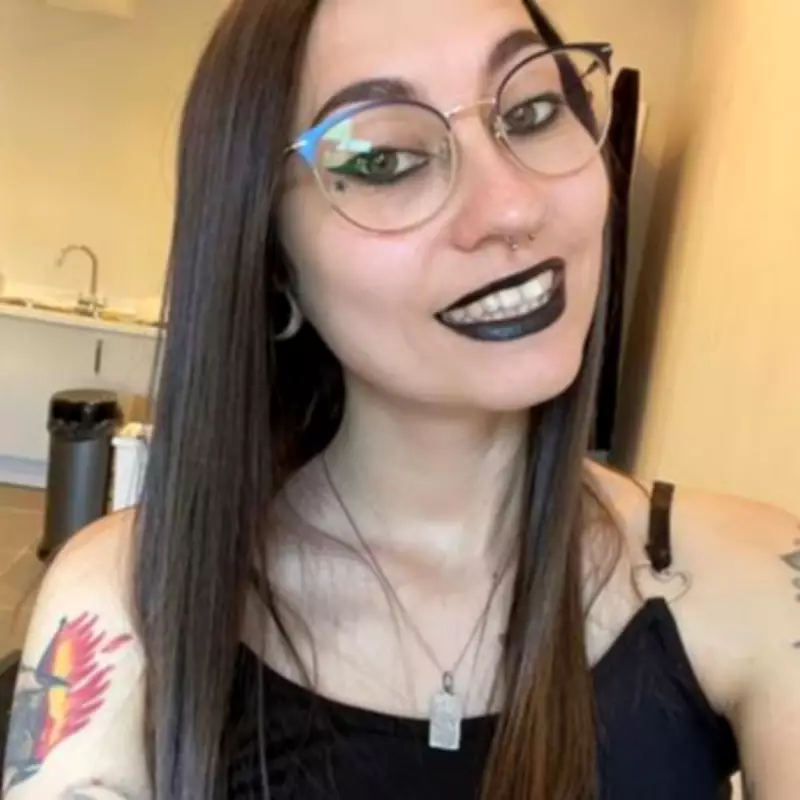
Manchester Woman's Life Altered After Spotting Subtle Vision Change
Sally Lowe, a 31-year-old woman from Denton, Manchester, experienced a life-altering diagnosis after noticing a subtle difference in her vision. What began as a seemingly minor visual disturbance quickly escalated into a rare cancer diagnosis that would force her to make a difficult treatment decision.
The Initial Symptoms
On Monday, March 16, Sally had just settled at her desk to begin work when she first noticed something was wrong with her eyesight. She described seeing a black spot that couldn't be detected when looking directly at her eye. Initially stationary, the dot began moving from side to side by the following day as she shifted her gaze.
"The black dot had gone by the Wednesday, but then my vision was really blurry and there were loads of floaters going on," Sally recalled. "I just knew something wasn't right."

Alongside the moving black spot, she experienced blurred vision and the appearance of floaters – small specks or strands that drift across one's field of vision.
The Optician's Concern
After noticing these persistent symptoms, Sally booked an appointment with her optician. During the consultation, the optician took photographs of her eye for examination. When reviewing the images, Sally observed the optician's visible concern.
"You could see she had a real concerned look on her face," Sally said. "She sat down and explained what the dot was and that I needed to go to the emergency room ASAP."
The optician identified a shadow on Sally's eye, known as a choroidal nevus, though she initially suspected it might be a detached retina.
Hospital Visits and Diagnosis
Following the optician's urgent recommendation, Sally visited Manchester Royal Infirmary and spent hours in A&E undergoing numerous eye examinations. Medical professionals then referred her to St Paul's Eye Hospital in Liverpool for further assessment to "rule out cancer."
More than two weeks later, during her appointment at the specialist eye hospital, Sally received the devastating diagnosis: choroidal melanoma, a rare eye cancer affecting approximately seven people per million annually.
"I kind of zoned out," Sally remembered of the moment she received the news. "It was a bit like she was talking to me but I wasn't taking it in. I burst into tears thinking 'why me.' I was just in a lot of shock knowing how much it would upset my family."
This form of cancer typically presents with minimal or no symptoms and is exceptionally rare among younger individuals.
Treatment Decision
Sally was presented with two treatment options:
- A four-day course of radiotherapy combined with eye injections every four to six weeks for an entire year
- Complete removal of her affected eye
After careful consideration, Sally opted for eye removal rather than enduring a year of intensive treatment.
"I suffer with depression and anxiety, and I don't think mentally I could have coped knowing I had a tumour in the back of my eye," she explained. "The doctor said there was maybe a 20-30% chance that my eyesight would remain the same or not improve anyway, and I could potentially lose my eye regardless."
"For me, going through a year's worth of painful, uncomfortable treatment – I don't think I could have coped with it very well," Sally added. "I'm feeling a lot better about the decision now. I think I've come to terms with it and I've kind of mourned the loss."
Maintaining Independence
One significant concern for Sally was whether she would be able to maintain her independence, particularly regarding driving. After contacting the DVLA, she received reassuring news.
"I had to ring the DVLA to check I could drive, and they said there are no restrictions as long as I'm okay," Sally shared. "So knowing I've not lost my independence in my driving and I can still keep my job has been important."
Medical Perspective
Rumana Hussain, Consultant Ocular Oncologist and Surgeon from St Paul's Eye Unit at Royal Liverpool University Hospital, provided medical context about choroidal melanoma.

"Choroidal melanoma is a rare but serious cancer of the eye with around 650 people diagnosed each year in the UK," Hussain explained. "Because it is so uncommon, treatment is only provided in a small number of highly specialist centres."
Hussain noted that while some patients experience symptoms such as flashing lights, blurred vision, or dark shadows in their sight, approximately one-third have no symptoms at all and are diagnosed during routine eye tests.
"That's why regular optician check-ups are so important, even if you think your eyes are fine," she emphasized. "When caught early, these tumours can often be treated with radiotherapy to destroy the cancer cells."
For more advanced cases like Sally's, surgery may be necessary. Hussain reassured that modern artificial eyes are extremely realistic and carefully hand-painted to match the remaining eye.
Public Health Message
Following her diagnosis, Sally shared an emotional video on TikTok under her username @erdyaltgirl, detailing the symptoms she experienced and urging her followers to prioritize regular eye examinations.
"Please go into the opticians and pay the extra money for the OCT scan, and just keep an eye on it," she urged. "Even if you don't wear glasses, go get your eyes checked. It doesn't matter what age. Maybe I left mine a little bit too late because I didn't have symptoms."
Hussain echoed this sentiment, stating: "The most important message is not to ignore changes in your vision and to attend regular eye checks – they can be lifesaving."
Next Steps
Sally is now scheduled for an operation in Liverpool later this month to have her left eye removed. Following surgery, she will need to undergo additional tests to ensure the cancer has not spread to other parts of her body.
The medical team at St Paul's Eye Unit offers support from a health psychologist for all patients, particularly those facing the prospect of losing an eye, to aid them through times of uncertainty.