

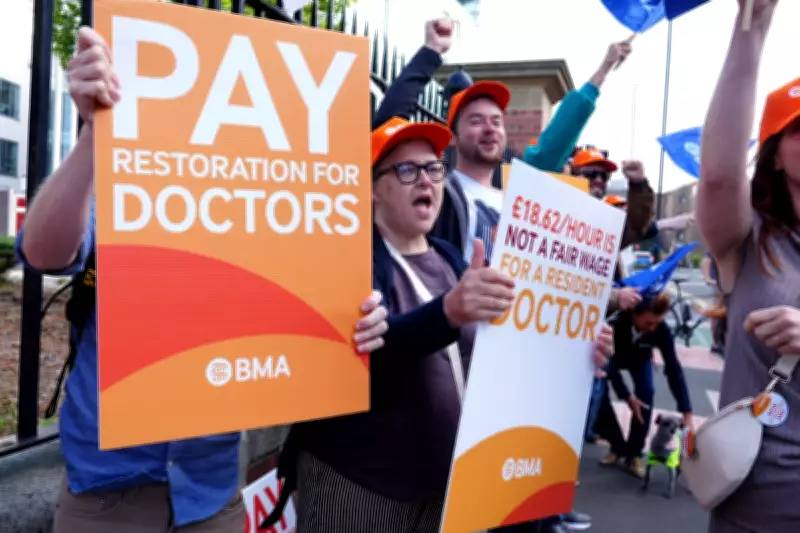
Health Secretary Wes Streeting has launched a scathing attack on striking doctors, labelling their demands as "absurd" and accusing them of rejecting a government deal while still expecting to reap its benefits. In an exclusive article for The Independent, Streeting claimed the British Medical Association (BMA), which represents resident doctors in an ongoing pay dispute, is not serious about reaching an agreement to avert industrial action.
Strike Action Set to Disrupt NHS Services
The NHS is preparing for a significant six-day walkout by tens of thousands of resident doctors in England, scheduled to begin at 7am on Tuesday immediately after the Easter long weekend. This industrial action is expected to lead to the cancellation of thousands of appointments and surgeries, placing additional strain on an already overburdened health service.
Financial and Operational Impacts
The government has withdrawn an offer of 1,000 additional training places following the collapse of talks aimed at preventing the strike. Officials stated that these positions are no longer considered "financially or operationally" feasible due to the NHS having to cover the estimated £250 million cost of the industrial action. Streeting emphasised that the deal itself becomes unaffordable if funds are diverted to cover strike expenses rather than being invested in doctors' pay and training opportunities.

"The idea that you can reject a deal while still expecting its benefits to materialise is simply not credible," Streeting wrote, highlighting what he described as the impracticality of the BMA's position.
Breakdown in Negotiations
Streeting criticised the BMA for failing to propose an alternative way forward and for delivering "another rejection of the offer on the table" when asked by ministers to suggest a path to agreement. He argued that there comes a point in any dispute where the focus shifts from what more can be offered to whether the other side is genuinely committed to reaching a resolution.
"The BMA seem to think they should get the benefits of the deal, at the same time as they take their members out on strike," he added, underscoring his frustration with the union's approach.
Historical Context of the Dispute
This marks the 15th strike by resident doctors, formerly known as junior doctors, since March 2023, following similar actions in December. The doctors are demanding that their pay be restored to 2008 levels, which would require an increase of approximately 26 per cent. According to the Department of Health and Social Care, their offer would improve career progression and working conditions, resulting in resident doctors being on average 35.2 per cent better off than they were four years ago.
Resident doctors, who are qualified physicians in their initial years of training, have seen their pay rise by almost 30 per cent over recent years, including a 22.3 per cent increase since the Labour government took office in the summer of 2024.
BMA Response and Future Prospects
Dr Jack Fletcher, chair of the BMA's resident doctors committee, expressed disappointment at the withdrawal of the training places, describing it as "extremely disappointing" and accusing the government of moving the goalposts during previously constructive talks.
"It is simply wrong that the development of the doctors of the future is being used as a pawn like this," Fletcher stated, indicating that the BMA would be willing to meet with Streeting over the Easter weekend to avoid the walkouts, but only if there is "an improvement" to the deal presented to medics.
When questioned about why the BMA had not put the government's offer to its members, Fletcher explained that it did not meet the threshold for consideration, and the organisation could not repeatedly present proposals to members without meaningful changes.
Prioritising Other Negotiations
Streeting warned that he would now have to prioritise negotiations with nurses and the broader NHS workforce, as well as manage the service through the impending strike. He acknowledged the pressures facing doctors but stressed that the consequences of repeated strikes on a health service under immense strain cannot be ignored.

The NHS will attempt to minimise disruption during the six-day strike, but Streeting cautioned that it cannot be eliminated entirely, leading to cancelled appointments, delayed care, and added pressure on other healthcare staff. The prime minister had previously given doctors a 48-hour ultimatum to reconsider industrial action or forfeit the offer of extra training places, describing the strikes as detrimental to both doctors and patients.





