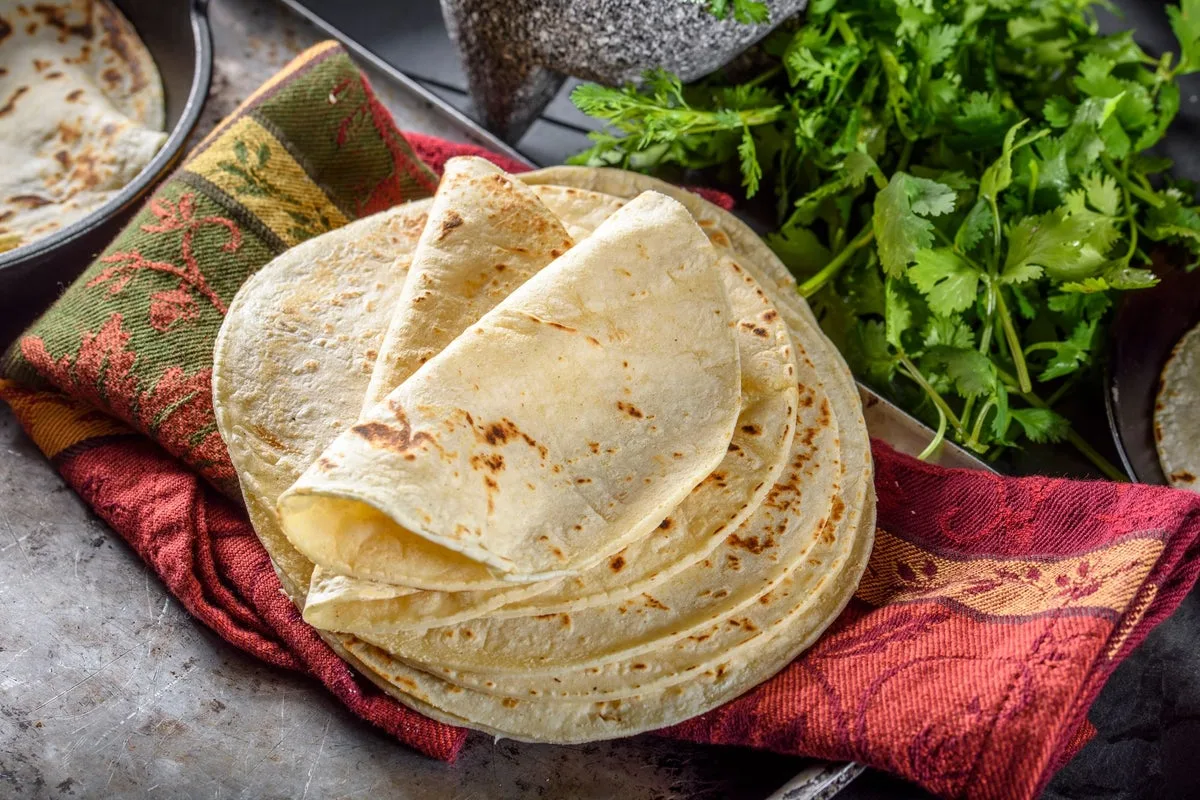
US States Expand Folic Acid Mandate in Corn Masa to Combat Birth Defects
Fifteen years after losing her first baby to a rare and devastating birth defect, Andrea Lopez finds solace in knowing that other Latina mothers might be spared similar anguish. In January, California became the pioneering state to mandate that food manufacturers add folic acid, a crucial B vitamin, to corn masa flour used in tortillas and other traditional Latino foods. This long-awaited measure aims to address the disproportionately high rates of neural tube defects among Hispanic infants, which claimed the life of Lopez's son, Gabriel Cude, when he was just ten days old.
"It's such a small effort for such a tremendous impact," said Lopez, a 44-year-old lawyer from Bakersfield now raising two young daughters. "There is very little that I wouldn't do to spare anybody this heartache."
Growing Momentum Across State Legislatures
A similar law will take effect in Alabama this June, while legislation is currently pending or under consideration in Florida, Georgia, Oklahoma, and Oregon. Four additional states—Texas, Delaware, New Jersey, and Pennsylvania—have expressed "active interest" in the issue, according to the Food Fortification Initiative, an advocacy group focused on combating micronutrient deficiencies.
"All women and children in the United States should have access to folic acid and have healthy babies," emphasized Scott Montgomery, the group's director.
Historical Exclusion and Persistent Health Disparities
For nearly three decades, folic acid has been required in enriched wheat and white breads, cereals, and pastas across the United States. Decades of research demonstrate that this 1998 requirement reduced rates of serious defects like spina bifida and anencephaly by approximately thirty percent, preventing about 1,300 cases annually. It is widely regarded as one of the foremost public health achievements of the twentieth century.
However, corn masa flour—a dietary staple in Latino communities—was excluded from the original fortification mandate. Consequently, rates of neural tube defects within this population have remained persistently elevated. In 2016, federal regulators permitted but did not require folic acid addition to corn masa products. By 2023, a review found that only about one in seven corn masa flour products and no corn tortillas contained the vitamin.
Addressing Higher Rates Among Hispanic Mothers
Nationwide, Hispanic women exhibit the highest rates of neural tube defects during pregnancy. In California, the incidence among Hispanic mothers is twice as high as among white or Black women, according to state data.
California's new legislation—coupled with the state's substantial purchasing power—could catalyze nationwide adoption, noted State Assemblymember Joaquin Arambula, who sponsored the bill passed in 2024.
"You have to be the first oftentimes to get the ball rolling," he remarked. "So, I'm glad other states have taken up that mantle."
Industry Response and Manufacturing Shifts
California's action and advocacy pressure have already prompted significant changes within the food industry. Gruma Corp., parent company of Mission Foods and Azteca Milling, has engaged with fortification efforts for nearly two decades. Azteca began selling some—though not all—varieties of its Maseca corn masa flour with folic acid in 2016.
As of this year, ninety-seven percent of the company's U.S. retail sales include folic acid, with the remainder expected to be fortified before July, according to a Gruma statement. Mission Foods initiated fortification in 2024 and now adds folic acid to all its branded and private-label corn tortillas in the United States.
These moves by major producers have facilitated smaller manufacturers in following suit, as highlighted in a recent report by the Center for Science in the Public Interest, a consumer advocacy group championing fortification.
Initially, industry concerns centered on potential flavor alterations and labeling costs, explained Jim Kabbani, head of the Tortilla Industry Association. However, he now anticipates broader-scale adoption by tortilla makers.
"I think overall the train has left the station and it will be more and more states," Kabbani projected.
Public Health Experts Applaud Progress
Public health specialists celebrate the mounting momentum behind these initiatives.
"The science is clear: Folic acid fortification works," asserted Vijaya Kancherla, an Emory University epidemiology professor and director of the Center for Spina Bifida Prevention. "It's safe. It's proven. And it's cost-effective."
Political Opposition and Misinformation Challenges
This perspective starkly contrasts with critics, including some high-ranking government officials, who view food fortification as governmental overreach. Late last year, Health Secretary Robert F. Kennedy Jr. denounced California's law in a social media post, labeling it "insanity" and accusing the state of "waging war against her children—targeting the poor and communities of color." A Kennedy spokesperson declined to elaborate on these comments.
Social media platforms are inundated with unfounded claims that folic acid is "toxic" or that individuals with the MTHFR gene variation cannot properly process the vitamin. Advocates and medical experts refute these assertions as entirely inaccurate.
"What's truly insane is that our nation's top health official is spreading false claims and frightening people into avoiding a nutrient that's proven to prevent birth defects and save babies' lives," countered Eva Greenthal, CSPI's senior policy scientist.
At fortification doses, folic acid "has never been shown to harm individuals or populations," affirmed Dr. Jeffery Blount, a pediatric neurosurgeon at the University of Alabama at Birmingham who works to prevent neural tube defects globally.
The U.S. Centers for Disease Control and Prevention stresses that "people with the MTHFR gene variant can process all types of folate, including folic acid." Even Kennedy's new federal dietary guidelines endorse fortification, acknowledging that folic acid from fortified foods or supplements is "critical" before conception and during early pregnancy to avert neural tube defects.
The Critical Timing of Prevention
Neural tube defects, affecting roughly 2,000 U.S. babies annually, develop in the initial weeks after conception—often before many women realize they are pregnant. With over forty percent of U.S. pregnancies being unintended, many women may not have been preparing for pregnancy, noted Dr. Kimberly BeDell, medical director of a rehabilitation clinic assisting children with spina bifida at Miller Children's Hospital in Long Beach, California.
"Even women's best efforts in going to an OB right away and starting prenatal vitamins, it's just too late," BeDell explained.
Incorporating folic acid into corn masa, akin to other grains, ensures the nutrient reaches broader populations in need, she added.
A Mother's Personal Journey and Advocacy
At age twenty-eight during her first pregnancy, Andrea Lopez was unaware of folic acid's importance or its absence from her diet. A mid-pregnancy ultrasound revealed her baby had anencephaly, a fatal condition where the skull fails to develop properly.
Lopez carried the pregnancy to term, and Gabriel survived for ten days. The pain of his loss endures, she shared, noting he would have been a high school freshman this year. She champions California's fortification mandate and finds it "mind-boggling" that implementation took so long.
"Trust me, you don't want to go through this," Lopez urged. "He's the love of my life. I have two little girls that survived, but he's my first born. He is my only son."






